
Hospitals are busy, complicated places that rely on rapid communication and flow of people to serve patients with good care. Patients may require urgent care from nurses, while hundreds of patients are on hold for registration, consultation, diagnostic tests and billing or pharmacy services.
A Nurse Calling System in a Hospital is designed for the patients to call the nursing staff when they want something, whereas a Queue Management System For Hospital Organizes patient flow by reducing unnecessary waiting time. They can make hospital operations more efficient, promote better team collaboration, and drive patient safety and satisfaction.
What Is a Nurse Calling System in a Hospital?
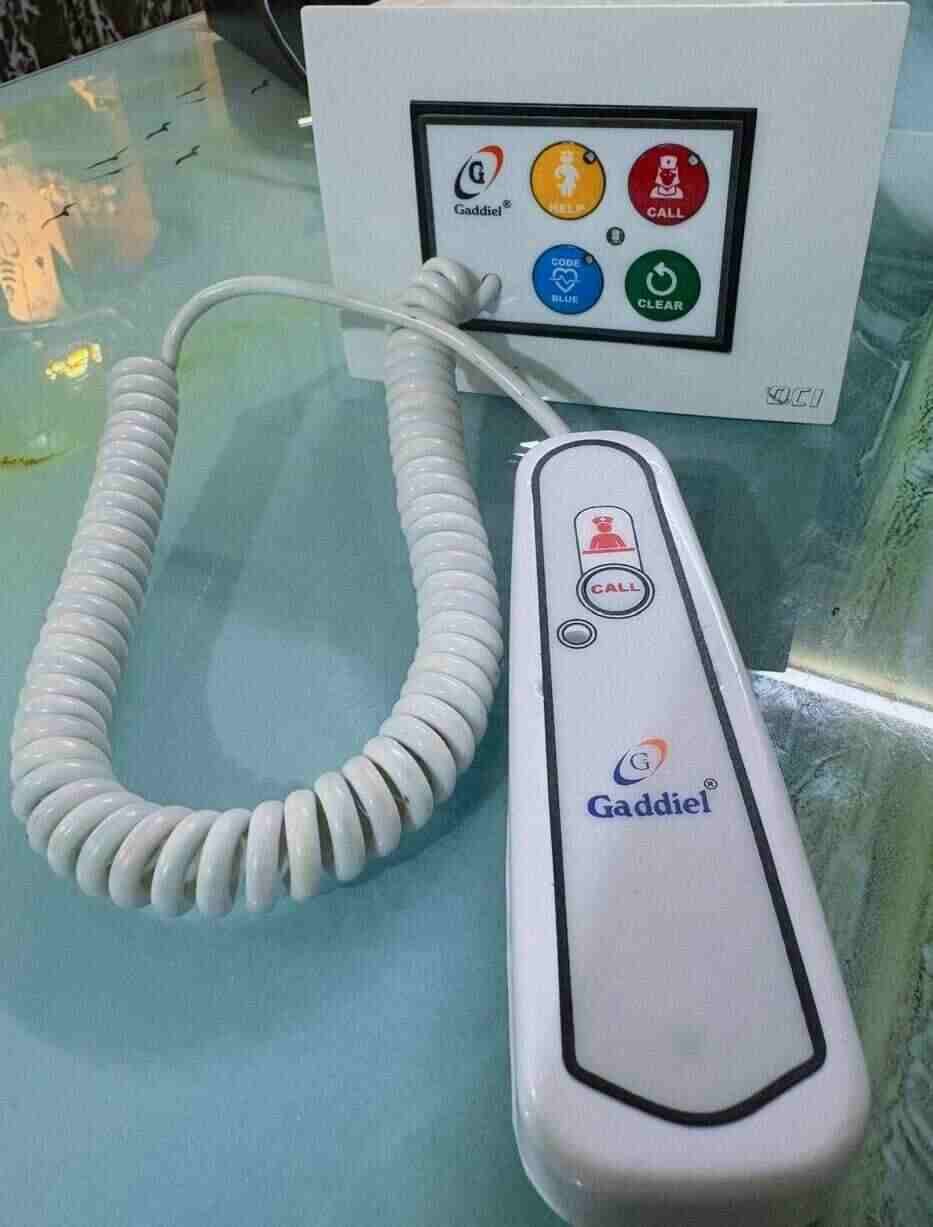
A nurse calling system in hospital is a vital and essential communication solution used to facilitate the patients with requests for help from nurses or other healthcare personnel.
Usually, the system consists of a call button placed near the bedside of the patient. They could press the button if a patient needed help. The call is then relayed to the nursing station or appropriate person.
The nurse calling system has evolved & no longer provides linear patient-to-nurse communication, but even has advanced features such as emergency calls from one place, bathroom call buttons, corridor lights, presence monitoring of staff at any given point in time (if anyone is within the area), prioritization of the incoming call and centralized monitors.
What Is the Application of the Nurse Call System?
The nurse calling system can be implemented in diverse health care settings, like:
- General hospital wards
- Private patient rooms
- ICUs
- Emergency departments
- Recovery rooms
- Nursing homes
What is a Nurse Calling System: How it Works?
A system is a network of interdependent components.
Patient Call Button
When the patient presses a button located near their bed to call for help.
Nurse Station
The call shows up at the nursing station where staff can see which patient or room needs assistance.
Corridor Light
One can visualize that an external indicator exists to show a call has been initiated.
Emergency Call
More emergency buttons can be placed in places like bathrooms or other areas where patients may need immediate aid.
Call Reset or Staff Presence
When the call is received by the nurse, it can either be acknowledged or reset (depending on configuration).
Centralized Monitoring
The healthcare facilities can empower monitoring of both calls and response action taking place at a location by employing advanced systems that make use of centralized software for hospital staff and administrators.
How a Nurse Calling System is Beneficial in a Hospital?
Faster Patient Assistance
Patients need not leave their beds to ask for nursing help, thus helping nurses get more quickly to the needs of patients.
Improved Patient Safety
A dedicated program that enables patients to systematically ask for assistance when necessary.
Better Nursing Workflow
Instead of relying solely on verbal communication or manual rounds, nurses can handle multiple patient requests more methodically.
Improved Response Monitoring
Advanced nurse calling allows hospitals to capture call activity and response data, enabling better analysis workflow for identifying areas of improvement.
Better Patient Experience
If patients want to be able to communicate with nursing staff easily, they may feel more comfortable and supported.
What is Hospital Queue Management System?
Hospital Queue Management System is a technology based system that helps hospitals to manage patients’ queues in departments.
Every hospital has such high patient footfall at registration counters, OPDs, diagnostic departments, pharmacies/billing counters & other service areas. Normal queues may cause congestion, confusion and cronyism.
A simple queue management system will eliminate these physical queues or help to reduce them through digital token generation, queue displays and automated announcements, and real-time monitoring.
And this mechanism is what you will find in a hospital Queue Management System.
Step 1: Patient Registration
The patient checks in at a reception desk, kiosk, or appointment system (another digital touchpoint).
Step 2: Token Generation
A token number is generated by the system for the chosen department, doctor and/or service.
Step 3: Digital Queue Display
The number is shown in a digital screen in the waiting area of the patient.
Step 4: Automated Patient Calling
Once the service point is ready to go, you can also call the next patient via display and audio announcement (where applicable).
Step 5: Service Delivery
The patient goes to the correct counter, doctor, or department.
Step 6: Queue Monitoring
Hospital administrators can also observe patient flow, waiting times, counters and service activity from a centralized dashboard.
Advantages of Queue management system for hospital
Reduced Waiting Time
It eases unnecessary delays and enhances the movement of patients through different departments of the hospital if there are organized queues.
Less Crowding
Patients are not required to queue continuously in a physical room, thus establishing a more pleasant waiting scenario.
Improved Patient Experience
Clearly printed tokens and digital screens help patients know when and who will serve them.
Better Staff Productivity
Less time for hospital staff manually coping with queues, or answering the same repeated patient questions about turns.
Real-Time Monitoring
This lets administrators keep an eye on queue activity to identify peak business times or operational bottlenecks.
Data and Analytics
The system is able to inform the patients about patient volume, waiting time, service time and department wise workload.
Why Hospitals Need Both Systems
Modern-day, operating a hospital today is no simple task – two of the key operational challenges faced in any setup are patient movement and patient communication.
Queues in a Hospital: Queue management System for hospital is primarily focused on to look how we deal with pre- and during each of the hospital services. It organizes the journey of patients in registration, consultation, diagnostics, billing and payments, pharmacy, other departments etc.
Weller said the patient care developed over time with surgeons from around the world and an analogue to a Nurse Calling System in Hospital is that it becomes vital once the patient has been admitted or located in a care area. It enables patients to indicate their need for help with a call directly to nursing personnel.
Conclusion
In hospitals, since patients need to summon nursing staff, a Nurse Calling System in hospitals provides them with the assurance that they can do so when needed and similarly, Queue Management System for hospitals help maintain the patient flow and reduce redundant waiting.
These solutions make staff workflows more efficient, improve communication, and provide useful operational data which ultimately help create a positive patient experience when executed the right way.
If it is in the works for hospitals where they are seeking digital transformation, patient communication and queue management technologies may be a critical piece to laying down the foundation for finding what brings them in an organized manner.