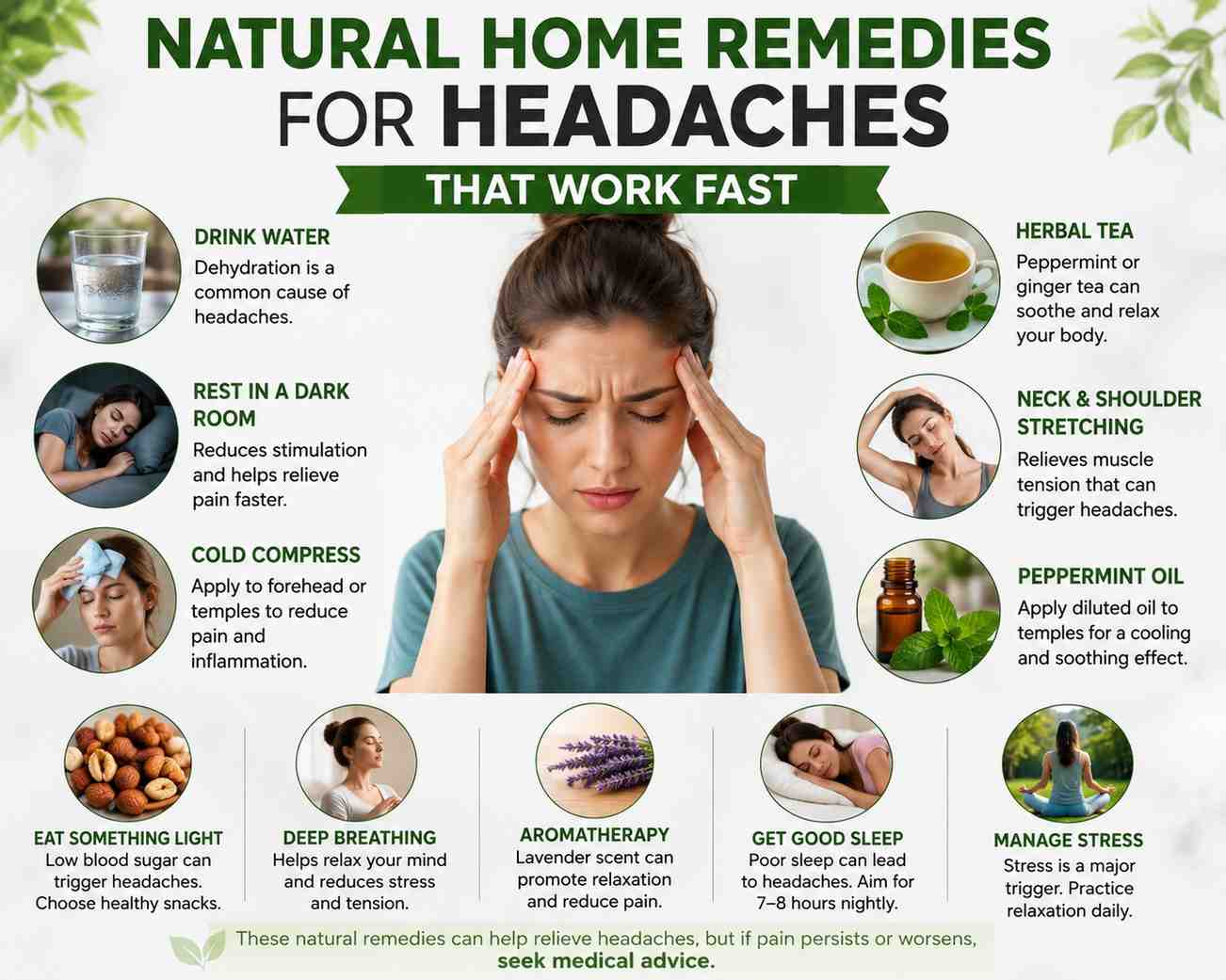
Headaches can interrupt almost every part of daily life. Sometimes they arrive slowly as dull pressure behind the eyes, while other times they hit suddenly with sharp tension that makes it difficult to focus, work, or even relax. Stress, dehydration, poor sleep, excessive screen time, skipped meals, and muscle tension are some of the most common triggers people experience today.
While severe or persistent headaches should always be evaluated by a medical professional, many everyday headaches can often improve through simple lifestyle adjustments and natural methods. The reason many people search for home remedies for headaches is because they want quick relief without immediately depending on medication for every minor episode.
The good news is that several natural approaches can help reduce headache discomfort surprisingly fast when used correctly.
Drink Water Immediately
Dehydration is one of the most overlooked headache triggers. Even mild dehydration can lead to pressure, fatigue, dizziness, and tension headaches.
Many people simply do not drink enough water throughout the day, especially when consuming large amounts of caffeine or spending long hours in air-conditioned environments.
Slowly drinking water and rehydrating the body can sometimes reduce headache intensity within a relatively short time, particularly if dehydration is the primary cause.
Rest in a Dark and Quiet Room
Bright lights, loud sounds, and overstimulation often worsen headaches.
Lying down in a quiet room with reduced lighting allows the nervous system to calm down. This is especially helpful for headaches triggered by stress, screen fatigue, or sensory overload.
Even 20 to 30 minutes of proper rest can significantly reduce discomfort in some cases.
Use a Cold Compress
Applying a cold compress to the forehead, neck, or temples may help reduce headache pain by constricting blood vessels and calming inflammation.
Cold therapy often works well for:
-
Migraine discomfort
-
Stress-related headaches
-
Heat-related headaches
A cold towel, ice pack wrapped in cloth, or chilled compress can provide quick soothing relief.
Try Gentle Neck and Shoulder Stretching
Tension headaches frequently originate from tight neck, shoulder, and upper back muscles.
Poor posture, long hours at desks, and stress-related muscle tightness can all create pressure that radiates toward the head.
Gentle stretching helps release muscular tension while improving circulation. Slow neck rolls, shoulder stretches, and posture correction often reduce discomfort naturally.
Reduce Screen Exposure
Digital screens place enormous strain on the eyes and nervous system.
Long periods of phone or computer use can contribute to:
-
Eye strain
-
Neck tension
-
Mental fatigue
-
Light sensitivity
Taking breaks from screens and resting the eyes often helps relieve headaches triggered by overstimulation and prolonged focus.
Drink Herbal Tea
Certain herbal teas are commonly used as natural calming remedies.
Peppermint tea and ginger tea are especially popular among people searching for home remedies for headaches because they may help relax the body and reduce nausea or tension associated with headaches.
Warm drinks can also create a calming effect that supports relaxation during stressful moments.
Massage Pressure Points
Gentle massage around the temples, jaw, neck, and scalp may help improve blood flow while reducing muscular tightness.
Some people also find relief by applying pressure to certain areas of the hands or between the eyebrows.
Massage works particularly well for stress-related headaches where muscle tension plays a major role.
Eat Something Light and Nutritious
Skipping meals or low blood sugar can trigger headaches surprisingly quickly.
When the body lacks proper energy, headaches may develop alongside dizziness, irritability, or weakness.
Eating balanced foods such as:
-
Fruits
-
Nuts
-
Yogurt
-
Oatmeal
-
Whole grains
can sometimes help stabilize energy levels and reduce headache symptoms naturally.
Improve Breathing and Relaxation
Stress often causes shallow breathing patterns that increase physical tension throughout the body.
Slow deep breathing helps relax muscles, calm the nervous system, and reduce stress-related pressure. Even a few minutes of controlled breathing exercises may noticeably ease tension headaches.
Mental stress frequently manifests physically before people fully realize it.
Use Peppermint Oil Carefully
Peppermint oil is commonly used for headache relief because its cooling sensation may help relax tense muscles and create a soothing effect.
A small amount diluted properly and applied around the temples can feel refreshing for some individuals.
However, essential oils should always be used cautiously and never excessively.
Get Better Sleep
Poor sleep habits are strongly connected to recurring headaches.
Inconsistent sleep schedules, lack of deep rest, and staying awake late into the night can increase both headache frequency and intensity.
Creating healthier sleep routines often improves long-term headache management more effectively than temporary relief methods alone.
Limit Excess Caffeine
Caffeine has a complicated relationship with headaches.
In small amounts, it may sometimes help reduce pain. However, excessive caffeine intake or sudden caffeine withdrawal can also trigger headaches.
Balancing caffeine consumption and staying hydrated helps reduce these fluctuations.
Practice Stress Management Daily
One of the biggest hidden causes of recurring headaches is chronic stress.
Mental overload affects:
-
Muscle tension
-
Sleep quality
-
Breathing patterns
-
Hormonal balance
-
Nervous system regulation
Simple stress management habits like walking, meditation, journaling, or quiet downtime may help reduce how frequently headaches occur over time.
Natural Relief Works Best With Consistency
The reason people continue searching for home remedies for headaches is because small natural methods often provide meaningful relief without requiring complicated solutions.
However, consistency matters. Hydration, posture, sleep, stress reduction, and balanced habits all work together over time. Temporary relief becomes much easier when the body receives proper support daily instead of only during painful moments.
Still, persistent, severe, or unusual headaches should never be ignored. If headaches become frequent, intense, or accompanied by symptoms like dizziness, vision changes, confusion, or numbness, professional medical evaluation is important.
For many everyday headaches, though, simple natural adjustments can often bring surprisingly fast comfort while helping the body recover more gently.