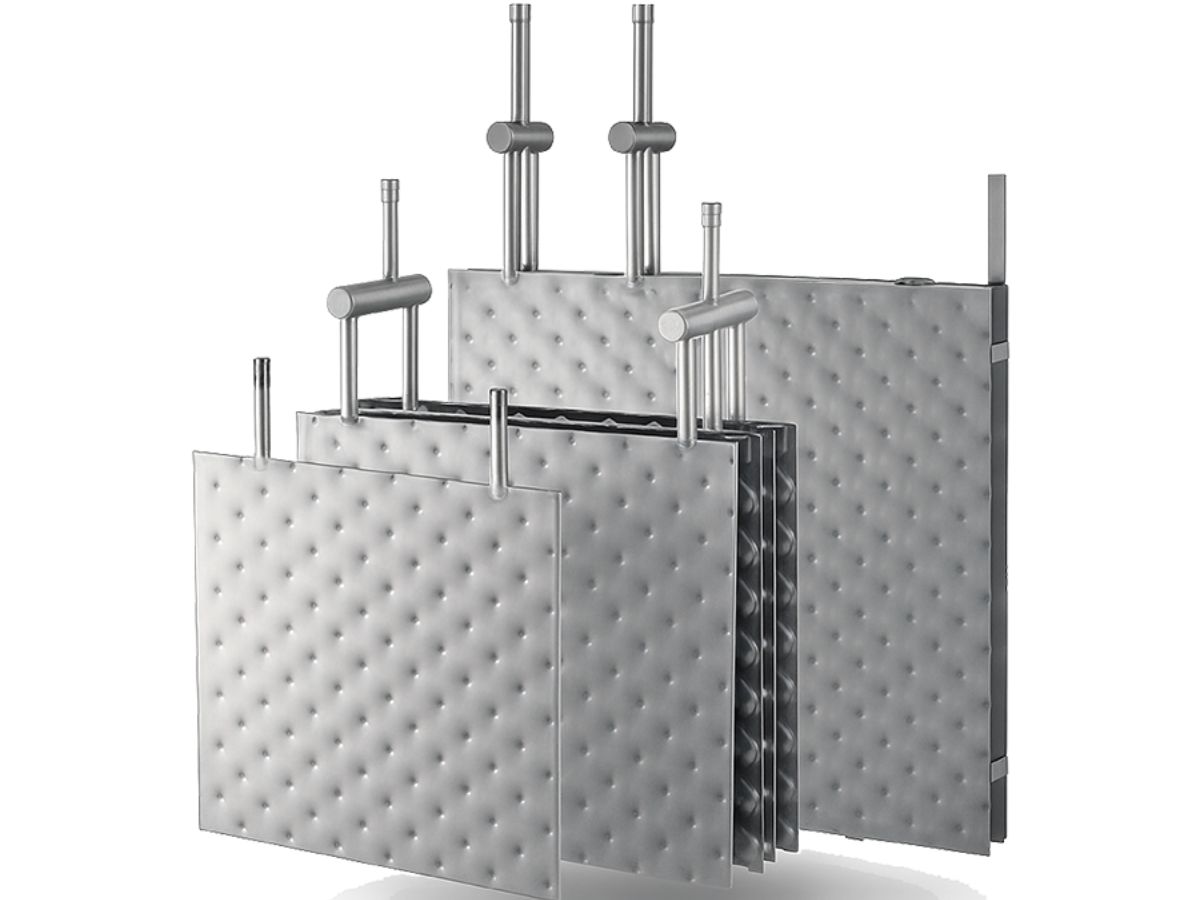
When it comes to choosing the right heat exchanger for your industrial process, selecting the appropriate design can make a significant difference in efficiency, maintenance, and long-term costs. Among the popular options, pillow plate heat exchangers and flat plate heat exchangers stand out for their unique advantages. Understanding their differences can help you determine which solution is best suited for your specific requirements.
Understanding Pillow Plate Heat Exchangers
Pillow plate heat exchangers are a modern design that features welded plates with a distinctive pillow-like structure. The plates are formed into a slightly inflated, dimpled shape, creating channels for fluid to pass through. This innovative design allows for enhanced turbulence, which improves heat transfer efficiency while reducing fouling.
One of the key benefits of pillow plate heat exchangers is their flexibility. They can be customized to fit tanks, vessels, or other irregular surfaces, making them ideal for industries such as chemical processing, food and beverage, and pharmaceuticals. The modular design also allows for easy cleaning and maintenance, which is a critical consideration for processes that handle viscous or particulate-laden fluids.
In addition, pillow plates offer excellent thermal performance with a relatively low pressure drop. The combination of increased surface area and turbulence ensures that heat is transferred efficiently, saving energy and reducing operating costs.
Exploring Flat Plate Heat Exchangers
On the other hand, flat plate heat exchangers are a more traditional design commonly used in various industries. These exchangers consist of stacked flat plates separated by gaskets, creating channels through which fluids flow. The plates are usually made of stainless steel or other corrosion-resistant materials, ensuring durability in demanding applications.
Flat plate heat exchangers are particularly popular for applications that require compact design, easy assembly, and high heat transfer rates. The gaskets between plates make them easier to disassemble and clean compared to some other designs. They are also highly effective in processes where space is limited but high efficiency is required, such as in HVAC systems, refrigeration, and certain chemical processes.
However, flat plate exchangers can have limitations in handling high-viscosity fluids or slurries. The straight, narrow channels are more prone to fouling and may require frequent cleaning in such applications.
Spiral Plate Heat Exchanger: An Alternative Option
While comparing pillow plate heat exchangers and flat plate heat exchangers, it’s worth mentioning the spiral plate heat exchanger as another viable option. Spiral plate designs feature a continuous spiral channel for fluid flow, providing high turbulence and efficient heat transfer. They are particularly effective for handling viscous fluids, slurries, and fluids with high fouling tendencies.
Although spiral plate exchangers are less commonly used than flat or pillow plate designs, they are highly valued in chemical processing, wastewater treatment, and other industries where fouling is a major concern.
Pillow Plate vs Flat Plate: Key Differences
| Feature | Pillow Plate Heat Exchanger | Flat Plate Heat Exchanger |
| Design | Inflated, dimpled plates forming channels | Stacked flat plates with gaskets |
| Customization | Highly flexible; can be shaped to fit tanks/vessels | Limited to standard configurations |
| Maintenance | Easy to clean and maintain; resistant to fouling | Easier to disassemble; may clog with viscous fluids |
| Efficiency | High turbulence; efficient heat transfer | High heat transfer, compact design |
| Applications | Food & beverage, pharma, chemical processing | HVAC, refrigeration, general chemical applications |
Choosing the Right Heat Exchanger for Your Needs
Selecting the best heat exchanger ultimately depends on your process requirements. If your priority is handling high-viscosity fluids, reducing fouling, or customizing the exchanger to fit unique tank shapes, a pillow plate heat exchanger is likely the better choice. Its modular design and thermal efficiency make it a versatile and reliable solution.
Conversely, if your process requires a compact design, high efficiency, and straightforward maintenance for clean fluids, a flat plate heat exchanger can be ideal. Its stackable design and simple construction make it cost-effective for many standard industrial applications.
For processes involving challenging fluids with high fouling potential, a spiral plate heat exchanger may also be worth considering. Its continuous spiral channel allows for better handling of such fluids, although it may not offer the same customization options as pillow plates.
Conclusion
Choosing between pillow plate heat exchangers, flat plate heat exchangers, and spiral plate heat exchangers requires a careful assessment of your fluid properties, space constraints, and maintenance preferences. Each design has its strengths, and understanding these differences ensures you invest in the most effective, long-term solution for your process.
For high-performance applications where customization and fouling resistance are critical, pillow plate heat exchangers often emerge as the preferred choice. However, for more traditional applications requiring compact and efficient solutions, flat plate heat exchangers remain highly reliable.
For more detailed information about spiral and pillow plate heat exchanger designs, visit XHEXNOVAS official website.