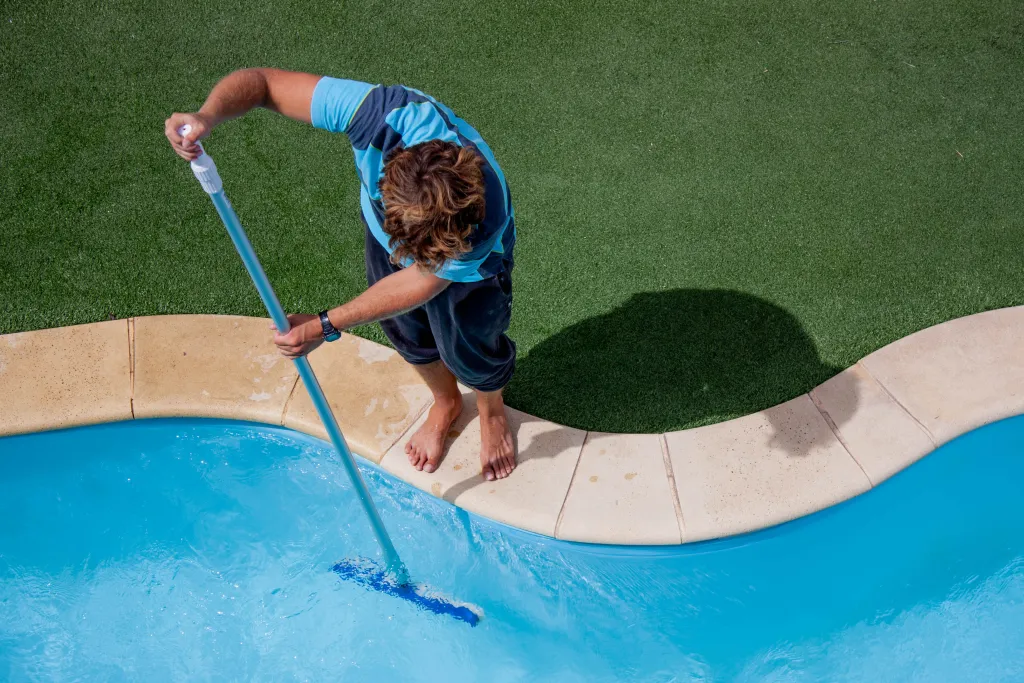
Public pools are a valued resource for residents, students, and patrons, but they can also be a regulatory minefield if the wrong provider is in charge of daily operations. Every year, municipalities, recreation centers, and school districts across Atlanta and surrounding areas lose operating days because their vendor was not built for public-sector compliance. That’s why it’s important to understand exactly what these obligations look like before signing a service contract. In this article, we’ll discuss the compliance demands that sink underprepared operators and what to expect from a public facility partner.
Understanding the Difference Between Public and Private Pools
The first thing to know is that a public pool is not a community pool with a few extra rules. It is a fundamentally different regulatory environment with stricter inspection schedules, broader documentation requirements, and shorter windows to correct any deviation. By understanding this difference early, you avoid the common mistake of hiring a vendor priced for residential service to run a public facility.
A “pool service near me“ search returns dozens of providers across the region, but very few are actually built for public facility work. Filtering on price or proximity alone almost always surfaces the wrong shortlist of providers for the demands a public pool actually carries.
The Documentation Standard Most Vendors Cannot Meet
Public facility compliance is paper-driven. Operators are required to produce records on demand, often years after the fact. The documentation includes daily water chemistry readings, bather load counts, lifeguard certifications, in-service training records, incident reports, Emergency Action Plan revisions, chemical inventory logs, and equipment maintenance history archived in retrievable form. By keeping all of this current and accessible, your provider gives you the records you need when an inspector arrives unannounced, and a clean paper trail you can produce on demand months or years later.
ADA, Lifeguard Certification, and Rotation Requirements
Public pools fall under the Americans with Disabilities Act in ways private facilities do not. You are responsible for accessible entry equipment, proper deck clearance, signage, and reasonable accommodation for guests with disabilities. ADA failures carry federal compliance exposure as well as state and local consequences. By addressing accessibility during pre-season planning every single year, your provider keeps these issues entirely out of your inspection record.
Public facilities also cannot rely on the assumption that posted guards are properly certified. You are responsible for verifying current certifications, monitoring expiration dates, documenting in-service training throughout the season, and managing rotation schedules that prevent guard fatigue, a known factor in drowning incidents. By building rotation discipline and certification tracking into the program, qualified public pool services protect your facility and the people in it from preventable incidents.
What Public Facility Operators Should Look For
When you type “pool service near me” into a search engine, the right filter is not proximity. It is what operational layer the provider can actually deliver to a public facility. That includes Certified Pool Operators assigned to each facility rather than shared across regions, an in-house service department that responds in hours rather than days, electronic maintenance logs you can access at any time from any device, active Health Department coordination, and General and Professional Liability Insurance with additional insured availability on the policy.
What a Real Partner Looks Like
By looking at how a provider handles documentation, supervision, and inspection prep, you can usually tell within the first conversation whether they are equipped for public-sector work or built for residential maintenance only. Vendors selected on price alone tend to underdeliver on the regulatory side, which produces violations, closures, and remediation costs that quickly exceed any savings from the original contract and leave the facility absorbing the full operational impact.
Conclusion
The compliance demands at a public pool compound quickly, and underprepared operators rarely see the problem coming until a closure forces it onto every meeting agenda for weeks afterward. By understanding the documentation, accessibility, and certification requirements your facility carries, and by holding every prospective provider to the standards of full public pool services, you keep your facility open, defensible, and ready for whatever the inspection cycle brings next without scrambling to recover lost operating days.