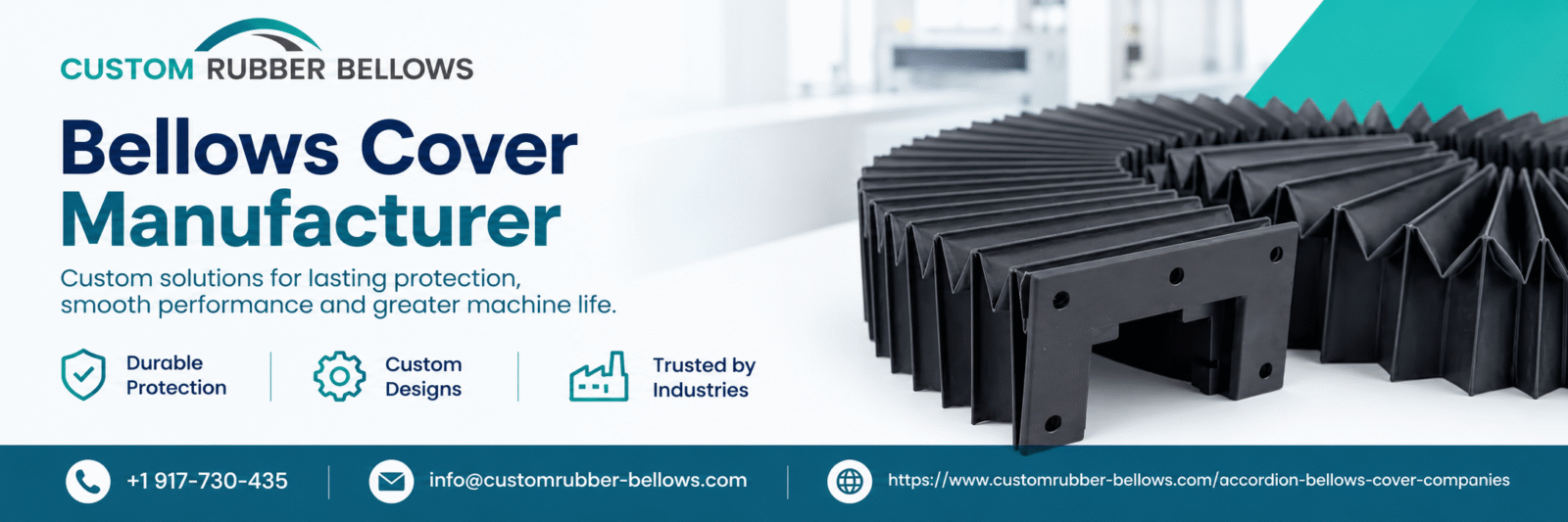
A reliable rubber bellows manufacturer will keep equipment, machines, or devices safe from water, dust, chemicals, and physical damage. Rubber bellows are a flexible protective covering that allows a particular part to move and offers a barrier to the environment. Rubber bellows are used in many different areas, like cars, industrial machines, manufacturing equipment, and both pneumatic and hydraulic systems. When you work with a well-known manufacturer, you’ll find that you receive high-quality, durable bellows that will be made according to your size, flexibility, and material specifications.
Heavy equipment and machines used in industry often face vibration, moving parts, high pressure, and other tough conditions. You may reduce downtime and part failure while enhancing equipment operation and reducing maintenance costs by using high quality rubber bellows. If you want protection that lasts, the first thing to do is find a qualified manufacturer.
What Are Rubber Bellows?
Rubber Bellows are flexible, expandable elements that are manufactured with the use of folds or convolutions to enable the desired movement, compression, and extension. These expandable members protect mechanical elements from exposure and give accomodation to different changes in position, length, and alignment. They are designed with different diameter, shape, thickness, size, and type of rubber based on the application.
Common applications include:
- Protecting shafts, rods, and moving mechanical parts.
- Use dust covers to prevent dust and debris from being sucked into a delicate assembly.
- Reducing exposure to moisture and environmentalcontaminants.
- Accommodating vibration and movement in machinery.
- Find and provide flexible connections for pneumatic and hydraulic systems.
- The optimum type of bellows used is determined by operating temperature, movement, chemical environment and the pressure and available space.
Why Choose a Professional Rubber Bellows Manufacturer?
When you use the expertise of a craftsman, you can simply order equipment to your requirements as opposed to ordering off the shelf components and items that may or might not be compatible. Good manufacturing service will have the ability to produce the same sized and correctly created items and goods, utilizing the perfect type of fabric.
A knowledgeable manufacturer can also be a resource when it comes to design, creating your prototype and customizing the size and material options for your equipment. This can be especially advantageous if you need equipment that is larger than normal or will be used in an extremely rugged setting
Top advantages are:
- Equipment-specific: Can be constructed to suit equipment sizes and travel needs.
- Materials: Appropriate rubber compounds can be chosen according to temperature, flexibility, and environmental resistance.With the possibility to control manufacturing there is more consistency and less variation between standards.
- Less Maintenance: Well-selected protective components can reduce contamination and premature wear.Long-Term Value: Durable design can
- lower replacement rate if well specified and used.
Types of Rubber Bellows for Industrial Applications
Bellows in a variety of configurations are suitable for different industries. The right configuration ensures you will get the proper fit and flexibility from the element, while protecting the goods moving through it.
1. Rubber Bellows Molded
Molded rubber bellows are manufactured by using molds to form particular shapes and sizes. They are ideal for use in any area where reproducible geometry, repeatability and customized designs are needed. They may also offer protection to environmental elements, vibration or mechanical movement, depending on the compound.
2. Fabric-Reinforced Rubber Bellows
These types of bellows include layers of reinforcement, which provide strength and stability. They are potentially suitable for certain applications within industry requiring conditions of pressure, repeated movement or severe operating conditions. The choice of reinforcement will be a function of the application and engineering requirements.
3. Silicone Rubber Bellows
Silicone bellows are commonly specified where high flexibility is needed over an extended temperature range. They may be advantageous for use in particular types of instrumentation where some thermal stability is a concern. The precise temperature and chemical exposure constraints will vary depending upon the grade of silicone used.
4. Protective Bellows Covers
Engine covers are used on moving parts of the machine to protect against dust, dirt, and moisture. Selection or development of a bellows cover is dependent on a variety of factors, including the length of stroke required and mounting configuration.
Industries That Use Rubber Bellows
Rubber bellows are used across a variety of industries as they provide both flexibility and a form of protection. Rubber bellows can be tailored to suit various types of equipment and environments.
automotive rubber bellows manufacturer help to keep dirt and moisture out of certain steering, suspension and mechanical assemblies. Automotive machinery and components call for appropriate materials, size and longevity.
- Industrial Machinery: Covers can be used to cover moving guides, guide shafts, rods, and other machine components and shafts to prevent contamination of the process.
- For added protection, certain moving components and couplings can be protected with flexible bellows. The pressure must always be taken into account while designing pressure applications.
- A few of these complex systems consist of pliant safeguard elements for cleanliness, material compatibility, and movement.
- There may be bellows on machinery working outside to prevent dirt, mud, rain and other conditions from getting in.
Choosing the Correct Rubber Bellows
When ordering your product, remember size is not the only consideration. Think about the environment in which it will operate as well as the mechanical requirements.
Things to Think About:
- Ensuring that the material will not be harmed or damaged when exposed to oil, chemicals, water, ozone etc.
- Temperature: Will it work across the required temperature range?
- How much Movement do I need: Decide on the compression, extension, bend and movement.
- Size & Fit: Decide inner & outer diameter, length, mounting flange and space obtainable.
- Pressure Conditions: Please tell us whether the part will be under vacuum, internal or external pressure.
- Service Life: Assess the projected number of operating cycles, maintenance (scheduled and non-scheduled), and environmental conditions.
Custom Rubber Bellows Manufacturing Process
A meeting with the customer is necessary before custom manufacturing can begin. The technical requirements and application of the customer have to be discussed first. The manufacturer will check the drawings, sizes, environment, material chosen and anything else needed to start designing.
The process may include:
- Assessment of needs: Gather data about the application, dimensions, and criteria for success.
- Material choice: Select the suitable rubber compound or reinforced build.
Create the manufacturing tooling and geometry. - Bend the Bellows with the proper forming or fabrication method.
- Quality Inspection: Assessment of size and visual specifications, in addition to specific performance requirements.
- Final Delivery: Deliver the parts on the schedule outlined on the sales order and presale agreement.
If the application is severe, it should be specified what testing is required, taking into account the temperature is harsh and both pressure and chemicals are likely to be of concern.
Why Customization Matters
In certain cases, the standard bellows don’t match the dimensions of your machinery or the technical constraints of its installation. Manufacture of customized bellows from the specification to the final deliverables, the dimensions, the number and type of folds, and the type of mounting, as well as the specified reinforcements and rubbers.
The concept can also be adapted to allow the correct fit, range of motion required and apply environmental considerations to the application. It may also consider installation constraints within the design phase.
If you know what your manufacturer can do, then send drawings, pictures, sample parts, operating ranges (temperature, force, stroke), and an estimated quantity before requesting a quote so it will know whether it is possible.
Conclusion
If your business needs to keep equipment, vehicles, or other moving parts protected for a long time, picking the right bellows cover manufacturer
really matters. From custom designing to your exact specifications to choosing the right material, size, and manufacturing process, the top-ranked supplier will guarantee that your equipment stays dust-free and dirt-free with durable, lasting performance. Explore our selection of silicone bellows, rubber bellows and custom protective covers to see what suits your application condition.
Get in touch with your trusted manufacturing vendor to find out about the application needs and manufacturing capabilities.