

Wound care can become more complicated as people age, particularly when mobility, chronic health conditions, or recovery from surgery make regular clinic visits difficult. For families searching for senior wound care at home near Troy MI home-based services can provide a practical way to support appropriate treatment without unnecessary travel. Professional wound care may include assessment, dressing management, monitoring, patient education, and communication with the broader healthcare team. The goal is to support safe healing while keeping the patient comfortable and appropriately monitored in familiar surroundings.
Why Seniors May Need Wound Care at Home
Older adults can face several factors that make wound recovery more challenging. Limited mobility may make it difficult to travel to appointments, while conditions such as diabetes, circulation problems, or reduced activity can affect the body’s ability to heal. Some seniors may also require assistance with transportation and daily activities, making frequent medical visits stressful for both patients and caregivers. Receiving appropriate wound care at home can reduce some of these practical barriers while allowing healthcare professionals to monitor the patient where they live.
Home-based wound care may be appropriate for different types of wounds, including surgical wounds, pressure injuries, chronic ulcers, and wounds associated with certain medical conditions. The type and severity of the wound determine what treatment is needed and how frequently it should be assessed. A qualified healthcare professional can evaluate the wound and follow the treatment plan established for the patient. If the wound requires services that cannot safely be provided at home, the patient may need specialist evaluation or treatment in a medical facility.
What Professional Senior Wound Care Involves
Professional wound care begins with assessment rather than simply changing a dressing. A qualified clinician may examine the wound’s size, depth, tissue appearance, drainage, surrounding skin, and signs of inflammation or infection. They may also ask about pain, changes since the previous visit, medications, nutrition, mobility, and other factors that could influence healing. This information helps the healthcare team determine whether the wound is progressing appropriately and whether the existing treatment plan needs review.
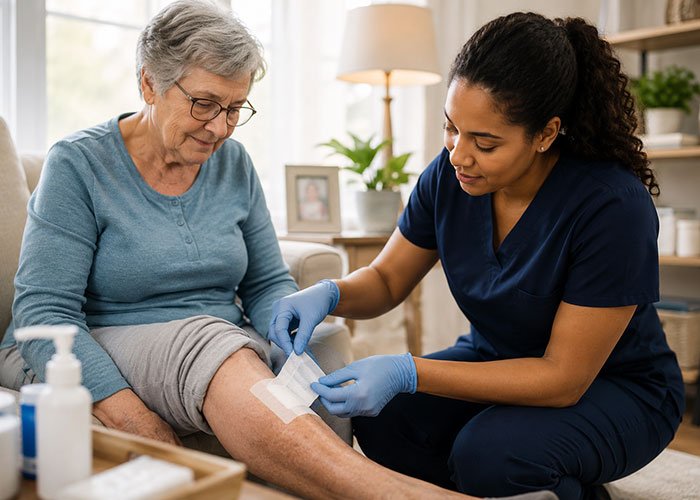
Dressing changes are performed according to the patient’s established care plan and the type of wound being treated. Depending on the situation, the clinician may remove an existing dressing, inspect the wound, provide appropriate cleansing or treatment, and apply a new dressing. Patients and caregivers may also receive instructions about protecting the wound and maintaining care between visits. Following professional instructions is important because using unsuitable products or changing treatment without guidance can interfere with healing.
Common Wound Concerns in Older Adults
Pressure injuries are an important concern for seniors who spend extended periods sitting or lying down. Continued pressure on vulnerable areas can damage the skin and underlying tissue, particularly when mobility is limited. Prevention and management may involve regular repositioning, pressure-relieving equipment, skin protection, nutrition, and professional monitoring. When a pressure injury develops, early assessment can help determine the appropriate care strategy and whether additional medical intervention is necessary.
Surgical wounds and chronic wounds can also require ongoing observation after a patient returns home. Families may notice changes in redness, swelling, drainage, pain, or wound appearance and wonder whether those changes are part of normal healing. Rather than relying on assumptions, patients should communicate concerns to their healthcare professional. Prompt evaluation is particularly important when symptoms become worse, new concerning changes appear, or the patient develops systemic symptoms such as fever or significant weakness.
Comfortable Wound Healing in Your Home Michigan
Comfort is an important consideration when caring for an older adult, but comfort should be balanced with proper clinical treatment. Comfortable wound healing in your home Michigan can mean receiving appropriate professional care without the physical demands of unnecessary travel. A familiar environment may also help some seniors feel less anxious during routine care and allow caregivers to participate when appropriate. Home visits can make the process feel more manageable while maintaining attention to wound assessment and treatment.
The home environment can also provide useful information that may not be visible during a brief clinic appointment. Healthcare professionals may identify practical challenges involving mobility, sleeping arrangements, medication routines, pressure relief, or caregiver support. Addressing these factors can be important because wound healing depends on more than the dressing placed over the affected area. Nutrition, blood sugar management, circulation, movement, and protection from repeated pressure can all influence recovery and should be considered as part of appropriate care.
How Families Can Support Wound Recovery
Family members and caregivers can play an important role in maintaining an organized wound-care routine. They can help keep appointments, medications, supplies, and treatment instructions organized while observing changes between professional visits. Keeping a simple record of symptoms or changes can also help healthcare professionals understand how the wound has progressed over time. Caregivers should communicate concerns promptly instead of attempting to diagnose the wound themselves or making significant treatment changes without professional direction.
The patient’s overall health should also remain part of the conversation. Adequate nutrition, appropriate hydration, mobility when medically permitted, medication adherence, and management of underlying health conditions may all support the healing process. However, recommendations should be individualized because seniors can have different medical needs and restrictions. A healthcare professional can help families understand which activities and supportive measures are appropriate for the patient’s particular situation.
Choosing a Home Wound Care Provider Near Troy
Families should evaluate home wound care providers carefully before selecting a service. Important factors include professional qualifications, wound care experience, availability, communication procedures, and the range of services provided. Families should ask who will perform the assessment and dressing care and whether the provider can coordinate with the patient’s physician or specialists. It is also helpful to understand how urgent concerns are handled between scheduled visits and what happens if the wound does not respond as expected.
Insurance and cost should also be discussed before care begins. Coverage can depend on the patient’s insurance plan, medical necessity, provider participation, and the type of service being delivered. Families should ask about potential out-of-pocket costs and whether additional services require separate arrangements. A reputable provider should be transparent about these practical details and should not promise outcomes that cannot reasonably be guaranteed. Professional care should be based on the patient’s actual medical needs rather than a one-size-fits-all approach.
When a Wound Requires Prompt Medical Attention
Home wound care is designed for appropriate situations, but families should recognize when a condition may require urgent medical evaluation. Rapidly increasing pain, significant swelling, heavy bleeding, spreading redness, worsening drainage, or other concerning changes should be reported to a qualified healthcare professional promptly. Fever, confusion, severe weakness, difficulty breathing, or other serious symptoms may indicate a broader medical problem requiring urgent attention. Patients should follow their healthcare provider’s instructions about when to seek emergency care.
Families should also avoid delaying evaluation simply because a patient already receives home wound care. A home-based clinician can determine whether a wound remains appropriate for residential treatment or whether additional services are needed. In some cases, specialist evaluation, diagnostic testing, advanced wound treatment, or hospital care may be necessary. The purpose of home wound care is to provide suitable treatment in a convenient setting, not to prevent patients from receiving higher-level medical attention when it is clinically required.
For families seeking senior wound care at home near Troy MI, the right provider can offer valuable support while reducing some of the challenges associated with repeated medical travel. Professional assessment, appropriate dressing management, ongoing monitoring, and communication with physicians can help create a more organized approach to wound recovery. Comfortable wound healing in your home Michigan is most effective when comfort is combined with qualified clinical care, careful observation, and attention to the underlying factors that affect healing. By choosing experienced professionals and staying actively involved in the care plan, families can provide seniors with practical support while keeping safety and medical needs at the center of treatment.