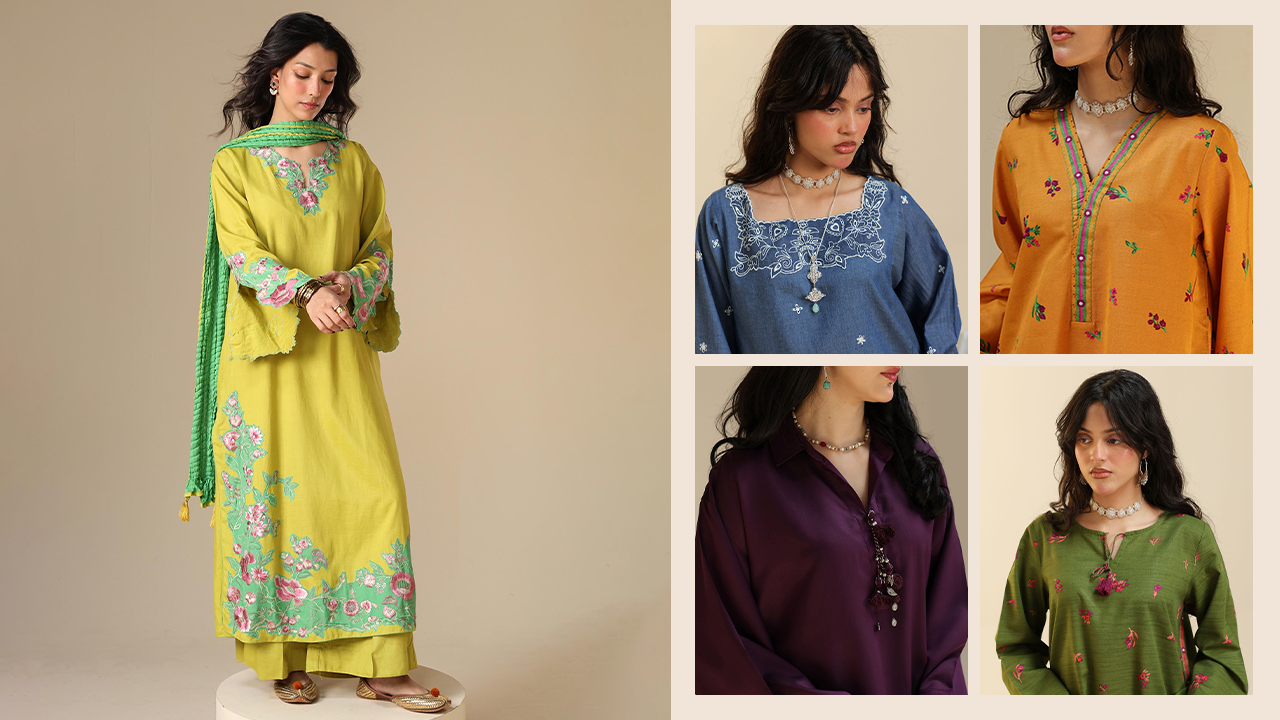
The beauty of eastern wear has never been in its rigidity. It has always been in what happens when someone decides to wear it their own way.
A kurta is not just a kurta. The same embroidered 3 piece that works for a wedding walima can work for a mehndi with different accessories. The same 3 piece dresses that feel formal with a pinned dupatta feel semi-casual with it draped loosely. This flexibility is not modern. It has always been there. We are just paying more attention to it now.
This guide is for girlies with a fashion game. Here is how you do it:
Start With the Bottom Silhouette
Most women start outfit decisions with the kameez and treat the bottom as an afterthought. Reverse this and the whole styling process gets easier.
The bottom silhouette determines literally the whole look, no kidding, for instance:
Balloon shalwar
Relaxed, contemporary, slightly festive without being formal. The 3 piece suit with a balloon shalwar reads as modern Pakistani party wear. Appropriate for a lunch gathering, a semi-formal family event, a mehndi where you want to look dressed without looking over-dressed. Generation’s balloon shalwar pieces in their two-piece range carry this energy well, the volume at the bottom balancing a more structured kameez on top.
Tulip shalwar:
More fitted, more polished. The same kameez over a tulip reads as a step more formal than balloon. Good for functions that require effort but not ceremony.
Farshi shalwar kameez
The silhouette that stops conversations. Floor-length, dramatic, the kind of outfit that earns the walk across a room. Reserve this for occasions that deserve it. A formal 3 piece suit on a farshi shalwar is the full formal statement. Generation carries farshi sets in both printed and embroidered formats for women who want the silhouette in fabrics appropriate for different formality levels.
Straight trouser
The most versatile bottom. Works with almost every kameez length, appropriate across a wider range of occasions than any traditional shalwar format, and the bottom most women feel most comfortable moving in.
The Two-Piece Occasion Range
At the casual end, a 2 piece suits set in a printed cotton or lawn, the kind of piece Generation does consistently well in their printed and solid sub-collections, is the daily wear option that still looks intentional. A 2 piece formal dress in an embroidered cotton karandi with restrained neckline embellishment crosses into semi-formal without needing a heavily worked dupatta to justify the occasion.
2 piece ladies suits in a solid colour with clean lines are the most versatile investment in this category. A solid co-ord in mehndi, navy, or deep teal works at a professional lunch and a casual family function and a daytime occasion all in the same week. The colour does the formality shift, not the embellishment.
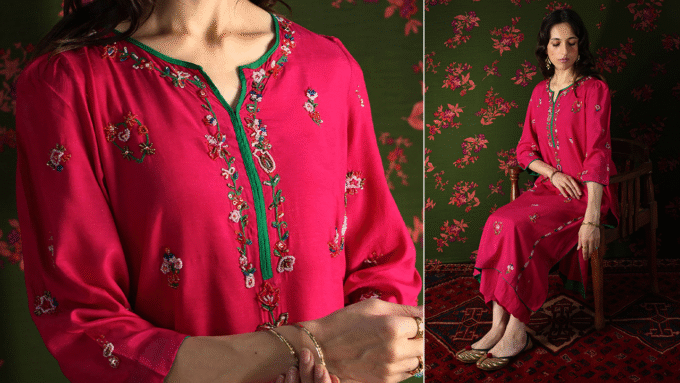
2 piece dresses with embroidery at the cuffs and neckline only, not all over, are the semi-formal sweet spot. Dressed enough to communicate occasion-awareness. Light enough to not feel like you over-dressed for lunch.
The Three-Piece: When to Commit
The 3 piece co ord set format requires a slightly different decision-making process from the two-piece. The dupatta changes the register of the outfit significantly;y, it is not just an accessory, it is a formality signal.
A 3 piece suit worn with a loosely draped dupatta reads as semi-formal to casual occasion wear. The same suit with a properly pinned or styled dupatta reads as full formal. This is the most useful piece of styling information for three-piece suits because it means one purchase covers two distinct formality levels.
For pakistani party wear dresses in the three-piece category, the Chamak Dhamak embroidered ensembles from Generation’s collection are the formal end, the gharara ensembles, the kalidaar silhouettes, pieces where the embellishment is designed to hold its own at a wedding function. These are the pakistani wedding formals dresses options where no styling adjustment is needed because the piece is already doing the full work.
For the middle ground, family gatherings, semi-formal occasions, events that sit between everyday and ceremony , a three-piece in a breathable voile or lawn with a chiffon dupatta is the right format. Light enough to wear comfortably through a full event day. Formal enough to communicate that the occasion mattered.
Ready to Wear: The Practical Reality
Readymade shalwar kameez from a brand that understands proportion, fabric, and construction arrives ready to wear and ready to style. No tailor step between delivery and the occasion.
Women co ord sets in the ready to wear dresses category specifically, where the kameez and bottom are designed together and arrive matched, remove the coordination question entirely. The outfit is resolved before you open the wardrobe.
Ready made dresses from Generation across their two-piece, three-piece, printed, embroidered, and solid sub-collections are all stitched and complete. The embroidered dresses for women in their formal range and the everyday printed and solid sets cover the full occasion spectrum from Tuesday errands to proper wedding functions.
Their full collection is live on their website and in stores across Pakistan. Grab yours now.