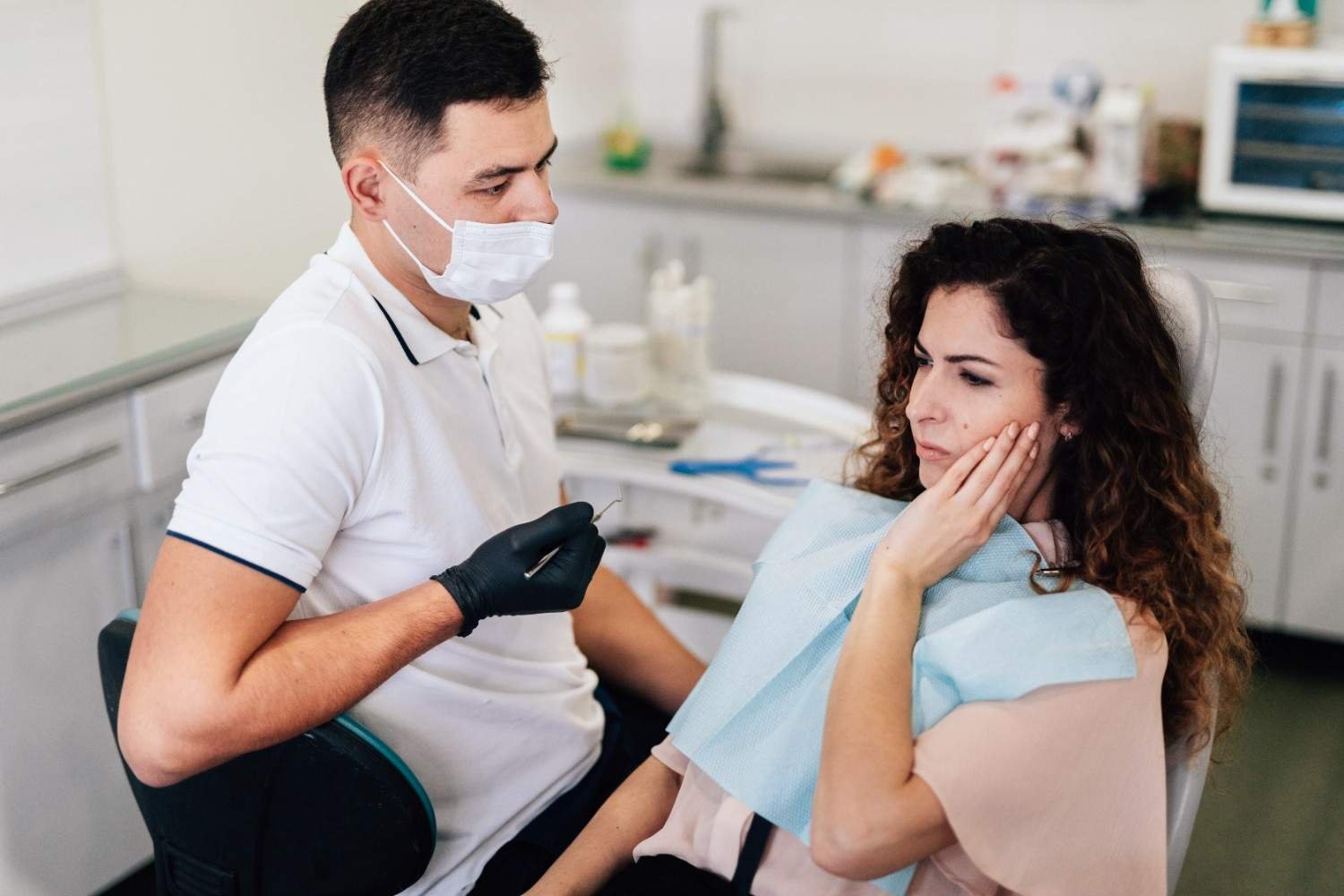
If you have ever woken up with a radiating ache in your jaw, a persistent headache that feels like a tight band around your skull, or a startling “pop” every time you take a bite of your favorite Texas BBQ, you aren’t alone. In fact, according to the National Institute of Dental and Craniofacial Research (NIDCR), temporomandibular joint (TMJ) disorders affect an estimated 5% to 12% of the U.S. population.
Living with chronic jaw pain can be exhausting, impacting everything from your ability to speak clearly to your quality of sleep. Fortunately, for residents seeking TMJ treatment in Taylor, TX, local dental expertise has evolved far beyond basic “wait and see” approaches. Modern dentistry now offers sophisticated, non-invasive solutions that address the root cause of the pain rather than just masking the symptoms.
Understanding the Complexity of the TMJ
The temporomandibular joint is one of the most complex structures in the human body. Acting like a sliding hinge, it connects your jawbone to your skull. It is responsible for a massive range of motion, allowing you to talk, chew, yawn, and laugh.
When this system of bone, cartilage, and muscle falls out of alignment, the results are often debilitating. Research indicates that TMD (the disorder itself) is the second most common musculoskeletal condition after chronic low-back pain, yet it remains one of the most frequently misunderstood.
Common Symptoms of TMJ Disorders
Many patients in Taylor visit a dentist thinking they have a simple toothache, only to find the issue lies in the joint. Keep an eye out for these statistical indicators of TMJ:
- Headaches: Reported by approximately 79% of sufferers.
- Bruxism (Teeth Grinding): Present in about 58% of cases.
- Jaw Popping/Clicking: Affecting roughly 51% of patients.
- Tinnitus (Ringing in the Ears): Experienced by nearly 37% of those with TMD.
How a Dentist in Taylor, TX Diagnoses TMJ
The first step toward relief is a comprehensive evaluation. A dentist in Taylor, TX uses more than just a visual exam to diagnose the severity of your condition. Because TMJ symptoms often overlap with other health issues, a professional diagnosis typically involves:
- Digital Imaging: Using Cone-Beam Computed Tomography (CBCT) or digital X-rays to assess the bony structures of the joint.
- Muscle Palpation: Checking for tenderness in the pterygoid and temporalis muscles, which are often the primary sources of “referred pain.”
- Bite Analysis: Evaluating how your upper and lower teeth meet (occlusion). Even a minor misalignment can place several hundred pounds of pressure on the joint.
Effective Treatment Options for TMJ Relief
One of the biggest misconceptions about TMJ is that surgery is the only answer. In reality, the National Institutes of Health (NIH) emphasizes conservative, reversible treatments as the gold standard. In Taylor, dentists prioritize these non-invasive methods, which boast high success rates.
1. Custom Oral Appliance Therapy (Splints)
The most common and effective treatment offered is the use of a custom-stabilization splint or night guard.
Statistical Insight: Recent clinical reviews suggest that splint therapy is effective for approximately 80% of patients with TMJ disorders.
Unlike over-the-counter guards that can actually worsen the condition by encouraging more clenching, professional splints are precision-engineered. They serve two purposes:
- Decompression: They provide a physical barrier that prevents the jaw from fully clenching, giving the joint space to rest.
- Muscle Reprogramming: By changing the position of the jaw slightly, they help “retrain” the masticatory muscles to stay relaxed.
2. Pharmacological Support
In acute cases, your dentist may prescribe short-term medications to break the cycle of pain. This often includes:
- Muscle Relaxants: To ease spasms that cause the jaw to “lock.”
- Anti-inflammatories (NSAIDs): To reduce swelling within the joint capsule.
- Low-dose Antidepressants: Often used not for mood, but because they have been shown to help control chronic nerve pain in the facial region.
3. Therapeutic Injections (Botox®)
While often associated with aesthetics, Botox has become a revolutionary tool for TMJ treatment in Taylor, TX. When injected into the masseter muscle (the large muscle used for chewing), it partially relaxes the muscle. This significantly reduces the force of involuntary grinding and clenching without affecting your ability to eat or speak.
4. Physical Therapy and Stress Management
The “biopsychosocial” model of TMJ treatment recognizes that stress plays a massive role. In fact, studies from 2026 show a strong correlation (p < 0.001) between high-frequency oral behaviors (like nail-biting or jaw tensing) and levels of anxiety. A Taylor dentist may work alongside physical therapists to provide:
- Jaw Exercises: To increase the range of motion and strengthen supporting muscles.
- Postural Correction: Improving neck and shoulder alignment to reduce strain on the jaw.
Why Prompt Treatment Matters
Ignoring TMJ pain isn’t just uncomfortable; it can lead to permanent damage. Chronic grinding can wear down tooth enamel, leading to fractures and tooth loss. Furthermore, untreated TMJ can lead to degenerative joint disease (osteoarthritis of the jaw), which may eventually require surgical intervention.
By seeking help early, you can manage the condition through simple, reversible means. The goal of modern TMJ treatment in Taylor, TX is to restore your “oral health-related quality of life” (OHRQoL), allowing you to return to your daily routine without the shadow of chronic pain.
|
Treatment Type |
Success Rate (Approx.) |
Primary Goal |
|
Oral Splints |
70% – 85% |
Muscle relaxation & joint protection |
|
Physical Therapy |
60% – 75% |
Improved mobility & posture |
|
Minimally Invasive Surgery |
75% – 84% |
Structural repair (reserved for severe cases) |
Finding Relief in Taylor
You don’t have to drive to a major metropolitan hub like Austin to find high-quality care. A local dentist in Taylor, TX understands the specific needs of the community and provides a personalized, patient-centered approach to jaw health. Whether you need a custom night guard or a complete bite realignment, the technology and expertise are available right here in your backyard.