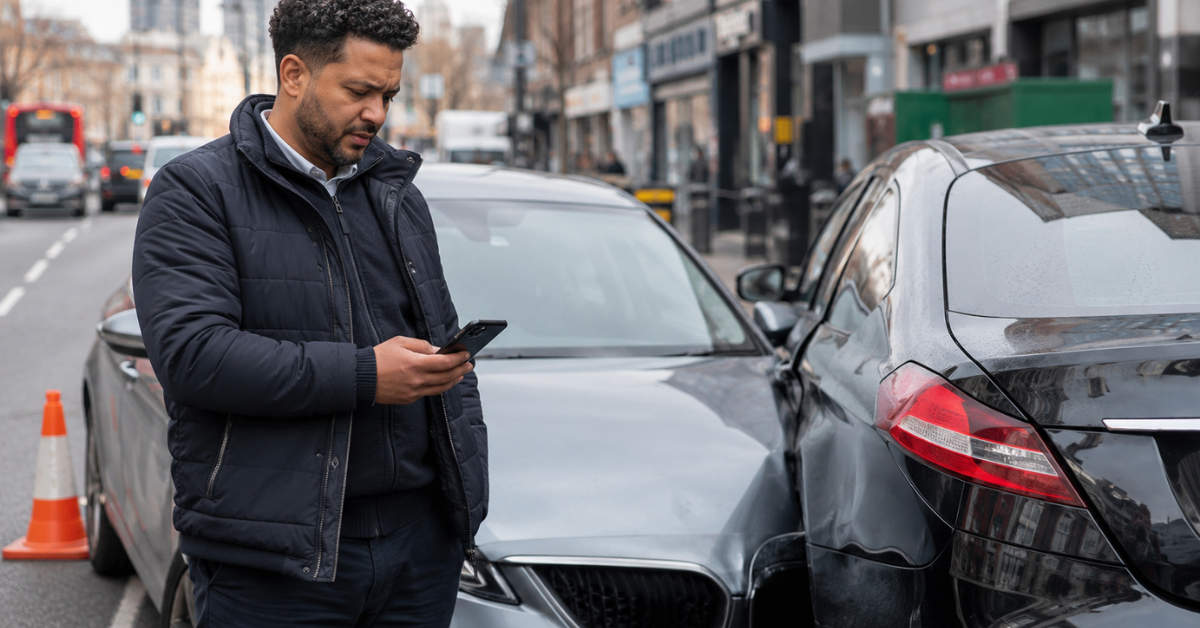
Top mistakes PCO drivers make after an accident often cost more than the crash itself. Your vehicle is your income. One wrong step, a delayed report, a signed credit hire agreement you don’t understand can leave you without a car, without pay, and with a huge bill.
Whether you drive for Uber, Bolt, or Ola, protecting your livelihood starts the moment the collision ends. Before we dive in, know this: a good accident management company can handle your claim and get you a replacement, but only if you ask the right questions first. Otherwise, you could owe thousands.
This guide covers the biggest PCO mistakes and exactly how to avoid them.
1. Delaying the Report | Hours Cost You Pounds
Most PCO policies require you to notify your insurer within 24 hours. Late reporting can void your claim.
Do this: Save your insurer’s emergency number in your phone. Report even minor bumps. A small scratch today could become a dispute tomorrow.
2. Signing a Credit Hire Agreement Without Reading It
This is the first trap. A “free” replacement car often comes with a credit hire contract. If the other driver’s insurer disputes fault, you pay the daily rate often £150–£300. Two months of arguing means a £10,000+ bill.
Do this: Ask directly: “Is this credit hire? What is my personal liability if the other insurer refuses to pay?” If they avoid answering, walk away.
3. Not Checking the Replacement Vehicle’s Licence
TfL (or your local council) sets strict rules: age limits, Euro emissions, and a valid private hire plate. A replacement that looks like a taxi but lacks a licence means you cannot work and you risk a fine.
Do this: Before accepting any car, ask for its registration and check with your council. “Is this vehicle TfL‑licensed and under the age limit?”
4. Forgetting Your Platform’s Rules (Uber, Bolt, Ola)
Uber requires you to report the accident through its app and may demand you use its approved repairer. Bolt and Ola have their own processes. Ignore them, and you could be deactivated.
Do this: Open your driver app immediately after the crash. Follow the platform’s accident reporting steps before calling anyone else.
5. Admitting Fault or Giving Inconsistent Statements
Never say “sorry” at the scene. Even a polite apology can be twisted into an admission of blame. Also, changing your story later even a small detail makes insurers suspicious.
Do this: Exchange details only. Write down exactly what happened (time, location, direction, witnesses) while it is fresh. Stick to those notes.
6. Not Understanding Your Own Policy (At‑Fault vs Non‑Fault)
Accident management companies only help if you are not at fault. If you caused the crash, you cannot use them. Your own policy may offer a courtesy car but with strict caps (e.g., £50/day for 14 days). Third‑party only? You get nothing.
Do this: Read your policy now. Find the “courtesy vehicle” or “hire car” section. Know your limits before you need them.
7. Ignoring Insurance Excess on the Replacement
The replacement car comes with an excess of £500–£1,500. Scratch the bumper, and you pay that amount. Your personal PCO insurance does not cover it.
Do this: Ask the provider: “What is the excess? Can I buy a damage waiver for £5–£15 per day?” Also, photograph the replacement from every angle before driving away.
8. Failing to Prove Lost Earnings
You can claim loss of income, but insurers will not take your word for it. They want hard evidence.
Do this: Download your last 3–6 months of trip history from your Uber/Bolt/Ola dashboard. Calculate your average daily take‑home pay. Submit that with your claim.
Your 6‑Step Action Plan After a PCO Accident
Step 1 – Stop safely. Check for injuries. Call 999 if needed.
Step 2 – Collect evidence. Photos of vehicles, damage, road signs, skid marks. Get witness names and numbers.
Step 3 – Exchange details. Name, reg, insurance provider. If the other driver refuses, call the police.
Step 4 – Report within 24 hours. Call your insurer and report through your platform app (Uber/Bolt/Ola).
Step 5 – Choose help carefully. If you are not at fault, contact a PCO accident management company but ask the credit hire question first. If you are at fault, call your own insurer for their courtesy car.
Step 6 – Keep a digital folder. Store all photos, emails, police reference, and lost earnings proof in one place.
Final Thoughts
Most PCO accident problems come from what you do after the crash, not the crash itself. Delayed reports, credit hire traps, unlicensed replacements, and forgotten platform rules can wreck your income for months.
Stay calm. Follow the six steps. And never sign anything without asking: “What is my personal liability?”
Your vehicle is your business. Protect it like one.