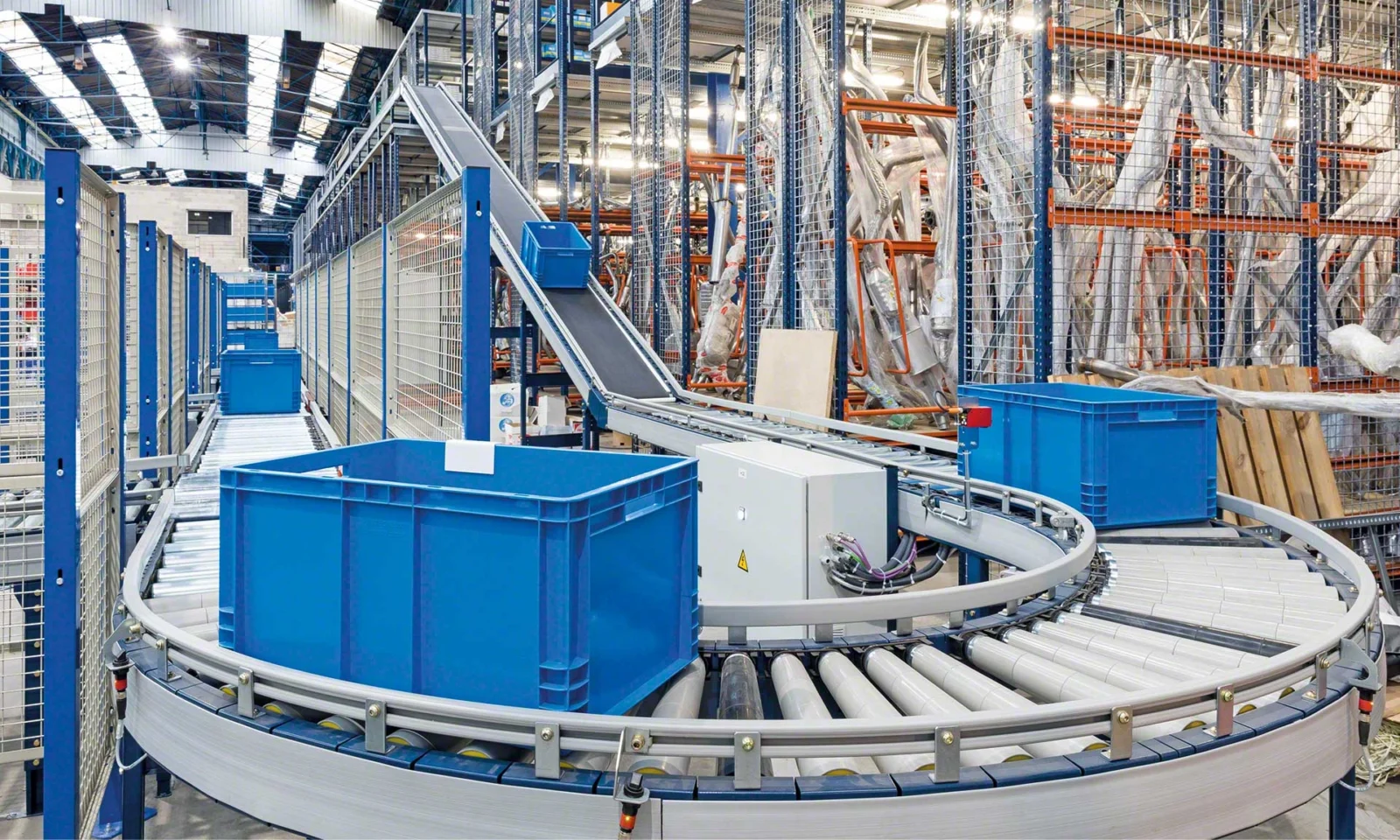
Production and packaging facilities often need to move products between different heights. Cartons travel from ground-level palletizing stations to elevated mezzanines. Components descend from upper-floor manufacturing to ground-level shipping. Raw materials rise from receiving docks to processing equipment mounted on platforms.
Incline conveyors handle these elevation changes mechanically, replacing manual lifting, forklifts, and temporary workarounds that slow operations and create safety hazards.
When Inclines Make Sense
Gravity roller conveyors only move products downward, and only when the product has a flat, rigid bottom surface suitable for rolling. Powered roller conveyors can push products uphill, but steep angles cause round rollers to lose traction against product surfaces. Belt conveyors solve this problem by providing continuous contact between the product and a moving surface that grips without slipping.
The belt surface conforms to product bottoms regardless of shape. Bags, pouches, irregular containers, and items with soft or uneven bases travel reliably on belts but would jam or tumble on roller systems. This makes belt technology the default choice for many packaging applications where product shapes vary considerably from one item to the next.
Incline angles up to approximately 15 degrees work with smooth flat belts. Steeper angles require textured belt surfaces, cleats, or sidewalls to prevent products from sliding backward down the incline. The maximum practical angle depends on product weight, packaging material, and surface friction. Loose items in open containers may spill at angles that work fine for sealed cartons.
Belt Surface Options
Standard conveyor belts feature smooth surfaces suitable for flat-bottomed cartons and cases. Rough-top belts add texture that increases friction for inclines and slippery products. Cleated belts incorporate raised flights at regular intervals that positively push products uphill regardless of surface friction between the product and belt.
Food processing applications require belt materials that meet FDA and USDA requirements for direct food contact. These conveyor belts resist moisture, clean easily, and withstand the sanitizing chemicals used in washdown procedures. White and blue belt colors help workers spot contamination during visual inspection of the production line.
High-temperature applications such as bakeries and heat-treating operations require belts rated for elevated temperatures without degradation. Cold storage applications need belts that remain flexible at low temperatures without cracking or becoming brittle over time.
Selecting the right belt material involves matching product characteristics, environmental conditions, cleaning requirements, and expected service life. Belts are wear items that require periodic replacement, so ongoing availability and cost factor into the initial selection decision made during the planning phase.
Frame and Support Configurations
Belt conveyors consist of more than just the belt. The frame supports the belt path and houses drive components. Slider beds provide a smooth surface beneath the belt for lightweight products. Roller beds reduce friction for heavier loads that would drag on slider surfaces and cause premature wear to the belt.
Incline conveyors need sturdy frames that resist the lateral forces created by loaded belts pulling uphill under tension. Adjustable floor supports accommodate uneven surfaces and allow fine-tuning of belt tension. Transitions at the top and bottom of inclines must align properly with connecting conveyors to prevent jams and product damage during transfer.
Drive motors mount at either the head or tail end depending on application requirements. Head drives pull the belt and work well for most standard applications. Tail drives push the belt and sometimes improve traction on steep inclines with heavy loads. Variable frequency drives allow speed adjustment to match upstream and downstream equipment or accommodate different products throughout the production day.
Integration Considerations
Incline conveyors rarely operate in isolation. They connect lower and upper conveyor runs, feeding products between different process areas or building levels. Proper integration requires matching speeds, widths, and product orientation across all connected equipment in the system.
Transfer points at the top and bottom of inclines deserve particular attention during design. Products leaving an incline must land smoothly on receiving conveyors without tumbling or jamming. Nose bars, transition rollers, and knife-edge transfers minimize the gap between conveyor surfaces at these connection points.
Controls should prevent products from feeding onto inclines faster than the incline can move them. Accumulation backup at incline infeeds causes jams and potential product damage. Photo eyes and zone controls regulate flow so products release only when space exists ahead on the incline.
Facilities planning incline installations should engage equipment suppliers early in the process. Site measurements, product testing, and layout review help identify potential problems before they become expensive corrections during installation or after startup begins.