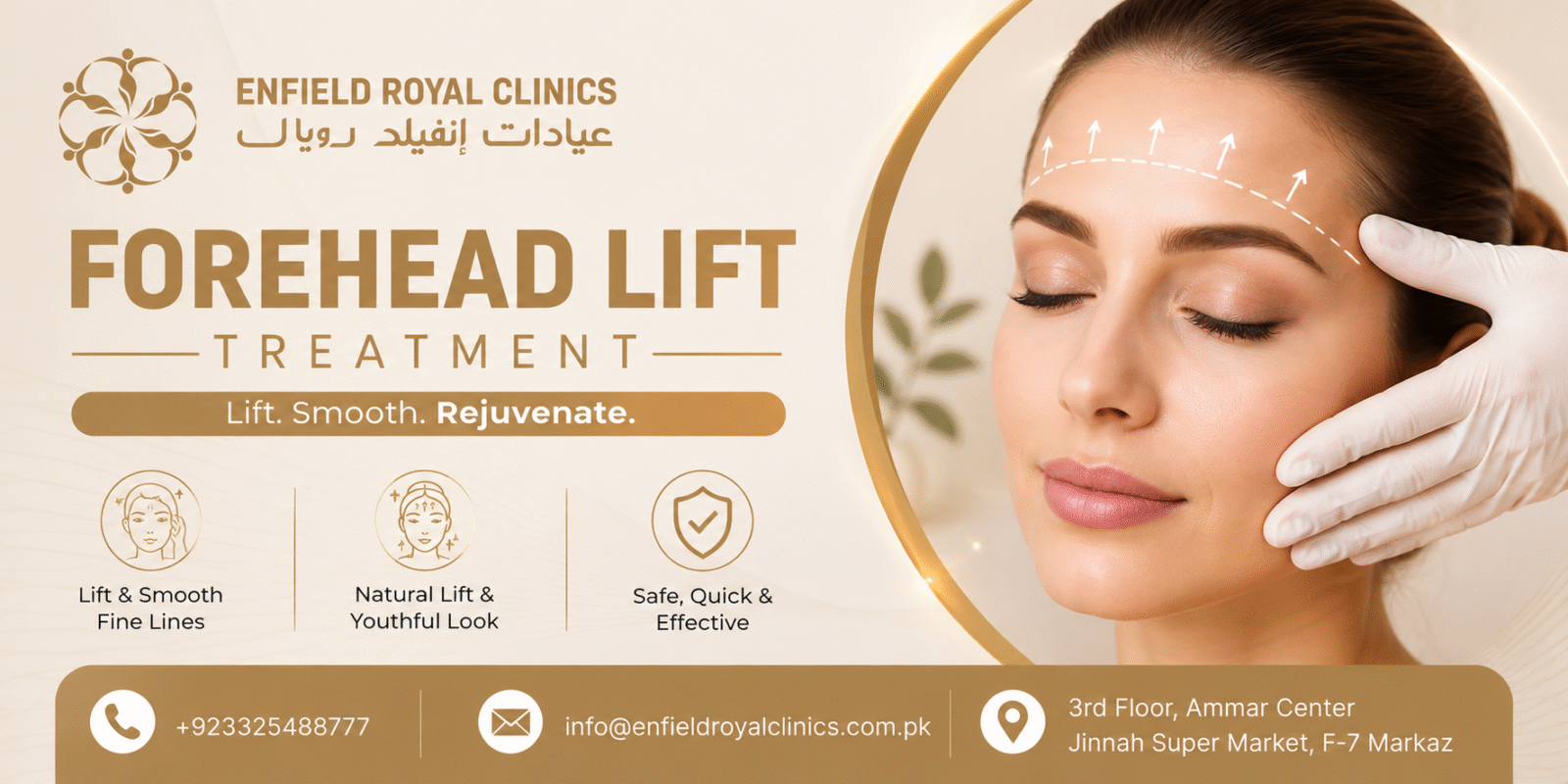
Changes in the forehead and eyebrow area are a natural part of aging. Over time, the skin may become less elastic, the eyebrows can gradually descend, and forehead lines may become more noticeable. Some people may also experience these concerns earlier because of genetics, facial expressions, or individual skin characteristics.
Forehead Lift Treatment can improve the appearance of sagging eyebrows, forehead wrinkles, and loose skin in suitable candidates. However, it is not the right choice for everyone. A professional assessment is important to determine whether the procedure matches your concerns and expectations.
What Does a Good Candidate Look Like?
A good candidate is generally someone who is bothered by visible changes in the upper face and wants a longer-lasting improvement. The person should understand what the procedure can realistically achieve.
Common concerns that may make someone consider a forehead lift include:
- Drooping or heavy eyebrows
- Horizontal forehead lines
- Frown lines between the eyebrows
- Loose forehead skin
- A tired or stressed facial appearance
- Changes in eyebrow position
- Reduced openness around the upper eye area
The procedure may be particularly useful when these concerns are caused by tissue laxity rather than skin texture alone.
Is Age Important for Forehead Lift Treatment?
There is no single age that makes someone automatically suitable for Forehead Lift Treatment. People age differently, and facial structure can vary considerably from one individual to another.
Some people develop noticeable brow descent relatively early, while others maintain a youthful eyebrow position for many years. Instead of focusing only on age, surgeons generally consider the condition of the skin, eyebrow position, facial anatomy, and the patient’s overall goals.
The most important factor is whether the expected benefits of treatment are appropriate for the individual’s concerns.
Can Younger Adults Be Candidates?
Younger adults can sometimes experience forehead or brow concerns because of genetics, facial structure, or naturally low eyebrows. However, surgery may not always be necessary.
If wrinkles are mainly caused by repeated muscle movement and there is little skin or tissue sagging, a non-surgical option may sometimes be more appropriate.
A consultation can help distinguish between concerns that require structural correction and those that may respond to less invasive treatments.
Does Skin Elasticity Matter?
Skin quality plays an important role in the outcome of a forehead lift. People with reasonable skin elasticity may respond well to tissue repositioning.
However, reduced elasticity does not automatically prevent someone from having the procedure. The surgeon can assess how the skin is likely to respond and determine an appropriate technique.
Factors such as sun exposure, smoking, age, and genetics can influence skin quality and healing.
What About Overall Health?
Good general health is an important consideration for elective cosmetic surgery. A candidate should be able to undergo the procedure and recovery safely.
During the consultation, the surgeon may ask about medical history, medications, allergies, previous operations, and other relevant factors. Certain health conditions or medications may require additional evaluation or adjustments before surgery.
Being open and accurate about your health information helps the surgical team plan treatment more safely.
Are Realistic Expectations Necessary?
Realistic expectations are one of the most important parts of becoming a good candidate. A forehead lift can improve certain signs of aging, but it cannot completely stop the aging process or guarantee perfection.
The procedure is intended to enhance facial appearance rather than create an entirely different face.
A suitable candidate understands that individual results vary and is prepared to follow the recommended recovery plan.
Can Men Have Forehead Lift Treatment?
Yes. Men can also develop forehead wrinkles, brow descent, and loose skin and may consider Forehead Lift Treatment when these changes affect their appearance.
The treatment plan for men may differ from that for women because eyebrow shape, forehead proportions, hairline characteristics, and facial anatomy can vary.
The surgeon should consider these differences when planning the procedure to maintain a natural and balanced result.
Is Hairline Position Considered?
The hairline is an important factor when selecting a forehead lift technique. Different surgical approaches may have different effects on the hairline or incision placement.
People with a higher hairline, a receding hairline, or concerns about forehead height may require particularly careful planning.
A detailed assessment allows the surgeon to select an approach that takes these characteristics into account.
Who May Not Be an Ideal Candidate?
A forehead lift may not be appropriate for someone whose main concern can be adequately addressed with a less invasive treatment.
People who expect dramatic or unrealistic changes may also need to reconsider their expectations before proceeding.
Certain medical factors can affect surgical suitability as well. A surgeon may recommend postponing treatment, additional medical evaluation, or an alternative approach when necessary.
Can Non-Surgical Treatments Be an Alternative?
Not every forehead wrinkle requires surgery. Botox and other non-surgical treatments can be useful for selected concerns, particularly when dynamic wrinkles are the main issue.
However, these treatments generally do not reposition significantly sagging tissues. If eyebrow descent or loose forehead skin is the primary concern, a surgical lift may provide a different type of correction.
The best choice depends on the underlying cause of the concern.
What Happens During a Candidate Assessment?
A consultation is an important step before Forehead Lift Treatment. The surgeon evaluates the forehead, eyebrows, eyelids, hairline, skin quality, and facial proportions.
Your aesthetic goals are also discussed. Based on this assessment, the surgeon can explain suitable techniques, expected results, recovery, potential risks, and possible alternatives.
This personalized evaluation is more useful than choosing treatment based solely on age or photographs.
Final Thoughts
A good candidate for Forehead Lift Treatment is generally someone with noticeable forehead or eyebrow aging, suitable overall health, realistic expectations, and a clear understanding of the procedure.
Age alone does not determine suitability. Skin elasticity, eyebrow position, facial anatomy, hairline, health, and individual goals all play a role.
If you are considering a forehead lift, a consultation with a qualified cosmetic surgeon can help determine whether surgery is appropriate for you or whether another treatment may better match your needs.
For more information visit Enfield royal clinic in islamabad