

The shower-drain moment
Most women notice it the same way: more hair than usual swirling around the drain, a thinner ponytail, or a scalp that suddenly shows through under bright light. It is unsettling, and it is also incredibly common. Hair loss is not just a male problem, yet women are often told to stop worrying and wait it out. The truth is that female hair loss almost always has a cause worth finding, and most causes are treatable once you know what you are dealing with.
How much shedding is actually normal?
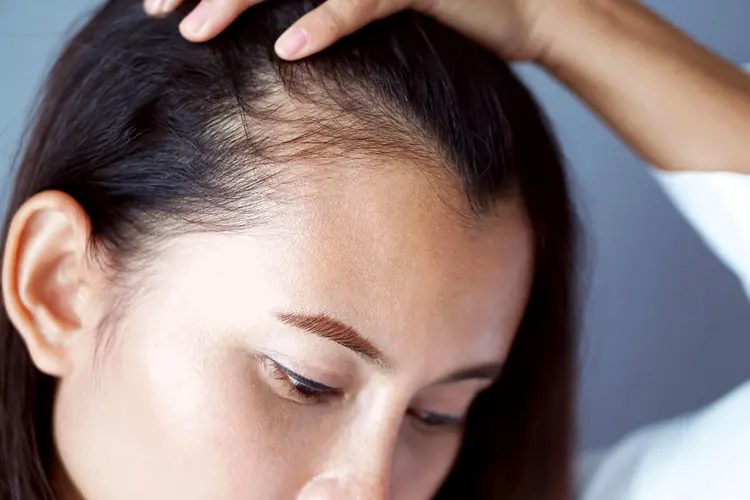
Losing 50 to 100 hairs a day is completely normal. Hair grows in cycles, and a share of your strands is always in the resting phase, ready to fall so new hair can replace it. What is not normal is a widening parting, a ponytail that feels half as thick, clumps on the pillow, or scalp becoming visible at the crown or temples. If you are seeing any of those, it is worth looking closer rather than waiting.
Why women lose hair: the common causes
Telogen effluvium is the most common. A shock to the system, such as a high fever, surgery, childbirth, crash dieting, or severe stress, pushes a lot of hair into the shedding phase at once, usually two to three months later. It is dramatic but typically temporary.
Female pattern hair loss is genetic and gradual. It shows up as a widening parting and thinning over the crown rather than a receding hairline, and it tends to progress slowly without treatment.
Thyroid and hormones matter more than people realise. An underactive or overactive thyroid, and conditions like PCOS, commonly show up in the hair.
Iron and nutrition are frequent culprits in women, especially low ferritin, or iron stores, along with vitamin D and B12.
Tight hairstyles worn daily, such as tight buns, braids and extensions, cause traction hair loss along the hairline, which can become permanent if ignored.
Scarring alopecia is less common but important, because it destroys the follicle for good. It needs a dermatologist quickly, so persistent scalp redness, itching or bald patches should never be brushed off.
The tests that actually help
You cannot treat what you have not diagnosed. A sensible workup usually includes blood tests for ferritin, thyroid, vitamin D and B12, a close look at the scalp and hair under magnification, and occasionally a scalp biopsy when scarring is suspected. This is why guessing with supplements rarely works: the fix depends entirely on the cause.
What works, and what to skip
Treat the underlying cause first. Correcting low iron or a thyroid problem can regrow hair on its own.
Minoxidil is the most evidence-backed topical treatment for pattern hair loss, and it works for many women when used consistently.
In-clinic options such as PRP and GFC use your own growth factors to stimulate follicles, and are useful alongside the basics.
What to skip are expensive shampoos marketed as regrowth miracles, and high-dose biotin unless you are actually deficient, because they rarely change the outcome. A structured hair fall treatment for women in Noida starts by identifying your cause and then combining the right proven options, instead of selling you one product and hoping.
When to see a dermatologist
Book an appointment if shedding is sudden or heavy, if you notice patches or a widening parting, if the scalp is red, itchy or sore, or if there is no improvement after three to six months of self-care. Early, scarring hair loss in particular is a race against time, since follicles lost to scarring do not come back. If you are unsure, a dermatologist can diagnose the type in one visit and start the right plan.
Frequently asked questions
Will my hair grow back? In most cases, yes. Telogen effluvium and nutritional hair loss usually recover fully once the trigger is fixed. Pattern hair loss can be stabilised and often improved with treatment.
Is hair loss after pregnancy permanent? No. Post-partum shedding is classic telogen effluvium and almost always settles within six to twelve months.
Does stress really cause hair loss? Yes. Significant physical or emotional stress is a well-known trigger, usually showing up a couple of months later.
Are supplements enough? Only if you are genuinely deficient. Taking iron or biotin when your levels are normal will not help and can occasionally cause problems.
The bottom line
Hair loss in women is common, and it is rarely a mystery once you test for the cause. The wrong move is to panic-buy serums and wait; the right move is to find out why it is happening and treat that. Get the diagnosis right, start early, and most women see their hair recover or stabilise.