Sugar has traditionally been at the centre of food formulation, providing sweetness, bulk, texture, browning, and mouthfeel. But as product developers respond to changing consumer expectations, many brands are looking for ways to reduce conventional sugar without creating a noticeable gap in taste or product quality.
This shift has increased interest in alternative sweetening ingredients, particularly those that can provide both sweetness and useful functionality.
Moving Beyond Conventional Sugar
Today’s food brands are exploring ingredients that allow them to develop products with lower sugar and fewer calories while maintaining a familiar eating experience.
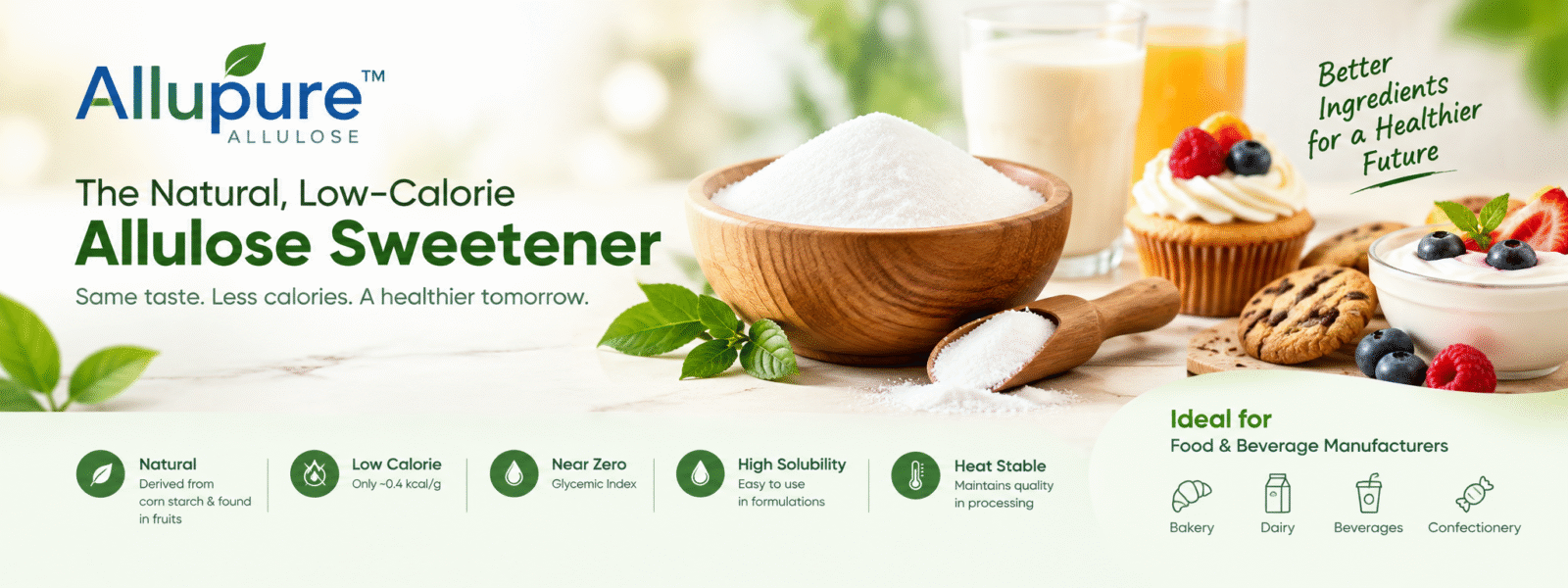
An allulose sweetener is one such option. Allupure™ Allulose is a naturally derived rare sugar made from corn starch. It provides approximately 70% of the sweetness of sucrose while contributing around 0.4 calories per gram.
Unlike a high-intensity sweetener that is primarily used for sweetness, allulose can also contribute to the texture and functionality of a formulation.
What Makes Allulose Different?
The growing interest in natural sweetener allulose is closely connected to the demand for ingredients that fit modern product-development goals.
Allulose occurs naturally in small quantities in certain fruits, while commercial production can use corn starch as its source. It offers a sugar-like taste and can be incorporated into products where manufacturers want to reduce conventional sugar without completely changing the sensory profile.
This makes natural allulose sweetener an interesting ingredient for businesses developing beverages, bakery products, dairy products, confectionery, desserts, and other specialty foods.
A Practical Approach to Low-Calorie Formulation
For many brands, the objective is not simply to eliminate sugar. Instead, they want to manage the amount of sugar and calories in the finished product.
Allupure™ contributes approximately 0.4 calories per gram compared with around 4 calories per gram for sucrose. This difference can be useful when developing lower-calorie formulations.
For manufacturers searching for a low-calorie sugar alternative, allulose can be evaluated across different product formats according to the technical requirements of the final formulation.
It can be considered for beverages, bakery products, frozen desserts, dairy applications, and tabletop products.
The Growing Importance of Clean-Label Formulation
Clean-label positioning has become an important consideration for many food brands. Consumers increasingly want to understand what is included in the products they purchase, encouraging companies to carefully evaluate ingredient choices.
A clean-label sweetener can therefore become part of a broader product-development strategy focused on simpler and more recognizable ingredient positioning.
Allulose is a naturally occurring rare sugar, which makes it relevant to brands exploring naturally derived ingredients for sugar-reduction programs.
Can Allulose Replace Sugar Completely?
The answer depends on the product.
Sugar performs different functions in different food systems. In a beverage, sweetness and solubility may be the primary considerations. In bakery, sugar can influence browning, moisture, texture, and structure. In frozen desserts, freezing behaviour becomes important.
For this reason, allulose is better viewed as a natural sugar substitute that can be evaluated according to the requirements of a specific formulation rather than treated as a universal one-to-one replacement.
Application trials can help manufacturers determine the appropriate usage level and whether additional ingredients are needed.
Allulose and the Search for Better Sugar Reduction
The phrase zero-calorie sweetener is often used by consumers when searching for very low-calorie sweetening solutions. However, it is important to distinguish search terminology from actual product specifications: allulose contributes approximately 0.4 calories per gram rather than literally containing zero calories.
This very low calorie contribution can still make allulose valuable for brands developing calorie-conscious products.
The goal is to achieve meaningful sugar reduction while retaining an enjoyable sensory experience.
Where Can Allulose Be Used?
Allulose can be evaluated in several categories, including:
- Reduced-sugar beverages
- Bakery products
- Cookies and cakes
- Dairy products
- Ice cream and frozen desserts
- Confectionery
- Nutritional products
- Tabletop sweeteners
Its high solubility, heat stability, and functional characteristics make it suitable for different processing environments.
Supporting the Next Generation of Food Products
A natural sugar replacement needs to work within the complete product system. Taste is important, but so are texture, processing performance, stability, appearance, and consumer acceptance.
This is why modern formulation teams increasingly evaluate sweeteners based on their complete functional profile.
Allupure™ Allulose offers a combination of sugar-like taste, low calorie contribution, solubility, heat stability, and browning functionality, providing manufacturers with another tool for developing reduced-sugar products.
Conclusion
The movement toward sugar reduction is changing the way food manufacturers approach sweetener selection. Rather than focusing only on sweetness, brands are considering calorie contribution, ingredient positioning, functionality, and the overall consumer experience.
Allulose provides a versatile option for manufacturers exploring these goals. Its naturally derived origin, sugar-like taste, low calorie contribution, and broad application potential make it worth evaluating across modern food and beverage formulations.
For brands looking to build products around a natural sugar replacement strategy, application-specific testing remains the best way to determine how allulose can work within the finished product.