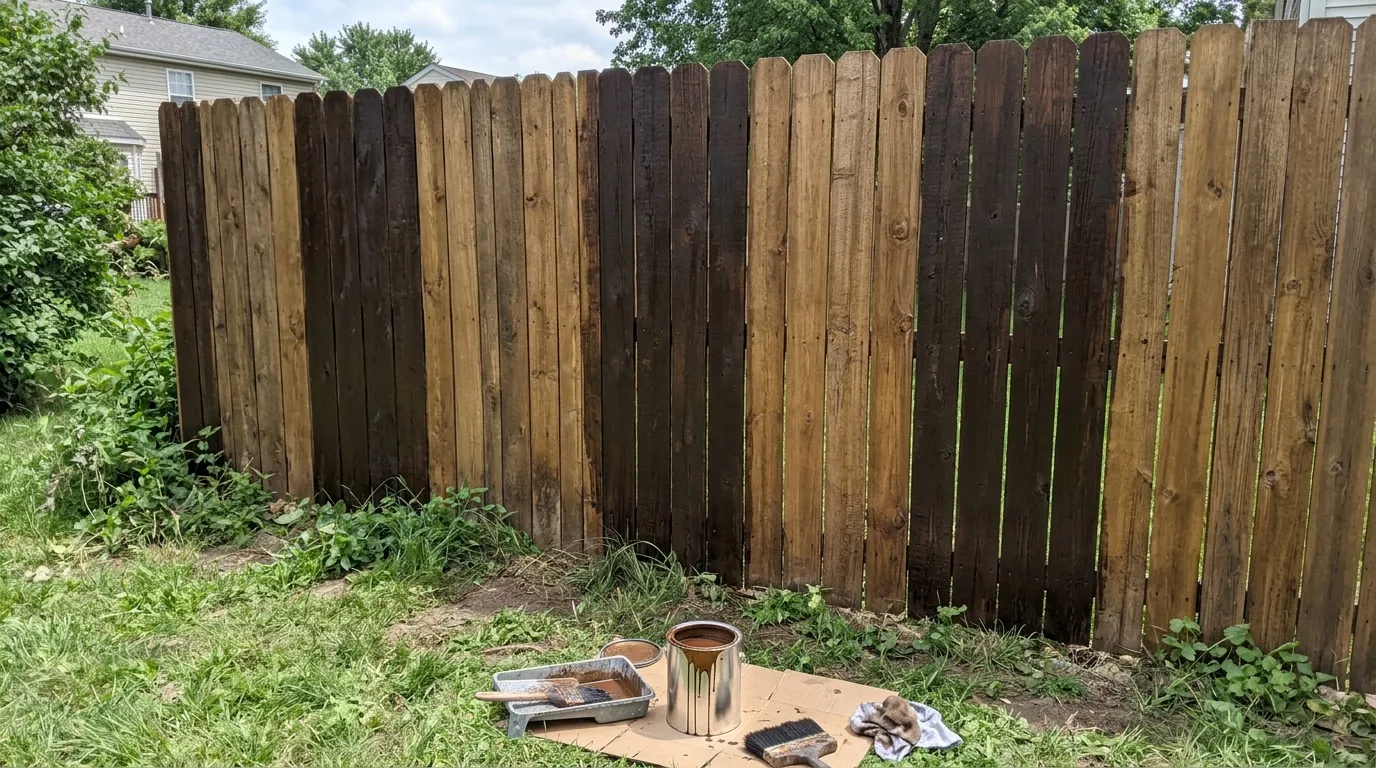
A homeowner in Northeast Ohio finishes staining a backyard fence and expects a consistent wood tone across every panel. Instead, some boards absorb the color deeply while others develop light patches or shiny, darker spots. The difference becomes more noticeable after the stain dries.
Uneven staining is not always caused by careless application. Wood naturally varies in density, grain pattern, moisture content, and surface condition. These characteristics influence how stain penetrates or forms a finish on the surface.
Understanding these factors can help homeowners decide whether the appearance is normal wood variation, a preparation problem, or evidence that the product was applied incorrectly.
Why Do Neighboring Fence Boards Absorb Stain Differently?
Wood is a natural material, and two boards from the same fence can respond differently to the same stain. Growth patterns, knots, grain orientation, and surface density affect the amount of product absorbed.
Some boards contain areas of denser latewood that absorb penetrating stain differently from softer earlywood. Knots and resin-rich sections may also produce noticeable color variation.
The USDA Forest Products Laboratory explains that wood species, surface condition, and weathering influence how exterior finishes perform.
Even pressure-treated lumber can show differences between boards. The treatment process and subsequent drying conditions may create variations in moisture content and surface appearance.
The important distinction is that a penetrating wood stain is not intended to behave exactly like an opaque wall paint. Its appearance often reflects the underlying wood characteristics.
Homeowners who want a highly uniform color may need to consider whether a more opaque compatible finish would better match their expectations.
Can Moisture Cause Blotchy Fence Staining?
Yes. Excess moisture can interfere with stain penetration or adhesion, depending on the product.
New pressure-treated wood may contain significant moisture after manufacturing and installation. Staining it before it reaches the condition required by the coating manufacturer can result in inconsistent absorption.
However, the assumption that every new fence must wait a fixed number of months before staining is unreliable. Drying time depends on wood type, weather, storage conditions, and exposure.
A moisture meter can help evaluate the wood when used appropriately, but the acceptable moisture level should follow the selected stain manufacturer’s instructions.
In Cleveland-area weather, rainfall, shaded sections, and seasonal humidity can cause adjacent fence panels to dry at different rates.
A fence that looks dry on the surface may still contain elevated moisture. Applying stain without checking the material can produce an uneven finish or premature failure.
Why Does Old Stain Affect New Color?
Restaining an existing fence introduces another variable: the condition of the previous finish.
Some boards may have lost most of their earlier stain through sun exposure, while shaded sections retain more coating. Applying a new penetrating product over these different surfaces can create inconsistent color.
Existing film-forming stains may also prevent a new penetrating stain from soaking into the wood. This can leave some sections darker, shinier, or more heavily coated than others.
Before restaining, identify whether the old product is penetrating, semi-transparent, solid-color, or another coating type. The new product must be compatible with the existing material and required preparation.
Simply choosing a darker stain may conceal some color differences, but it will not resolve loose coatings, poor adhesion, or surface contamination.
A small test area can reveal how the new finish behaves before the entire fence is treated.
Does Pressure Washing Improve Stain Absorption?
Cleaning can remove dirt, algae, loose surface material, and weathered residue that interfere with finishing. However, pressure washing must be performed carefully because excessive pressure can damage wood fibers.
A high-pressure stream may leave gouges or raise the grain, creating rough sections that absorb stain differently. Wood that has been aggressively cleaned may also need additional preparation before finishing.
The surface should be allowed to dry thoroughly after cleaning. Product instructions and actual moisture conditions should determine when staining can begin.
For homeowners considering fence staining services, the preparation plan should account for whether the fence is newly installed, previously stained, weathered, or partially coated.
A suitable contractor should evaluate the wood rather than treat every fence as ready for stain immediately after washing.
Proper cleaning should prepare the surface without unnecessarily removing sound material.
Can Applying Too Much Stain Cause Dark Patches?
Penetrating stains are designed to enter the wood to a degree determined by their formulation. When more product is applied than the surface can absorb, excess stain may remain and produce uneven color or a sticky finish.
Some manufacturers require unabsorbed product to be removed after a specified period. Others use different application methods depending on whether the coating is water-based, oil-based, or film-forming.
A common mistake is assuming that applying a thicker coat always provides more protection. Excessive application can interfere with drying and may produce surface defects.
Lap marks can also develop when adjoining sections are treated inconsistently. Working systematically and maintaining a suitable wet edge helps achieve more even results when the product requires that approach.
Always follow the stain’s actual coverage rate and application instructions. The correct technique varies by product.
What Should Homeowners Do With an Already Blotchy Fence?
First, allow the stain to reach the drying stage specified by its manufacturer. Some temporary appearance differences may change as the finish dries.
Next, inspect whether the problem involves uneven wood absorption, excess surface coating, remaining old stain, or other defects.
Do not immediately add another coat to every lighter board. If some surfaces already contain excess material, more stain may worsen the difference.
A practical review should consider:
-
Whether the wood was sufficiently dry.
-
Whether old coating remained.
-
Whether the boards were cleaned consistently.
-
Whether stain pooled or dried unevenly.
-
Whether the product supports recoating.
-
Whether a small correction area can be tested first.
The appropriate remedy might involve cleaning, limited surface preparation, compatible recoating, or accepting natural color differences in a transparent finish.
How Can You Protect the Finish Through Ohio’s Seasons?
Exterior fences experience sunlight, precipitation, freeze-thaw conditions, and changes in wood moisture. No stain eliminates these stresses entirely.
A suitable maintenance plan should focus on drainage, wood condition, and the expected life of the selected finish. Sprinklers should not continually soak the same boards, and vegetation should not trap moisture against the fence.
Inspect exposed tops, horizontal surfaces, and areas near the ground where deterioration may develop sooner.
The next maintenance coat should be planned according to actual condition and manufacturer guidance rather than an assumed universal schedule.
Conclusion
Blotchy fence staining can result from natural wood variation, retained moisture, previous coatings, surface preparation, or excessive application. The best correction depends on identifying which condition caused the uneven appearance. The material property of porosity explains why some surfaces absorb liquids more readily than others. Understanding differences in wood absorption helps homeowners choose realistic finishing expectations and avoid applying additional stain where it cannot be absorbed properly.