It is not possible to predict every event that may occur in the future. Sudden illness, road accidents, natural disasters, or the death of the family’s earning member can affect financial stability. Insurance is a useful financial tool for dealing with such uncertainties. It helps provide financial support in the event of potential loss, thereby reducing the pressure on a family’s savings and financial plans.
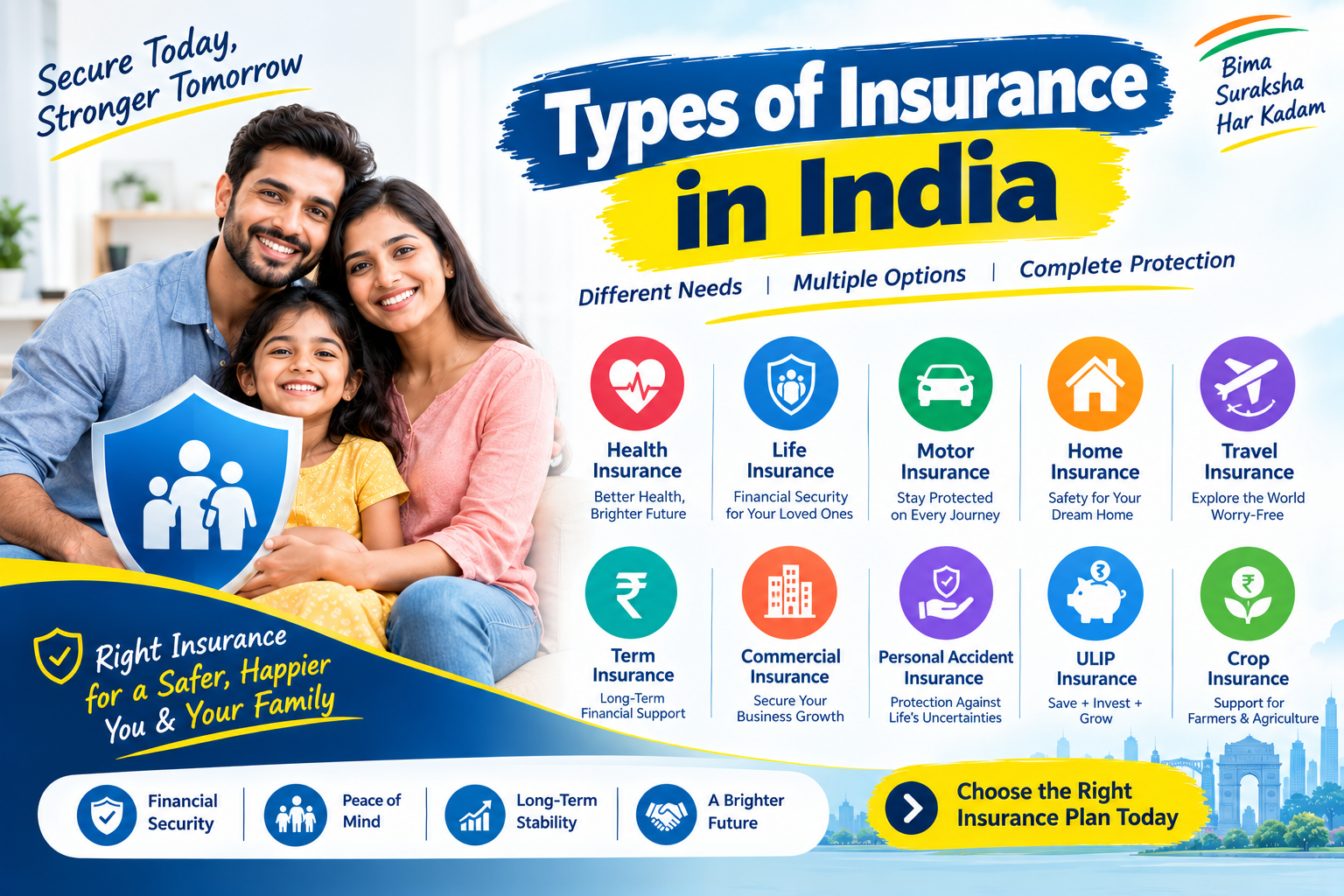
It is important to understand the types of insurance in India because each insurance policy covers a different kind of risk. Some policies are meant to secure the family’s future, while others are related to hospital expenses, vehicle damage, or property loss. Before choosing the right insurance, it is better to know its purpose and coverage.
Major Categories of Insurance in India
Insurance in India is broadly divided into life insurance and general insurance. Life insurance primarily covers financial risks related to a person’s life, while general insurance is available for risks related to health, vehicles, homes, and other assets.
1. Life Insurance
For a person who bears the financial responsibility of the family, life insurance can be an important financial protection option. If the policyholder dies during the policy term, the nominee may receive the insurance amount according to the selected plan and its terms and conditions. This helps the family meet daily expenses, children’s education, and other essential responsibilities.
Term insurance is a major type of life insurance. It provides life cover for a specified period. In addition, some plans may also include savings and investment-related benefits. When choosing a policy, one should consider the sum assured, policy term, and premium.
2. Health Insurance (Health Insurance)
The cost of treatment in a hospital can sometimes affect a family’s budget. Health insurance helps cover medical expenses in such situations, according to the terms and conditions of the policy. It may include hospitalization, surgery, and in some plans, specified expenses before and after hospitalization.
A person can choose an individual health policy or a family floater plan according to their needs. In a family floater, several family members are covered under a shared sum insured. Before purchasing a policy, check the network hospitals, waiting period, co-payment, and the rules related to pre-existing diseases.
3. Motor Insurance
When driving a vehicle on the road, there is a risk of damage due to accidents, theft, and other causes. Motor insurance provides financial protection to car and two-wheeler owners under specified circumstances.
Third-party insurance is mandatory in India for driving a vehicle on public roads. It covers legal liability related to injury to a third party or damage to property. Comprehensive motor insurance may also include certain damages to your own vehicle along with third-party cover. The policy should be chosen according to the vehicle’s age, usage, and requirements.
4. Home Insurance
A home is not just a place to live, but also a major asset for a family. Fire, theft, flood, or other covered risks can damage the house and the belongings inside it. Home insurance can provide financial protection in such events, subject to the terms of the policy.
Some policies cover only the building, while others also provide protection for household contents. Therefore, it is important to understand the coverage, exclusions, and claim process when purchasing a policy.
5. Travel Insurance
During travel, problems such as medical emergencies, flight delays, lost baggage, or trip cancellations may arise. Travel insurance can provide assistance in such situations, depending on the selected plan.
For international travel, coverage for medical expenses and emergency assistance can be especially useful. When choosing a policy, carefully read the rules related to the destination, the duration of travel, and pre-existing health conditions.
6. Personal Accident Insurance
In the event of death or disability due to an accident, a person’s income and that of their family may be affected. Personal accident insurance can provide financial benefits for accidental death and permanent or temporary disability, according to the specified terms and conditions. Some plans also include additional benefits. Before taking coverage, understand which accidents and circumstances are included in the policy.
What should you pay attention to before choosing the right insurance policy?
The decision to buy insurance should not be made by comparing premiums alone. First, understand your financial responsibilities and potential risks. After that, compare the benefits, sum insured, and coverage offered in the policies of different insurance companies.
Carefully read the exclusions, waiting period, deductible, and claim-related rules mentioned in the policy document. Fill in your information correctly and keep the nominee details updated. If needed, seeking advice from an insurance expert can also be useful.
Conclusion
The choice of insurance should be based on a person’s age, family, income, and financial responsibilities. Having knowledge of the types of insurance in India makes it easier to understand the available options for life, health, vehicle, home, and travel insurance. When choosing the right policy, keep in mind not only its benefits but also its terms and limitations. An appropriate insurance plan can help manage financial risk in uncertain situations and prepare better for the future.