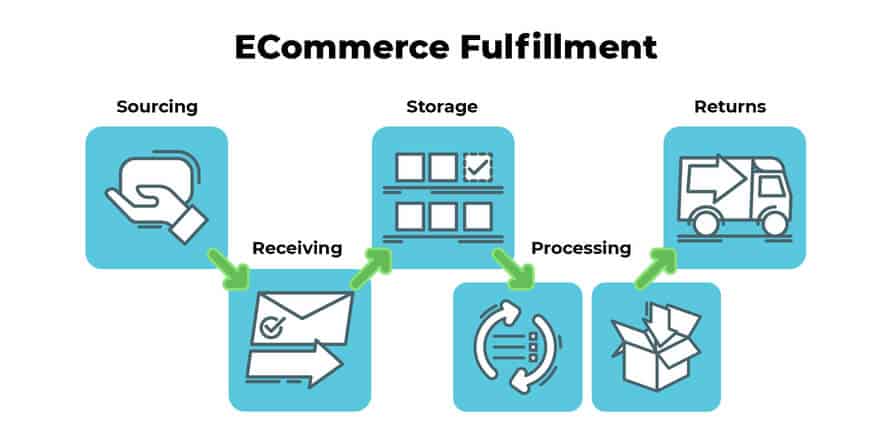
E-commerce has rapidly evolved into one of the most competitive global industries, and fulfillment has become the backbone of this transformation. In 2026, online businesses are no longer judged only by product quality or pricing but also by how fast, accurate, and reliable their delivery systems are. Fulfillment now plays a central role in shaping customer satisfaction, brand reputation, and long-term growth. Businesses that invest in advanced fulfillment systems are gaining a clear advantage over competitors who still rely on traditional methods. Modern fulfillment includes warehousing, inventory control, packaging, shipping, and reverse logistics, all integrated through smart digital systems. As customer expectations continue to rise, companies are forced to rethink how they manage operations and logistics to stay relevant in a fast-paced digital economy.
In addition, customer service expectations have become more complex, especially when handling post-purchase processes. Efficient systems for ecommerce returns management have become essential for maintaining trust and ensuring repeat purchases. In 2026, customers expect hassle-free returns, instant updates, and transparent refund processes. Businesses that fail to optimize this area often face negative reviews and loss of customer loyalty. As a result, fulfillment strategies are no longer limited to shipping products but also include managing the entire customer journey after purchase, including returns, exchanges, and complaint resolution.
The Evolution of E-commerce Fulfillment
Over the past decade, e-commerce fulfillment has shifted from manual warehouse operations to highly automated and data-driven ecosystems. Earlier, businesses managed inventory using basic spreadsheets and manual tracking systems, which often led to delays and errors. However, in 2026, advanced software solutions now allow real-time inventory monitoring, predictive demand forecasting, and automated order processing.
This evolution has enabled even small and medium-sized businesses to compete with larger enterprises. With centralized fulfillment systems, sellers can store products in multiple locations and ship them faster to customers across different regions. This distributed approach reduces delivery time and increases efficiency, making fulfillment a key competitive factor in modern e-commerce.
Technology Driving Modern Fulfillment
Technology has become the driving force behind modern fulfillment systems. Artificial intelligence, machine learning, and robotics are widely used to improve accuracy and reduce operational costs. Automated sorting systems can now process thousands of orders per hour with minimal human intervention.
AI-powered analytics help businesses predict demand patterns, manage inventory levels, and avoid overstocking or stockouts. Additionally, cloud-based platforms allow real-time communication between warehouses, sellers, and delivery partners. This level of integration ensures smooth operations and faster decision-making.
Barcode scanning, RFID tracking, and smart warehouse management systems have also improved visibility across the entire supply chain. These innovations not only reduce errors but also increase transparency, allowing businesses and customers to track orders at every stage.
Enhancing Customer Experience Through Fulfillment
Customer experience has become the most important factor in e-commerce success. Fast shipping, accurate order processing, and reliable delivery directly influence customer satisfaction. In 2026, customers expect same-day or next-day delivery options, especially in urban areas.
Fulfillment systems now focus heavily on personalization and convenience. Packaging is optimized for product safety and branding, while tracking systems provide real-time updates to customers. These improvements help build trust and encourage repeat purchases.
Moreover, businesses that invest in strong fulfillment strategies often see higher customer retention rates. A smooth delivery experience creates a positive impression, which is essential in a highly competitive online marketplace.
Global Shipping and Cross-Border Expansion
One of the biggest transformations in e-commerce fulfillment is the growth of global shipping. Businesses are no longer limited to local markets and can now reach international customers with ease. Advanced logistics networks and partnerships with global carriers have made cross-border shipping faster and more affordable.
However, international fulfillment also brings challenges such as customs regulations, taxes, and delivery delays. To overcome these issues, companies are using localized warehouses and regional distribution hubs. This approach helps reduce shipping times and improves customer satisfaction across different countries.
Global expansion has opened new opportunities for e-commerce brands, allowing them to scale rapidly and access diverse markets.
Challenges in Modern Fulfillment
Despite advancements, fulfillment still faces several challenges. Rising shipping costs, supply chain disruptions, and labor shortages continue to affect operations. Managing returns efficiently is also a major concern for many businesses, especially in fashion and electronics industries.
Data security and system integration are additional challenges, as businesses rely heavily on digital platforms. Any system failure can disrupt the entire supply chain. Therefore, companies must invest in secure, scalable, and flexible fulfillment systems to ensure long-term stability.
Future Outlook of E-commerce Fulfillment
The future of e-commerce fulfillment is expected to become even more automated and customer-focused. Innovations such as drone deliveries, autonomous vehicles, and fully robotic warehouses are already being tested in several regions. These advancements aim to reduce delivery times and operational costs significantly.
Many businesses are also adopting hybrid fulfillment models that combine local warehouses with international logistics networks. A modern US Fullfillment Center plays an important role in this system by enabling faster domestic shipping, better inventory distribution, and improved scalability for global sellers entering the U.S. market. This model is expected to dominate the industry as more companies prioritize speed and efficiency in their supply chains.
As technology continues to evolve, fulfillment will become more intelligent, predictive, and seamless, shaping the future of global e-commerce operations.
Conclusion
E-commerce fulfillment has become a critical factor in determining the success of online businesses in 2026. From automation and AI integration to global logistics and customer-focused strategies, fulfillment systems are transforming how companies operate and compete in the digital marketplace.