Setting up a call center often feels heavy for growing businesses. Traditional systems need hardware space wiring and constant care. Teams must install servers, manage updates and fix issues when they appear. This work takes time and pulls focus away from customer service. Costs also rise as the company adds more agents and lines.
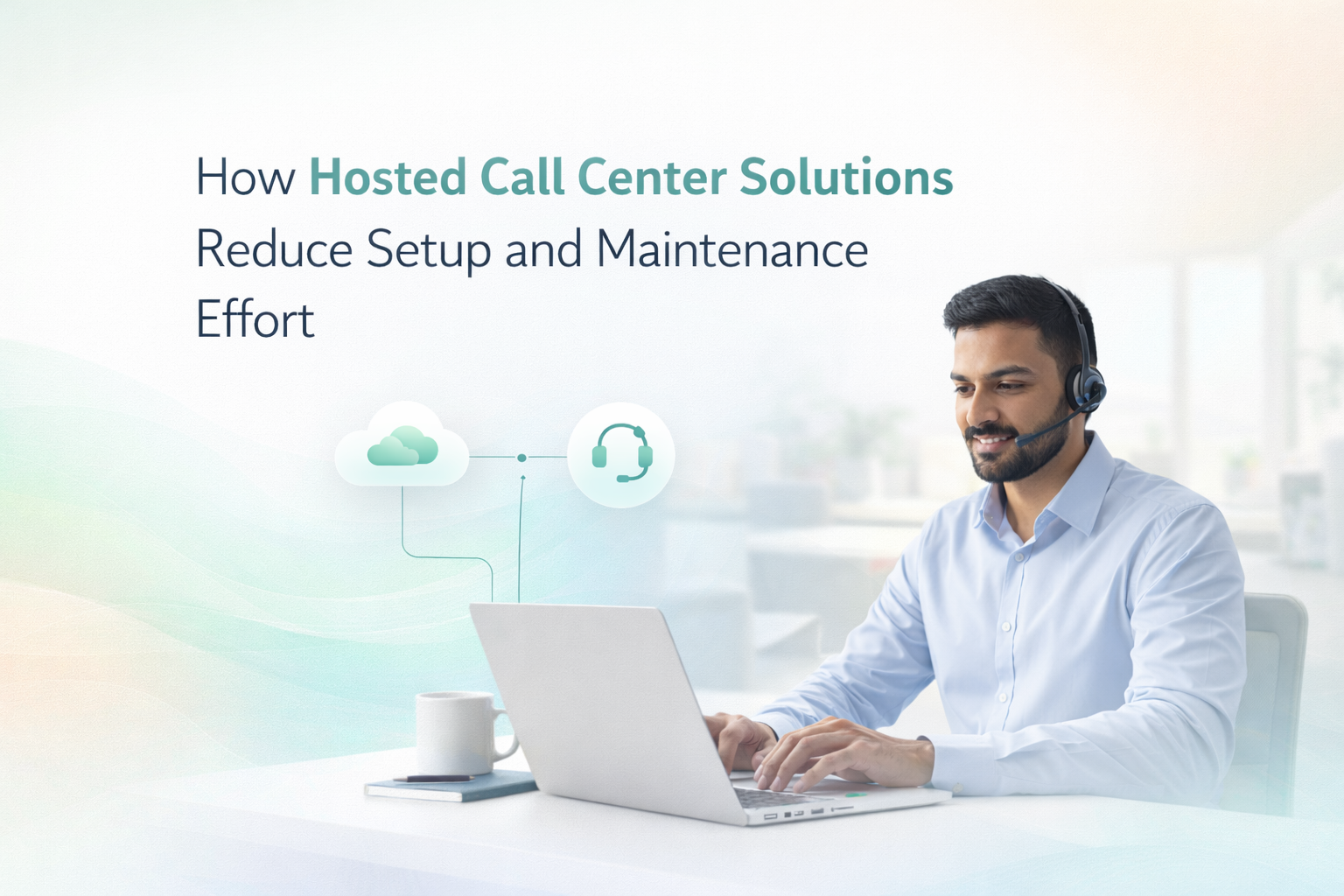
A hosted call center solution changes this approach by moving the system to the cloud. The provider manages server security and updates on remote infrastructure. Businesses access the system through the internet using simple dashboards. Agents can log in from office desktops or mobile devices and start handling calls quickly. This shift reduces setup effort and lowers ongoing maintenance work. It also helps teams stay focused on customers instead of technical tasks.
Simple Setup with Cloud Based Infrastructure
A hosted call center solution removes the need for complex on site installation. There is no requirement to buy servers or build a telecom room. Businesses can start with a stable internet connection and user accounts. The provider handles system deployment in the background which shortens the setup time.
Administrators create agent profiles and assign roles through a web panel. Phone numbers, call flows and extensions are configured with guided steps. Many platforms offer ready templates for inbound call center software and outbound campaigns. This makes the initial configuration faster and easier to manage.
Teams can add features like IVR system, call routing software and auto dialer tools without installing new hardware. Updates appear inside the same dashboard which keeps the setup clean. Because everything runs on remote servers businesses avoid delays linked to physical installation. This allows companies to launch support operations quickly and scale when needed.
Lower Maintenance with Provider Managed Systems
Maintenance is one of the biggest challenges in traditional call centers. Hardware can fail and software requires regular updates and security checks. Companies often need dedicated staff to keep systems running. This increases cost and adds pressure on internal teams.
A hosted call center solution shifts this responsibility to the service provider. The provider manages servers, applies updates and monitors system health. Security patches are handled in the background which keeps the platform safe and stable. Businesses do not need to schedule downtime for upgrades or fixes.
If issues appear the provider resolves them without requiring on site work. This reduces disruption and keeps customer communication active. Because maintenance tasks are handled externally support teams can focus on call quality and customer satisfaction. Over time this leads to smoother operations and fewer technical interruptions.
Easy Scaling for Growing Teams
Growing businesses need systems that can expand without heavy effort. Traditional call centers require new hardware and wiring when adding agents. This process takes time and often interrupts daily work. It also adds cost for equipment and installation.
A hosted call center solution offers flexible scaling through software settings. Administrators can add new users within minutes and assign them to campaigns or queues. There is no need to install new lines or devices for each agent. This makes it easy to support hiring plans and seasonal demand.
Features like call routing software and queue management adjust automatically as the team grows. Businesses can handle higher call volume without changing the core system. Remote agents can also join from different locations which support distributed teams. This flexibility helps companies expand operations without increasing setup or maintenance effort.
Integrated Tools Reduce System Complexity
Many businesses use multiple tools to manage calls, messages and reports. This creates a complex environment that is hard to maintain. Teams must switch between systems which slows down work and increases the chance of errors.
A hosted call center solution brings key tools into one platform. It can include IVR system, call monitoring software, call recording and reporting features. Some platforms also support ticketing system integration and CRM connections. This unified approach reduces the need for separate software.
Agents handle inbound calls, outbound dialing and customer records from a single dashboard. Managers track performance through real time reports without exporting data from different tools. Because the system is integrated there are fewer points of failure. Maintenance becomes easier since updates apply to the entire platform at once.
This setup improves workflow and keeps operations organized. It also reduces the time spent managing multiple systems which lowers overall maintenance effort.
Remote Access Supports Modern Work Models
Work models have changed as many teams now operate from different locations. Traditional call centers depend on fixed office setups which limit flexibility. Managing remote access in such systems can be difficult and costly.
A hosted call center solution supports remote work by design. Agents can log in from any location with a secure internet connection. Calls are handled through softphones or web based interfaces. This removes the need for physical presence in a single office.
Managers can monitor calls, review performance and guide agents through the same platform. Features like call monitoring software and live dashboards provide visibility across the team. This ensures consistent service quality even when agents work from different places.
Remote access also reduces the need for office infrastructure. Businesses can operate with smaller spaces and lower utility costs. This adds another layer of savings while keeping communication strong and reliable.
Consistent Updates and Better System Reliability
Keeping software up to date is essential for security and performance. In traditional setups updates may be delayed due to limited resources or fear of downtime. Outdated systems can create risks and reduce efficiency.
A hosted call center solution ensures regular updates managed by the provider. New features improvements and security patches are applied without disrupting operations. Businesses always use the latest version of the platform.
This leads to better system reliability and fewer unexpected issues. Call quality remains stable and features perform as expected. Providers also maintain backup systems to protect data and ensure continuity. If a problem occurs traffic can shift to backup resources without interrupting service.
Because updates and backups are handled automatically businesses gain a dependable communication system. This reduces maintenance effort and improves long term performance.
Final Thoughts
Building and maintaining a call center can demand time, money and technical effort. Traditional systems require hardware installation, regular updates and constant supervision. These tasks often distract teams from delivering quality customer service.
A hosted call center solution offers a simpler path by moving communication systems to the cloud. It reduces setup effort through quick deployment and removes maintenance tasks by relying on provider managed infrastructure. Businesses can easily integrate tools and support remote teams without added complexity.
For companies that want efficient communication with less operational burden a hosted call center solution provides a practical answer. It keeps systems reliable, lowers maintenance work and allows teams to focus on what matters most which is serving customers well.