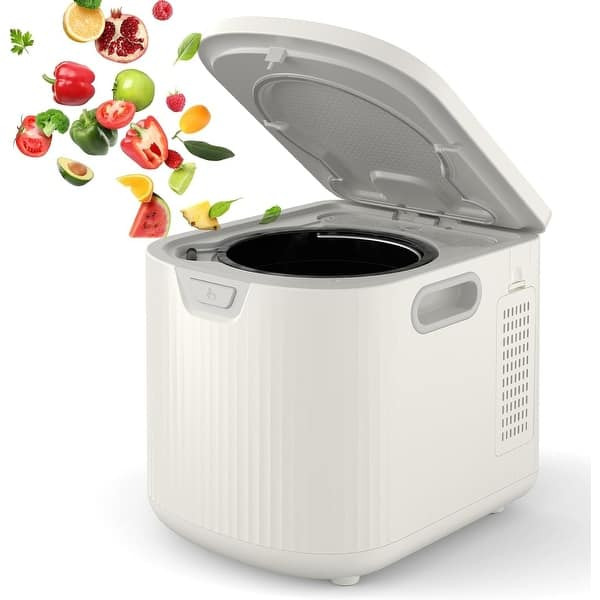
The decision to start composting indoors usually stalls at the same question: what do you do with the finished material if there’s no garden? It’s the most practical barrier for apartment dwellers, condo owners, and anyone whose outdoor space starts and ends at the front door. The composting itself makes sense. Reducing food waste, lighter trash bags, a cleaner kitchen. But if the output has nowhere to go, the whole system feels incomplete.
The good news is that a garden bed is only one of many destinations for composter output, and most of them require zero outdoor space. Here’s where the material goes when there’s no backyard waiting for it.
Houseplants: The Most Immediate Option
Every apartment with a potted plant has a use for compost output. Mix a small amount into potting soil at a 1:10 ratio, the same way you’d add any soil amendment, and it delivers nutrients directly to the root zone without synthetic fertilizer.
Herbs on the windowsill, a pothos on the shelf, a fiddle leaf fig in the corner, succulents on the desk. All of them benefit from the nitrogen, phosphorus, potassium, and calcium that compost output contains. For anyone who has watched houseplants decline slowly despite regular watering, a light application of compost-amended soil can be the missing piece.
A single batch from an indoor composter produces enough material to feed several houseplants for weeks. Even a household with just two or three pots can absorb the output from regular composting cycles without ever running out of places to use it.
Community Garden Drop-Offs
Most cities and many suburban neighborhoods have community gardens that accept home-produced compost. A quick search online or a post in a neighborhood group usually turns up a nearby drop-off point. Some community gardens actively seek compost donations because their beds need continuous amendment and buying commercial compost adds up fast.
The output from an electric composter is dry, compact, and odor-free, which makes it easy to transport in a sealed jar or zip-top bag. Unlike raw food scraps, which smell and leak, processed output travels cleanly and stores well until enough has accumulated for a drop-off.
For composters who produce more than their houseplants can use, a community garden connection turns the surplus into something the neighborhood benefits from rather than something that needs to be stored indefinitely.
Neighbor Sharing
This one is simpler than it sounds. Gardening neighbors, the ones with raised beds in the backyard or tomato plants on the patio, are almost always happy to accept free soil amendment. A jar of finished output with a brief explanation of what it is usually gets a grateful response.
Composting creates a natural connection point with people who garden, and most composters who start sharing output find that the supply never outpaces the demand. Gardeners go through compost and amendments constantly, and a reliable free source is always welcome.
Compost Tea: A Liquid Alternative
For houseplant growers who want to stretch their output further, compost tea is a simple liquid fertilizer made by steeping a small amount of finished compost material in water for 24 to 48 hours. The resulting liquid can be used to water houseplants, delivering nutrients in a form that roots absorb quickly.
A tablespoon or two of output steeped in a quart of water produces enough compost tea for several houseplants. This method makes a small amount of material go a long way, which is ideal for composters who produce more output than their plants need in solid form.
Long-Term Storage
Indoor composter output doesn’t expire the way raw food scraps do. It’s dry, stable, and stores well in airtight containers for months without degrading. A mason jar under the sink, a sealed bag in a closet, or a labeled container on a shelf all work. The material stays usable until a garden opportunity comes along, whether that’s a spring planting project, a friend who gardens, or a move to a place with outdoor space. There’s no rush to use it immediately. The finished material is a bonus that becomes useful whenever the timing is right.