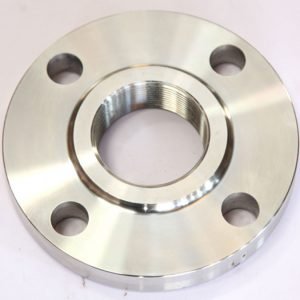
Pipeline systems are designed to operate under constant pressure, fluctuating temperatures, and demanding industrial conditions. While pipes usually receive the most attention, flanges are equally responsible for maintaining the integrity of the entire system. Choosing the right flange material and ensuring accurate machining can significantly influence performance, safety, and service life. That’s the reason why leading stainless steel products manufacturers place equal importance on metallurgy and precision engineering rather than treating them as separate considerations.
Material Selection Forms the Foundation
The material used for the flange determines how effectively it operates throughout the lifecycle. Stainless steel remains one of the preferred choices because it comes with strength, corrosion resistance, and durability across a wide range of operating environments.
Different grades are chosen based on the requirements of projects. For example, a chemical processing plant handling corrosive media requires a different material than a water treatment facility or an oil and gas pipeline. Factors like pressure rating, operating temperature, fluid composition, and environmental exposure all influence material selection.
Selecting an unsuitable grade can lead to corrosion, premature wear, leakage, and expensive maintenance, making material compatibility an important engineering decision.
Precision Machining Ensures Reliable Performance
Even the highest-quality material cannot compensate for poor machining. A flange must be manufactured with exceptional dimensional accuracy to create a secure seal with mating components.
Precision machining directly affects:
- Proper alignment during installation
- Uniform gasket compression
- Leak-free sealing
- Pressure retention
- Reduced vibration and mechanical stress
Minor dimensional variations may seem insignificant during manufacturing but can create operational issues once the pipeline is commissioned. High-precision machining minimises installation challenges while improving long-term reliability.
Material and Machining Work Together
Material quality and machining precision are not independent factors. In fact, they complement one another.
A premium stainless steel grade loses its advantages if the flange face is uneven or bolt holes are misaligned. Likewise, perfectly machined flanges manufactured from an unsuitable material will eventually fail under aggressive operating conditions.
The most dependable pipeline systems achieve a balance between:
- Appropriate stainless steel grade selection
- Accurate forging processes
- Tight machining tolerances
- Thorough dimensional inspection
- Consistent surface finish
This combination enables flanges to withstand demanding industrial applications without compromising safety.
Better Machining Supports Better Sealing
One of the primary functions of a flange is creating a reliable seal. The finish of the flange face directly impacts gasket performance.
Surface roughness that falls outside recommended standards may prevent proper gasket seating, increasing the likelihood of leakage. Precision-machined sealing faces distribute bolt loads more evenly and help maintain sealing integrity even during thermal expansion and pressure fluctuations.
Industries where leaks can result in operational downtime or environmental risks particularly benefit from carefully machined flange surfaces.
Manufacturing Consistency Makes a Difference
Pipeline projects often require hundreds or even thousands of identical flanges. Consistency across every batch becomes essential for smooth installation and dependable operation.
Manufacturers following stringent quality management systems perform multiple inspections throughout production, including raw material verification, machining checks, dimensional measurements, and mechanical testing. This systematic approach ensures every flange meets applicable international standards and project specifications.
Consistent manufacturing also reduces installation delays by eliminating fitment issues between interconnected pipeline components.
Conclusion
Successful pipeline systems depend far more than selecting quality pipes. Flanges perform a vital role in maintaining structural integrity, pressure containment, and operational efficiency. When superior stainless steel material is combined with precision machining, the result is a connection capable of delivering dependable performance for years.
Viraj Profiles, a global leader in stainless steel long products and engineered components, manufactures high-quality flanges backed by advanced manufacturing capabilities, strict quality control, and international standards. As a trusted stainless steel flanges supplier, the company delivers reliable solutions for demanding industrial applications worldwide. Explore Viraj Profiles’ comprehensive stainless steel portfolio to find engineered products that support long-lasting pipeline performance.