Clean drinking water is one of the most important requirements for every household. The quality of water can vary significantly depending on the locality, source, and supply system. In areas where groundwater or borewell water is commonly used, people may experience concerns related to hardness, high TDS, dissolved salts, or other impurities. A suitable water purification system can help make everyday drinking water cleaner and more convenient to use.
Choosing a water purifier should not be based only on price or appearance. Factors such as water quality, family size, daily consumption, storage capacity, filtration technology, and maintenance requirements should also be considered. Understanding these factors can help homeowners select a purifier that matches their specific needs.
Understanding Your Home’s Water Quality
Before purchasing a purifier, it is useful to identify the source of your household water. Municipal water, groundwater, borewell water, and tanker water can have different characteristics. The amount of dissolved solids and other impurities may also vary from one location to another.
A basic TDS test can provide useful information about the dissolved content of water. However, TDS alone does not provide a complete picture of water quality. If there are concerns about specific contaminants, a more detailed water-quality test may be appropriate.
Understanding the water first makes it easier to decide whether RO purification is necessary or whether another filtration method would be sufficient.
Why Consider RO Water Purification?
Reverse osmosis is a purification technology that uses a semi-permeable membrane to reduce many dissolved substances from water. It can be particularly useful for certain types of groundwater and hard water where dissolved solids are a concern.
Unlike a basic sediment filter, which primarily targets suspended particles, an RO system is designed to address dissolved substances. Depending on the purifier, additional filtration stages may also be included to improve the overall treatment process.
For households with unsuitable source water, this type of purification can provide a convenient way to obtain treated water for regular drinking and kitchen use.
Features to Look for in a Water Purifier
When comparing different models, homeowners should look beyond the brand name and consider the features that actually suit their household.
Multi-Stage Filtration
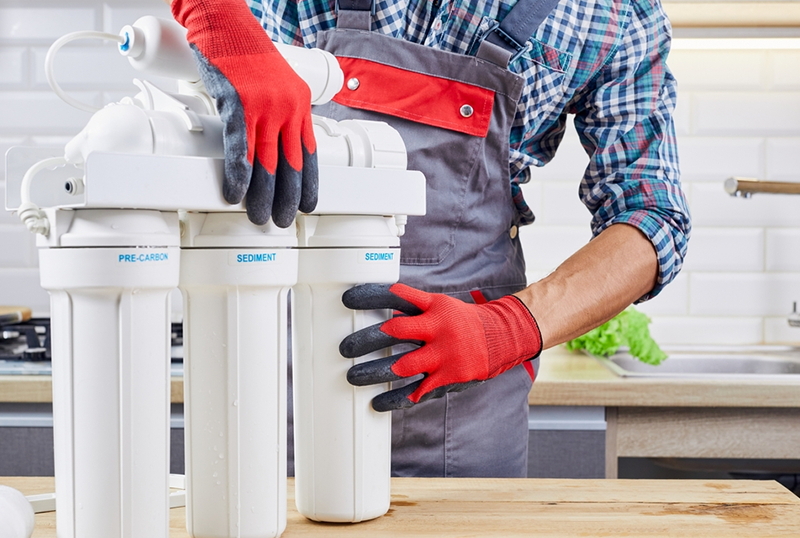
Different filtration stages can perform different functions. Sediment filters may help reduce suspended particles, while other stages can address taste, odour, and dissolved impurities. The exact configuration differs between models.
Storage Capacity
Storage capacity should match the family’s daily requirements. A small household may not need the same capacity as a larger family. Adequate storage can also be useful when water supply is not continuous.
Purification Capacity
Check how much water the purifier can process within a given period. This can help ensure that the system meets your household’s regular drinking-water requirements.
Filter Replacement
Filters and membranes require periodic replacement. Before purchasing, check the approximate replacement requirements and associated costs. Easy access to genuine replacement components can make long-term ownership more convenient.
Service and Warranty
After-sales service is an important consideration. Check the warranty terms, installation support, servicing options, and availability of technicians in your area before making a purchase.
Finding the Right Option for Ghaziabad Homes
For residents searching for the Best Aquafresh RO System in Ghaziabad for Clean Drinking Water, the most suitable choice will depend on their specific water conditions and household requirements. A purifier that works well for one home may not necessarily be the right option for another.
Homes using borewell water may have different purification needs compared with homes receiving municipal water. Similarly, a larger family may require greater storage and purification capacity than a household with only one or two members.
It is therefore better to evaluate water quality first and then compare models according to filtration technology, capacity, maintenance, and overall running costs.
Importance of Regular Maintenance
Installing a water purifier does not eliminate the need for maintenance. Filters gradually accumulate impurities and may become less effective over time. The replacement frequency depends on water quality, usage, and the manufacturer’s recommendations.
Homeowners should pay attention to changes in water taste, odour, flow rate, or unusual sounds from the purifier. Leakage or a sudden change in performance should also be checked promptly.
Regular cleaning of the storage tank and timely replacement of filters can help maintain hygiene and purification performance. Following the manufacturer’s service guidelines is one of the simplest ways to keep the system functioning properly.
Clean Water as Part of a Comfortable Home
A comfortable home involves more than furniture and appliances. Everyday essentials such as clean drinking water, proper sanitation, and reliable household facilities also contribute to a better living environment. This is especially important for families setting up a new home or moving into a new residential area.
Businesses such as The Blessings Matrimonials focus on helping individuals and families take important steps toward building their future, while practical household choices can support a comfortable lifestyle once that new chapter begins.
Final Thoughts
Selecting a water purifier requires a little research, particularly when water quality varies between locations. Homeowners should understand their source water, consider whether RO technology is appropriate, compare important features, and calculate long-term maintenance requirements.
With proper selection, installation, and regular servicing, a suitable RO purifier can provide convenient access to treated drinking water for everyday household needs. Making the decision based on actual water quality rather than simply choosing a popular or expensive model can lead to a more practical and satisfactory result.