
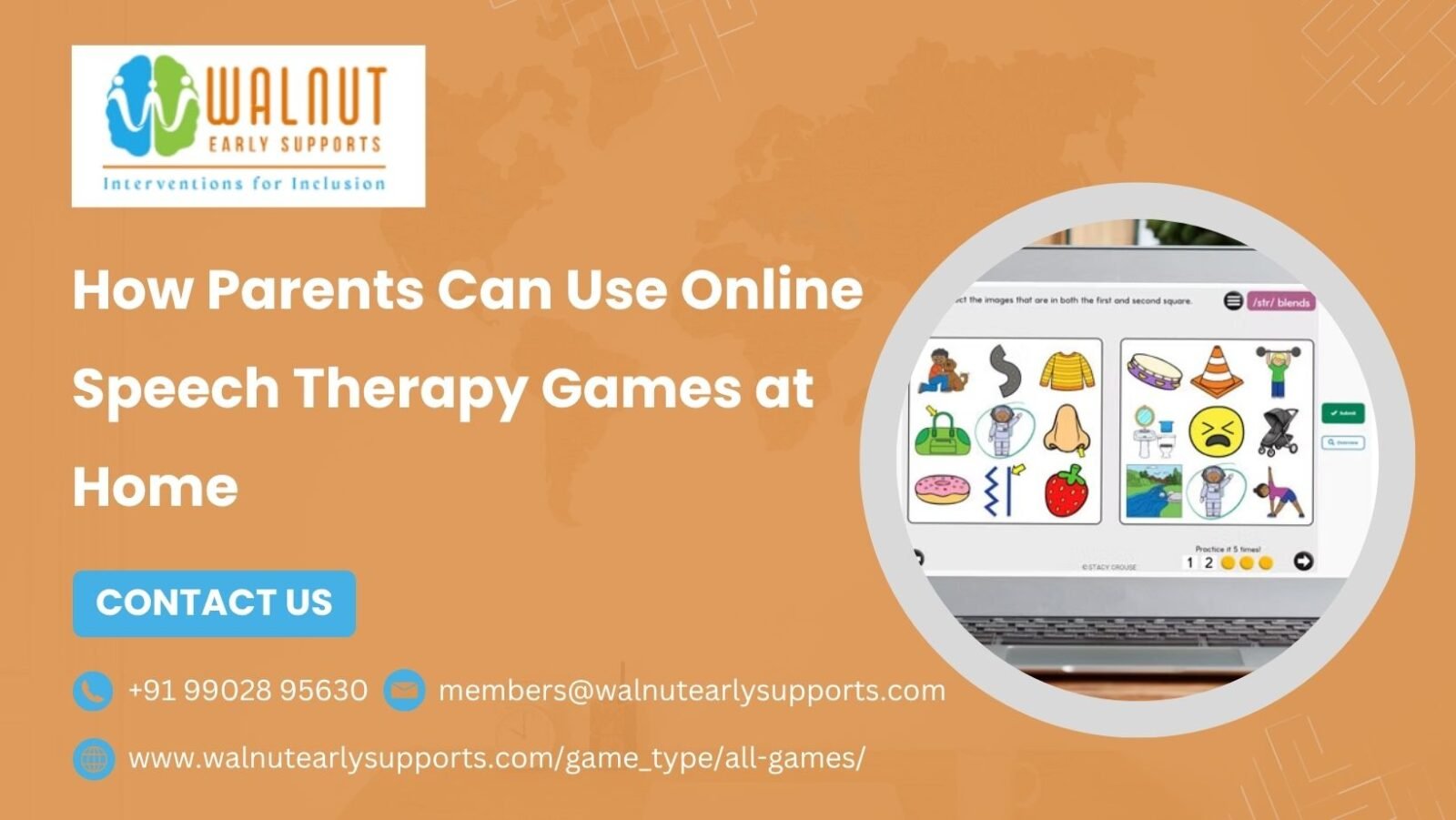
Helping a child practise speech and language skills at home does not have to feel like a formal lesson. Children often learn best when activities are enjoyable, interactive, and connected to everyday life. Online Speech Therapy Games can give parents a simple way to add structured language practice to a child’s daily routine.
When used appropriately, these games can support skills such as vocabulary, listening, comprehension, sentence building, and communication. They can also make practice more interesting for children who may become bored with repeated worksheets or traditional exercises.
Why Use Online Games for Speech and Language Practice?
Regular practice can help children strengthen communication skills over time. However, keeping a child interested during practice can sometimes be challenging.
Interactive activities can give children a reason to listen, respond, identify pictures, answer questions, or use new words. This makes practice feel more like play than a lesson.
Online Speech Therapy Games can be especially useful when they are selected according to a child’s individual needs. A speech-language therapist can recommend suitable activities based on the child’s goals and developmental level.
Parents can then use those activities at home as additional practice between therapy sessions.
Start With a Simple Routine
Parents do not need to spend a long time practising every day. A short, consistent routine can be easier for both the child and the parent.
For example, set aside 10–15 minutes at a convenient time. Choose one activity and focus on one or two communication goals.
A simple routine might include:
- Introduce the target words or skill.
- Play the selected activity together.
- Encourage the child to answer or communicate.
- Repeat difficult words naturally.
- Finish with a short conversation about everyday life.
Keeping sessions positive is important. If a child becomes tired or frustrated, take a break rather than turning practice into a struggle.
Choose Games Based on Your Child’s Needs
Different children need support with different aspects of communication. Some may need help learning new vocabulary, while others may be working on sentence formation or understanding questions.
Parents can look for activities that practise:
- Naming familiar objects and actions
- Following simple directions
- Answering who, what, where, and why questions
- Describing pictures
- Building sentences
- Learning categories
- Understanding word meanings
- Practising everyday communication
Well-designed therapy games for children should encourage active participation rather than simply asking children to watch something on a screen.
Connect Digital Practice With Everyday Activities
Digital practice becomes more meaningful when children use their new skills outside the game.
For example, if a game teaches food-related vocabulary, parents can continue the conversation during mealtime. Ask questions such as, “What are you eating?” or “Which fruit do you like?”
If the activity focuses on describing objects, encourage your child to describe a toy, book, or household item.
This connection between screen-based practice and real-life communication helps children understand when and how to use the skills they are learning.
Make Practice Fun, Not Stressful
Children are more likely to participate when they feel successful. Parents can use encouragement, praise effort, and celebrate small improvements.
Instead of correcting every mistake, model the correct word or sentence naturally. For example, if a child says, “Dog run,” you could respond, “Yes, the dog is running.”
This gives the child a correct language model without making the interaction feel like a test.
Using fun games for speech therapy can also make repetition easier. Children may practise the same vocabulary or sentence structure several times without feeling that they are doing the same exercise repeatedly.
Use Quality Digital Materials
The quality of an activity matters. Parents should choose digital speech therapy materials that are age-appropriate, easy to understand, and connected to meaningful communication goals.
Useful speech therapy resources may include interactive activities, visual prompts, vocabulary tasks, comprehension exercises, and sentence-building practice.
Parents should also consider whether the activity encourages the child to speak, listen, answer, describe, or make choices rather than simply clicking through screens.
Work With a Speech-Language Therapist
Online activities can support home practice, but they should not be viewed as a replacement for professional assessment or personalised therapy.
A speech-language therapist can identify a child’s specific strengths and difficulties and recommend suitable activities. Parents can then use these activities consistently at home and share observations with the therapist.
This teamwork can make home practice more focused and useful.
Making Home Practice Part of Daily Life
The goal of home practice is not to create another demanding task. Instead, parents can use short activities alongside conversations, books, play, meals, and daily routines.
When selected thoughtfully, Online Speech Therapy Games can make structured practice more engaging while giving children additional opportunities to use communication skills.
With patience, encouragement, and consistent practice, parents can create a supportive environment where children feel comfortable communicating and learning at their own pace.