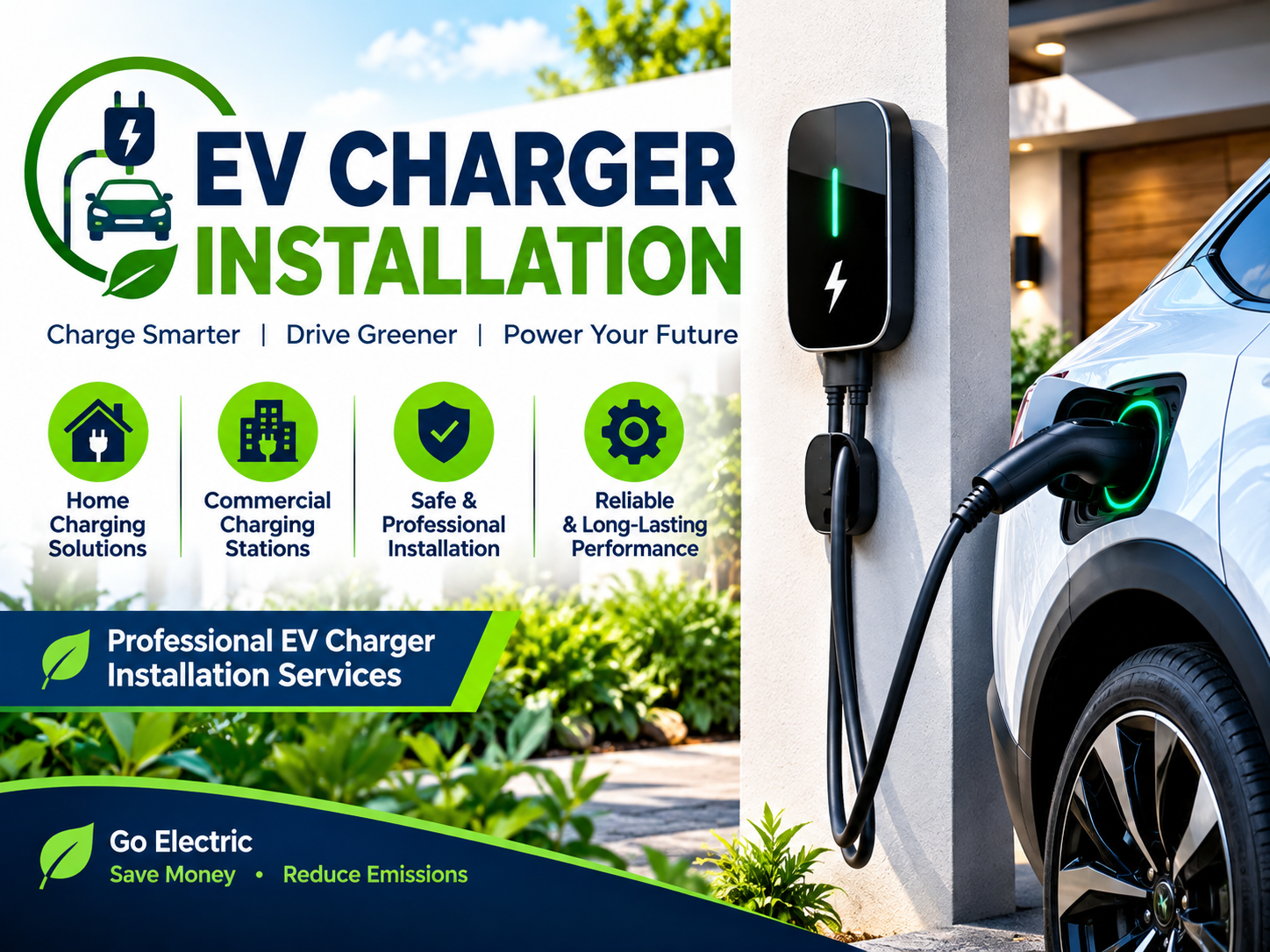
Electric vehicles are becoming a practical choice for many homeowners and businesses. As more drivers switch from gasoline-powered cars to EVs, convenient home charging is becoming just as important as having reliable electricity inside the property. Installing a charger, however, is not simply a matter of plugging a device into an outlet. The electrical system must be evaluated to determine whether it can safely support the charger.
For this reason, many property owners search for an Electrician Near Me when they are ready to install an EV charging station. A qualified electrical professional can inspect the existing system, determine the appropriate circuit requirements, install the necessary equipment, and make sure the charger is connected correctly.
Understanding the installation process can help you make better decisions about charger type, electrical capacity, placement, and long-term use.
What Is EV Charger Installation?
EV charger installation is the process of connecting an electric vehicle charging unit to a property’s electrical system. Depending on the charger and the building, installation may involve a new circuit, breaker, wiring, conduit, disconnects, and other electrical components.
There are several charging options available, ranging from basic portable charging equipment to faster Level 2 systems designed for regular home use.
The right solution depends on factors such as:
- Vehicle charging requirements
- Electrical service capacity
- Available panel space
- Garage or parking location
- Distance between the electrical panel and charger
- Indoor or outdoor installation
- Local electrical requirements
A professional assessment helps determine which setup is appropriate rather than choosing equipment based only on appearance or advertised charging speed.
Why Professional Installation Is Important
EV chargers can place a significant electrical load on a property, particularly when they operate for extended periods. This makes proper installation important for safety and reliability.
An experienced electrician can evaluate the electrical panel, wiring, grounding, breaker capacity, and available service. They can also determine whether the home or commercial building needs an upgrade before a charger is installed.
Improper installation can result in problems such as overheating, nuisance breaker trips, damaged equipment, or other electrical hazards.
Professional installation also helps ensure the charger is positioned correctly and that cables, conduit, and connections are protected from unnecessary wear.
Understanding EV Charger Levels
Before installation begins, it helps to understand the basic charging categories.
Level 1 Charging
Level 1 charging typically uses a standard household electrical outlet. It is convenient because it may not require a dedicated charging installation, although the existing outlet and circuit should still be suitable for the intended use.
This option usually provides slower charging and may work well for drivers with shorter daily commutes or plenty of charging time overnight.
Level 2 Charging
Level 2 charging is a common choice for residential installations. It generally operates on a higher-voltage circuit and can charge an EV significantly faster than Level 1.
Because Level 2 equipment places a greater demand on the electrical system, installation commonly requires dedicated wiring and an appropriately sized breaker.
DC Fast Charging
DC fast chargers are primarily associated with commercial locations and public charging facilities. They can deliver much faster charging than residential systems but usually require substantially greater electrical infrastructure.
For most homes, Level 2 charging offers a practical balance between charging speed and installation requirements.
Does Your Home Need an Electrical Panel Upgrade?
One of the first questions homeowners often have is whether their existing electrical panel can support an EV charger.
The answer depends on the property’s current electrical load and available capacity.
A professional may evaluate the panel rating, existing circuits, major appliances, heating and cooling equipment, and other electrical demands. They may also consider future additions that could increase consumption.
For example, a home with electric heating, an electric water heater, multiple large appliances, and other high-demand equipment may have less available capacity than a property with a lighter electrical load.
If the existing service cannot safely support the new charger, an electrical upgrade may be recommended. This could involve adding capacity, replacing the panel, modifying circuits, or making other improvements.
Choosing the Right Charger Location
Where you place the charger matters almost as much as which charger you choose.
Most residential chargers are installed in a garage, carport, driveway, or other dedicated parking area.
The charger should be positioned so the cable can comfortably reach the vehicle without creating a tripping hazard or being exposed to unnecessary damage.
Outdoor installations require additional consideration. Equipment should be appropriate for the environment, and wiring should be protected from weather and physical damage according to applicable requirements.
A qualified professional can help determine an efficient location based on the electrical panel, parking arrangement, vehicle access, and cable length.
Dedicated Circuits and Electrical Load
A Level 2 EV charger commonly requires a dedicated circuit. This means the circuit is designed specifically for the charging equipment rather than sharing its capacity with unrelated appliances.
Dedicated circuits can improve reliability and help prevent overloading.
The electrician will select wiring and protective equipment appropriate for the charger’s electrical requirements. The circuit must also be installed according to applicable electrical standards and the manufacturer’s instructions.
This is one of the reasons professional planning matters. Simply choosing a charger with a high output rating does not mean every home can safely support it at that level.
Smart EV Chargers and Modern Features
Today’s EV chargers often include features that go beyond basic charging.
Smart chargers may provide mobile-app connectivity, charging schedules, energy monitoring, notifications, and other controls. Some can be integrated with home energy management systems or used to schedule charging during preferred periods.
These features can make charging more convenient, but they still require proper electrical installation.
Before purchasing a smart charger, check whether it is compatible with your vehicle and whether the electrical requirements fit your property.
EV Charger Installation for Businesses
EV charging is not limited to residential properties. Businesses, apartment communities, offices, retail centers, hotels, and other commercial locations are increasingly adding charging stations.
Commercial projects can be more complex because they may involve multiple charging stations, larger electrical loads, longer cable runs, parking lot layouts, networking equipment, and potentially upgraded electrical infrastructure.
A commercial electrical professional can help plan the installation based on expected usage and available capacity.
For businesses, charger placement can also affect customer experience. Stations should be accessible, clearly positioned, and installed in a way that supports safe vehicle movement.
Signs You May Need an Electrical Evaluation
Before installing a charger, homeowners should pay attention to existing electrical issues.
Warning signs may include:
- Frequently tripping breakers
- Flickering lights
- Warm electrical outlets
- Buzzing or crackling sounds
- An outdated electrical panel
- Burning odors
- Limited panel space
- Repeated power interruptions
If these problems exist, it may be better to address them before adding another significant electrical load.
Installing an EV charger on top of an already problematic electrical system can create additional strain.
How the Installation Process Usually Works
A professional installation often begins with a site assessment.
The electrician may inspect the main electrical panel, evaluate available capacity, identify the best charger location, and determine the approximate wiring route.
After that, they can recommend equipment and provide an estimate based on the work required.
Once the project is approved, installation may involve mounting the charger, installing a dedicated circuit, routing wiring, connecting protective devices, and completing the electrical connections.
After installation, the system should be tested to verify that the charger is operating correctly.
The exact process varies depending on the equipment, property, and local requirements.
Permits and Electrical Requirements
Some EV charger installations may require permits, inspections, or other approvals. Requirements vary by jurisdiction.
A professional electrician should know which local requirements apply to the project or help the homeowner understand what must be arranged.
Following the applicable rules is important because electrical installations need to be safe, properly documented, and compliant with local standards.
Homeowners should be cautious about any contractor who suggests skipping required permits or inspections simply to save time.
How Much Does EV Charger Installation Cost?
There is no single price for every installation.
The total cost may depend on the charger itself, electrical panel condition, circuit length, wiring requirements, mounting location, trenching or conduit work, permits, and any necessary upgrades.
A straightforward garage installation may be considerably less complicated than a project involving a long distance between the panel and charger or an electrical service upgrade.
The best way to understand the cost is to request a detailed estimate after a site assessment.
A good estimate should explain what is included rather than presenting only one unexplained total.
How to Choose an Electrician
Choosing the right professional involves more than finding the first company that appears in a search result.
Look for an electrician with relevant experience in EV charger installations and residential or commercial electrical systems, depending on your project.
It is also useful to check licensing and insurance requirements in your area, read customer reviews, and ask for references or examples of similar projects.
When discussing the project, ask about:
- Charger compatibility
- Recommended circuit size
- Panel capacity
- Installation location
- Permits and inspections
- Estimated timeline
- Total project cost
- Warranty information
Clear answers can help you understand whether the proposed installation is appropriate for your property.
Benefits of Hiring a Local Electrical Professional
Searching for an Electrician Near Me can be especially helpful when local knowledge matters.
A local professional may be familiar with regional electrical requirements, permit procedures, common construction styles, and service options in the area.
Local service can also make future maintenance more convenient. If the charger needs troubleshooting, replacement, or electrical modifications later, working with an established provider can make follow-up service easier.
However, proximity should not be the only consideration. Experience, qualifications, communication, and workmanship remain important.
Maintaining Your EV Charger
Once the charger is installed, basic maintenance can help keep it operating properly.
Inspect the charging cable periodically for visible damage, keep the equipment clean, and follow the manufacturer’s recommendations.
Do not use damaged connectors or cables. If the charger repeatedly stops charging, produces unusual sounds, trips the breaker, or shows error messages, have it inspected rather than repeatedly resetting the system.
Outdoor equipment may need additional attention because of weather exposure and physical conditions.
Future-Proofing Your Electrical System
EV ownership may change over time. Some households may eventually have two electric vehicles, add solar panels, install a battery system, or purchase other high-demand equipment.
When planning a charger installation, it can be useful to consider potential future electrical needs.
A professional can help you evaluate whether your current setup provides enough flexibility for future improvements.
Planning ahead may reduce the need for repeated electrical work later.
Common EV Charging Installation Mistakes
Several mistakes can make an EV charging project more difficult than necessary.
One is purchasing a charger before checking whether the electrical system can support it.
Another is choosing a location based only on convenience without considering cable reach, panel distance, weather exposure, or vehicle positioning.
Some homeowners also focus entirely on charger speed and overlook electrical capacity.
Finally, hiring an unqualified person to perform electrical work can create unnecessary safety risks.
A properly planned installation starts with the property, not just the charger.
Final Thoughts
EV charging can make electric vehicle ownership much more convenient, but the installation needs to be approached as an electrical project rather than a simple appliance setup.
Choosing the Electrician Near Me who has experience with EV charging can help ensure that the charger, circuit, panel, wiring, and installation location are properly evaluated.
A professional assessment can also reveal whether your home needs an electrical panel upgrade or other improvements before charging equipment is installed. From choosing the right charger to planning its location and testing the finished system, careful preparation can make a major difference.
The goal is a charging setup that is convenient, dependable, and appropriate for your property’s electrical capacity. With professional installation and sensible planning, an EV charger can become a valuable addition to your home or business for years to come.
Frequently Asked Questions
What does an Electrician Near Me do for EV charging?
An electrician can evaluate your electrical system, determine whether it can support an EV charger, install the required circuit and equipment, and test the completed installation.
Can I install an EV charger myself?
Some basic charging equipment may plug into an existing outlet, but permanent Level 2 installations commonly involve electrical work that should be handled by a qualified professional. Requirements vary by equipment and location.
Does every EV need a Level 2 charger?
No. Some drivers may find Level 1 charging sufficient. The best option depends on daily driving distance, available charging time, vehicle requirements, and the property’s electrical system.
Will my electrical panel support an EV charger?
It may, but this should be determined through an electrical assessment. The electrician can evaluate your current load and available capacity.
How long does installation take?
Installation time varies. A straightforward project may be completed relatively quickly, while a project involving long wiring runs, panel modifications, trenching, or upgrades can take longer.
Can an EV charger be installed outdoors?
Yes, depending on the equipment and installation conditions. Outdoor chargers and electrical components must be suitable for the environment and installed with appropriate protection.
Can a charger be installed in an older home?
Often, yes. However, an older property may require additional electrical work before a charger can be safely installed. The condition and capacity of the existing system should be evaluated first.
Is a dedicated circuit necessary?
Many Level 2 chargers require or are designed to use a dedicated circuit. The specific requirement depends on the charger and installation configuration.
What happens if the breaker keeps tripping after installation?
Repeated breaker trips should not be ignored. Stop using the equipment and have a qualified electrician inspect the charger and electrical circuit to determine the cause.
Can one home support two EV chargers?
Possibly. Supporting two chargers depends on the home’s electrical service, total load, charger ratings, and whether load management or electrical upgrades are required.