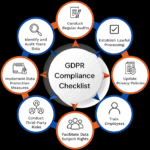
A small business can hold personal data in more places than its owner expects. Customer orders, employee files, appointment calendars, contact forms, and marketing lists all create responsibilities. A useful checklist starts with those actual activities and assigns work to named people, rather than asking whether the business has bought a privacy product. The aim is to make handling information predictable. Staff should understand what they may collect, where it belongs, how long it stays, and what to do when someone asks a question or reports a mistake. A short process that people follow is easier to maintain than an unused manual.
Establish Which Activities Need Attention
First determine how GDPR applies to the business and its activities. Location matters, but it is not the only consideration; offering goods or services to people in the EU or monitoring their behaviour can also be relevant. Avoid assuming that every overseas website is automatically covered simply because someone can visit it. Make an inventory of activities using personal data. Include staff administration and suppliers alongside customers. Record the purpose, information involved, systems used, recipients, and responsible person. This working list gives the business a practical starting point for examining its more detailed obligations.
Reduce Collection Before Adding Controls
Look at every field on forms and ask what decision or service requires it. An optional birthday field should have a clear purpose, and a support request rarely needs unrelated identity documents. Removing unnecessary collection reduces the information the business must protect, locate, and eventually delete. Mobile services need the same scrutiny. Research into gdpr compliance mobile apps should include permissions, analytics libraries, and information transmitted in the background. A clean registration screen does not reveal what an embedded service collects, so someone must examine the app’s actual data flows.
Document the Basis and Explain the Use
Identify an appropriate lawful basis for each processing purpose and record the reasoning. Different activities may rely on different bases. Where consent is used, check that people have a meaningful choice and that withdrawal can be carried through the relevant systems without unnecessary obstacles. Provide clear privacy information at the appropriate point in the journey. Explain purposes, relevant sharing, retention information, and individual rights in language the audience can understand. Check that the notice reflects current practice rather than a template describing systems the business does not use.
Secure Accounts and Working Files
Give employees access according to their duties and remove access when those duties end. Use strong authentication, install security updates, and protect devices that hold business information. Shared accounts make it difficult to establish who changed a record or downloaded a customer list. Review everyday storage habits as well as central systems. A spreadsheet copied to a personal laptop may escape the controls applied to the original platform. Agree where exports may be stored, who may create them, and when they must be removed after their purpose is complete.
Check Suppliers and Data Locations
Identify suppliers that process personal data on the business’s behalf and review the necessary contractual arrangements. Understand what they do, which other providers they use, and how they assist with security incidents and individual requests. A signed agreement should correspond to the service actually being delivered. When comparing gdpr compliant software, ask about access from other countries as well as hosting location. International transfer requirements can depend on the parties and arrangements involved. Obtain appropriate advice where needed instead of treating an EU server location as an answer to every transfer question.
Prepare for Requests and Mistakes
Give staff one clear route for escalating privacy requests. Someone should log the request, assess identity checks, coordinate searches, and monitor the applicable response period. Practise with a fictional customer whose information appears in invoices, emails, and a support platform so missing systems become visible. Set up a similarly clear incident reporting route. Staff should report a lost device or misdirected message promptly, even when they do not know its significance. The responsible person can then assess the facts, contain the incident, and determine whether notification obligations apply.
Keep the Checklist Alive
Set retention rules that distinguish records with different purposes and obligations. Schedule deletion or review, then check that the process works. Keep only justified exceptions, with an owner and a reason, instead of extending retention indefinitely because removal feels inconvenient. For example, separate unpaid invoice records from expired marketing enquiries so an accounting obligation does not become a reason to retain everything. Review the checklist whenever a new service, supplier, or collection purpose is introduced. Record actions with owners and dates, then revisit unfinished work at an ordinary management meeting. Privacy becomes more manageable when it is part of purchasing, hiring, product changes, and customer service, rather than a separate annual paperwork exercise.