Smart Playlists help cannabis dispensaries keep digital promotions aligned with products that are actually available in store. In a fast-moving retail environment, inventory can change throughout the day, making it difficult for staff to keep every screen accurate. When a promoted product sells out, an outdated advertisement can confuse customers and create extra work for employees.
BudSense’s Smart Playlists offer a practical way to manage this challenge. By connecting digital marketing assets to specific products or product groups, dispensaries can display more relevant promotions while reducing the need for constant manual updates. This approach helps retailers maintain accurate messaging, use their digital screens more effectively, and provide a smoother shopping experience.
Why Inventory Accuracy Matters in Dispensary Marketing
Cannabis inventory can change quickly as popular products sell, new stock arrives, and availability differs between store locations. A promotion that was accurate in the morning may no longer reflect what is available later in the day.
When customers see an advertisement for a product that is out of stock, they may need to ask staff for alternatives or change their purchasing plans. Repeated experiences like this can reduce confidence in store promotions.
Inventory-aware marketing helps address this issue by connecting promotional content with product availability. Instead of relying entirely on employees to remove outdated advertisements, dispensaries can use automation to keep promotions relevant to current stock.
How Smart Playlists Connect Products With Promotions
Traditional digital signage often requires staff to manage images, videos, and promotional schedules separately from inventory information. This can create extra steps whenever a product becomes unavailable.
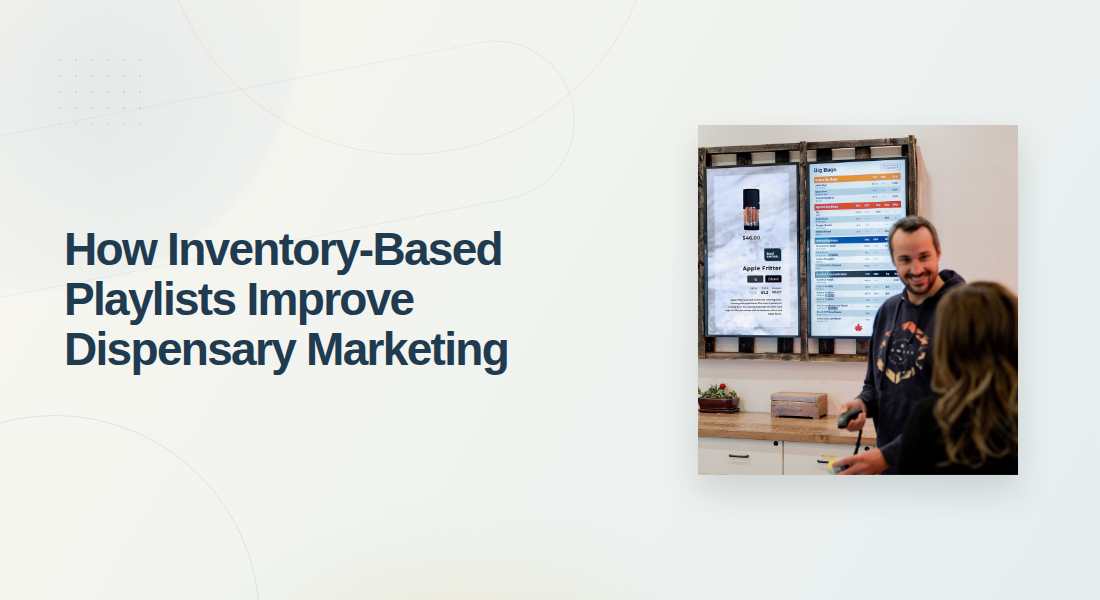
BudSense’s Smart Playlists connect digital marketing assets to specific stock-keeping units (SKUs) or groups of products. According to the BudSense digital signage solution, its system integrates with inventory information so that only in-stock products are promoted.
This connection helps dispensaries prepare campaigns in advance without having to manually remove every affected product from a promotion. When availability changes, the playlist can adjust which promotional content is eligible to appear.
For example, a store could create a campaign for a particular product line. If one item becomes unavailable, its promotion can be excluded until stock returns, helping the screen continue to show relevant content.
Reducing Manual Work for Retail Teams
Dispensary teams already manage customer service, inventory, product displays, compliance procedures, and daily operations. Updating digital marketing assets manually adds another responsibility to an already busy schedule.
Without an automated process, staff may need to check stock levels, locate the relevant advertisement, remove it from a screen, and restore it when the product becomes available again. Repeating these steps across multiple products can consume valuable time.
Inventory-based playlists simplify this process by linking promotional assets to product availability. Staff can spend less time maintaining individual advertisements and more time on customer support, merchandising, and campaign planning.
Automation also reduces reliance on memory and repetitive administrative tasks. Although teams should still review their promotional content and inventory data, they can avoid some of the routine work associated with changing stock levels.
Making Digital Promotions More Relevant
Digital screens can support several marketing goals, from highlighting featured products to communicating daily deals and seasonal campaigns. However, the value of a promotion depends partly on whether the advertised item is available when a customer sees it.
Inventory-based playlists help retailers connect their promotional plans with actual store conditions. Rather than displaying a static set of product advertisements, a dispensary can prepare content for selected products and allow inventory availability to determine which promotions remain eligible.
This creates opportunities to organize campaigns around product categories, individual items, or brand groups. Retailers can prepare creative assets ahead of time while keeping their display strategy connected to current stock.
For the best results, promotional messages should also be easy to read, visually consistent, and appropriate for the store’s audience. Inventory automation supports accurate delivery, while clear design helps customers understand the offer.
Scheduling Promotions Around Customer Traffic
The timing of a promotion can be just as important as its content. A dispensary might want to highlight certain offers during busy periods, feature daily deals at particular hours, or coordinate messaging with a planned campaign.
Digital signage with scheduling capabilities allows teams to decide when specific promotions should appear. BudSense lists scheduled promotions among its digital signage features, giving retailers a way to plan messaging instead of making every change manually.
When scheduling and inventory awareness work together, dispensaries can prepare campaigns ahead of time while keeping product availability in mind. For example, a store could schedule a promotional graphic for an afternoon campaign and connect it to the relevant product. The display strategy becomes easier to manage because timing and stock availability both inform what customers see.
Scheduling does not replace the need to review campaign details. Retailers should still check offer dates, pricing, and any applicable restrictions before promotions go live.
Supporting Marketing Across Multiple Locations
Managing digital promotions becomes more complicated when a business operates several dispensaries. Each location may carry different products, experience different sales patterns, or have its own promotional priorities.
A campaign created for one store may not be suitable for every other location if stock levels vary. Manually adapting every screen can also create extra work for marketing teams and increase the chance of inconsistencies.
BudSense Digital Signage Pro includes multi-location functionality and bulk actions, helping operators deploy digital promotions across stores. Its Smart Playlists approach can keep promotion eligibility connected to the inventory available at each location.
This gives central marketing teams a way to plan consistent campaigns without assuming every store has identical stock. Teams can maintain shared branding and campaign messaging while allowing product availability to influence which promotions appear locally.
For growing retail groups, this combination of central planning and inventory-aware displays can make campaign management more scalable.
Improving the Customer Experience
In-store marketing should help customers understand what a dispensary offers without creating confusion. Clear, current promotions can make it easier for shoppers to notice featured products and ask informed questions.
Inventory-based playlists contribute to that experience by reducing the likelihood that screens continue promoting unavailable items. Customers are less likely to spend time asking about an advertised product that has already sold out, while employees may face fewer repetitive questions about outdated promotions.
Accurate signage also supports trust. Customers may not know how a dispensary manages its inventory or digital displays, but they notice when information appears reliable. Keeping promotional content aligned with stock availability is one practical way to make the shopping journey more consistent.
Digital promotions should complement, rather than replace, helpful staff interactions. Employees can still guide customers, explain product information, and suggest alternatives when a preferred item is unavailable.
Best Practices for Inventory-Based Digital Marketing
To get the most from inventory-based playlists, dispensaries should combine automation with a clear promotional process.
- Keep inventory data accurate: Review the systems and processes that feed product availability information into digital signage.
- Use relevant creative assets: Match each promotion to the correct product, SKU, or product group to avoid misleading associations.
- Plan schedules in advance: Set campaign timing around store priorities, offer periods, and expected customer traffic.
- Review promotions regularly: Check that creative content, pricing, dates, and terms remain correct.
- Consider each location’s stock: For multi-store operations, avoid assuming that every location carries the same products.
- Track campaign performance: Where suitable reporting is available, assess customer engagement and sales trends to help guide future promotional decisions.
These steps help retailers get more value from automation while maintaining oversight of their marketing. A playlist can respond to inventory changes, but the broader campaign still benefits from thoughtful planning and regular review.
For cannabis retailers seeking a more organized way to manage in-store merchandising, BudSense provides digital tools designed around dispensary operations. Connecting promotional planning with inventory-aware workflows can help teams maintain consistent messaging while reducing some of the effort involved in day-to-day updates.
Final Thoughts
Inventory-based playlists offer cannabis dispensaries a practical way to connect digital marketing with real store conditions. By linking promotional assets to product availability, retailers can reduce outdated advertisements, limit manual maintenance, schedule campaigns, and coordinate messaging across locations.
The biggest benefit is not simply putting promotions on screens. It is making sure those promotions remain relevant to the products customers can actually purchase. With accurate inventory data, well-planned creative content, and regular campaign reviews, dispensaries can use digital signage to support more reliable communication and a smoother in-store experience.
Frequently Asked Questions
1. What are inventory-based playlists?
Inventory-based playlists are digital signage playlists that connect promotional content to specific products or product groups. Their display eligibility can change according to product availability.
2. How do Smart Playlists help cannabis dispensaries?
They help dispensaries promote products that are in stock, reduce manual updates, and keep digital marketing more closely aligned with current inventory.
3. Can inventory-based playlists reduce staff workload?
Yes. By automating certain changes linked to product availability, they can reduce repetitive tasks involved in removing or restoring promotional content. Staff still need to review campaigns and data accuracy.
4. Can dispensaries schedule digital promotions?
Digital signage systems such as BudSense support scheduled promotions. Retailers can plan when selected content appears, while inventory-aware playlists help keep product promotions relevant.
5. Are inventory-based playlists useful for multi-location dispensaries?
Yes. They can help marketing teams coordinate campaigns across stores while accounting for differences in local inventory. Multi-location tools can also reduce the effort needed to deploy shared promotional content.