
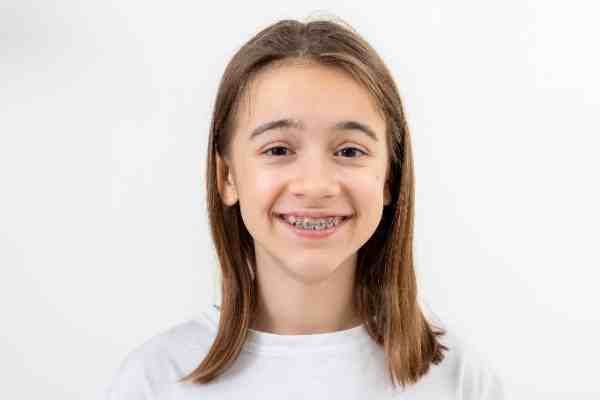
It usually happens at the bathroom mirror, or when the school photos come home. Your child grins, and you notice it for the first time. A front tooth coming through at an angle. A gap that seems to be getting wider. Teeth that look like they are fighting for space.
And then the question pops into your head: are we looking at braces?
It’s one of the most common worries parents have, and it’s completely understandable. The good news is that you don’t need to have the answer yourself. You just need to know what to look out for, and when it’s worth getting a professional opinion.
Why age 7 is a good time for a first look
Seven might sound young to be thinking about braces. Most kids still have a mouth full of baby teeth at that age.
That’s exactly why it’s useful. Around this time, the first adult molars and front teeth are usually coming through, and the jaws are still growing. A dentist can get a good sense of how the bite is developing and whether there’s enough room for the adult teeth still on their way.
An early check doesn’t mean early braces. For most children, the answer at seven is simply “let’s keep an eye on it”. But if something does need attention, finding out early can give you more options, and sometimes a simpler path later on.
The signs worth noticing
You know your child better than anyone, and many of the early clues are things you’ll spot at home. Keep an eye out for:
- Crowded or overlapping teeth, or adult teeth coming in behind baby teeth
- Large gaps between teeth that don’t seem to be closing
- Front teeth that stick out noticeably. These are also more likely to be chipped in a fall or at sport.
- Teeth that don’t meet when your child bites together, such as top teeth sitting behind the bottom ones, or a gap between the front teeth when the back teeth are closed
- A jaw that shifts to one side when they bite down
- Baby teeth falling out very early or very late, compared with their friends
- Trouble biting into or chewing food
- Thumb or finger sucking that continues once the adult front teeth are coming in
- Regular mouth breathing or snoring
Seeing one of these doesn’t automatically mean your child needs braces. Kids’ mouths change a lot as they grow, and some things sort themselves out. But they are all good reasons to mention it to your dentist.
It’s not only about looks
A straight smile is lovely, but it’s rarely the only reason a bite is checked. Teeth that are crowded can be harder to brush and floss properly, which can make decay and gum problems more likely. Teeth that stick out are more prone to injury. And a bite that doesn’t line up can put uneven pressure on teeth and jaws over time.
It’s worth saying, too, that some children feel self-conscious about their teeth, even if they never say so. Sometimes the first sign is a child who has stopped smiling in photos.
What happens at a bite check
If you’ve been worried about this, the appointment itself is usually much more relaxed than parents expect. The dentist will look at your child’s teeth and how they bite together, and may take X-rays or photos to see the adult teeth that haven’t come through yet.
From there, there are generally three possible outcomes:
- Everything looks on track, and the bite is simply checked again at future visits.
- Something is worth monitoring, so the dentist keeps a closer eye on it as your child grows.
- Treatment may help, either now or once more adult teeth have come through. In some cases, your child may be referred to a specialist orthodontist.
When braces or aligners are recommended, treatment usually starts somewhere between about 10 and 14, once most of the adult teeth are in. Every child is different, though, so timing is always worked out case by case.
A quick note on cost
Orthodontic treatment is a significant investment for most families, so it helps to plan early. If you have private health insurance, check whether your extras cover includes orthodontics. Many policies have a waiting period before you can claim, sometimes 12 months or more, so it’s worth looking into well before treatment might begin.
It’s also completely reasonable to ask for a written treatment plan and a full cost estimate before making any decisions, and to take your time thinking it over.
So, what should you actually do?
If your child is around seven or older and hasn’t had their bite looked at, mention it at their next check-up. You don’t need a special referral, and it doesn’t need to be a big deal.
For families in Bacchus Marsh, Melton, Ballan and the surrounding towns, a dentist in Bacchus Marsh can check your child’s bite during a routine visit and explain the options, without a trip into Melbourne. If anything needs specialist input, they can point you in the right direction.
Most importantly, try not to stress. Plenty of kids go through a slightly crooked stage on the way to a perfectly healthy adult smile. A quick check simply means that if something does need a hand, you’ll know about it in good time.