Why Smart Lawyers Rely On An Expert Witness Finder Early On
AI OverviewAn expert witness finder is a resource attorneys and litigation teams use to locate qualified professionals, such as engineers, surveyors, or forensic specialists, who can provide sworn testimony and technical analysis in a legal case. It connects specific case needs, like a construction dispute, an accident reconstruction, or a boundary conflict, with someone who has direct field experience and can hold up under cross-examination. |
Introduction
Engineers and lab technicians rarely think about courtrooms until a project ends up in one. A boundary line gets challenged. A structural failure gets investigated. A construction defect turns into a lawsuit. Suddenly, the field notes, the survey data, and the site documentation that once seemed routine become evidence. And evidence only holds weight if someone credentialed can explain it under oath.
This is where most technical teams get caught off guard. They wait until the case is already moving before they start looking for testimony support, and by then, options are limited, and timelines are tight. An expert witness finder solves this exact problem by connecting legal teams with the right technical expert before the pressure sets in, not after.
The Real Cost of Late Expert Testimony
When a legal team waits too long to bring in technical support, the consequences show up in ways that are hard to reverse. Evidence collected without expert oversight can get challenged on procedure alone, regardless of how accurate the underlying data is. A surveyor’s field notes might be solid, but if no credentialed expert reviewed the methodology before the deposition stage, opposing counsel will use that gap.
Courts are strict about chain of custody and technical validation, and a rushed expert witness finder search two weeks before trial rarely produces someone who can speak to the full history of a project. Lawyers who understand this build their technical bench early, long before a case reaches discovery, because the alternative is scrambling to find someone credible while the clock runs out.
Building a Case With Technical Evidence
Technical evidence carries weight in court only when it is presented by someone who can defend it under scrutiny. This is true whether the case involves a property line dispute, a construction defect, or an accident reconstruction. Raw data, no matter how accurate, needs a human translator who understands both the field work and the legal standards for admissibility.
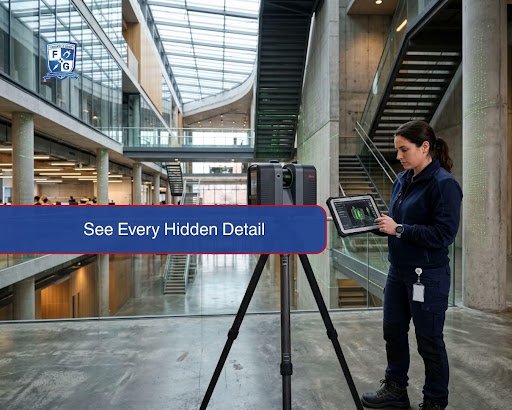
This is exactly where 3D laser scanning building technology has changed the conversation. A scan captures millions of data points across a structure or site in a matter of hours, creating a record that is far harder to dispute than a handwritten survey. But even this level of detail still needs an expert who can walk a jury through what the scan actually shows.
Why Site Documentation Matters More Than Ever
Older cases often relied on photographs and manual measurements, which left room for interpretation and error. Modern litigation increasingly leans on 3D laser scanning building data because it removes much of that ambiguity, giving both sides a shared, measurable starting point for argument.
Choosing the Right Expert for Your Case
Not every technical expert fits every case, and this is where a lot of legal teams underestimate the search process. A structural engineer with decades of experience in commercial buildings may not be the right fit for a residential boundary dispute. A land surveyor who works exclusively in rural counties may struggle with the zoning complexity of a dense urban project. Matching expertise to case type is not optional; it is the difference between testimony that holds and testimony that gets picked apart.
Legal teams using an expert witness finder typically look for a few specific qualities before moving forward:
- Direct field experience in the exact discipline the case requires
- A history of testimony that has survived cross-examination
- Familiarity with local codes, jurisdiction, and regional standards
- Clear, accessible communication that a jury can actually follow
- Availability that matches the case timeline without last-minute conflicts
Once these boxes are checked, the expert becomes more than a name on a report. They become a voice the jury trusts, which is often the deciding factor in technical disputes that would otherwise come down to competing paperwork.
3D Laser Scanning and Litigation Data
Laser scanning has moved from a construction planning tool to a courtroom asset over the past several years. A single scan can document a site’s exact conditions at a specific moment, which becomes critical when disputes arise months or years later about what actually existed at the time. In accident reconstruction cases, this level of detail can show sightlines, obstructions, and spatial relationships that photographs alone cannot capture with the same accuracy.
The data itself is only half the story, though. Courts still require someone to interpret the scan results and explain their relevance to the specific legal questions at hand. This is why teams pairing 3D laser scanning building output with an experienced technical witness tend to build stronger, harder-to-challenge cases than those relying on scan data alone.
Where Scanning and Testimony Intersect
A scan without context is just a file. A scan explained by a credentialed expert, someone who can connect the data to the legal standard the case depends on, becomes evidence a jury can actually use.
Mistakes Engineers Make in Site Documentation
Even experienced professionals fall into a few common traps when documentation later becomes part of a legal case. These mistakes are rarely intentional, but they still create openings for opposing counsel.
- Failing to date and timestamp field data consistently
- Skipping chain of custody documentation for physical samples
- Assuming raw data will speak for itself without expert interpretation
- Waiting until litigation starts to organize project records
- Not looping in legal counsel early enough to flag potential disputes
The fix is not complicated, but it does require a mindset shift. Treating every significant project as if it could one day face legal review, and keeping documentation organized from day one, saves enormous time and cost later. It also makes the eventual search for technical testimony far smoother, since the records are already in a usable state.
Where Technical Expertise Meets Legal Strategy
Litigation involving land, construction, or accidents rarely comes down to a single piece of evidence. It comes down to how well that evidence is organized, explained, and defended. Engineers and lab technicians who understand this reality tend to keep better records, ask better questions, and flag potential legal exposure long before a dispute becomes a lawsuit. Pairing strong technical work, including 3D laser scanning and building documentation, with early legal coordination is what separates cases that settle quickly from ones that drag on for years.
Smart lawyers already know this, which is exactly why they start the search for technical support long before a filing deadline forces their hand.
Final Thoughts
Legal outcomes involving technical disputes rarely hinge on luck. They hinge on preparation, and preparation starts with having the right expert lined up before anyone else even realizes the case will need one. Much like professionals who work with firms such as Ferrantello Group for land surveying, flood mapping, and construction documentation, legal teams that build technical relationships early give themselves room to work through complications calmly instead of reacting under pressure. An expert witness finder is not a last-resort tool. It is a planning tool, one that rewards the teams who use it before they think they need it.
Frequently Asked Questions (FAQs)
1. What does an expert witness finder actually do?
It connects attorneys with qualified technical experts who can provide credible, court-ready testimony for a specific case type.
2. When should a legal team start using an expert witness finder?
As early as possible, ideally before discovery, so the expert can review evidence and documentation from the start.
3. How does 3D laser scanning building data help in litigation?
It provides a detailed, timestamped record of site conditions that is harder to dispute than photographs or manual notes alone.
4. Can any engineer serve as an expert witness?
No, the expert needs direct experience in the specific discipline and a track record of testimony that holds up under cross-examination.
5. Does technical data replace the need for expert testimony?
No, data still needs a credentialed expert to explain its relevance and defend it in front of a judge or jury.