


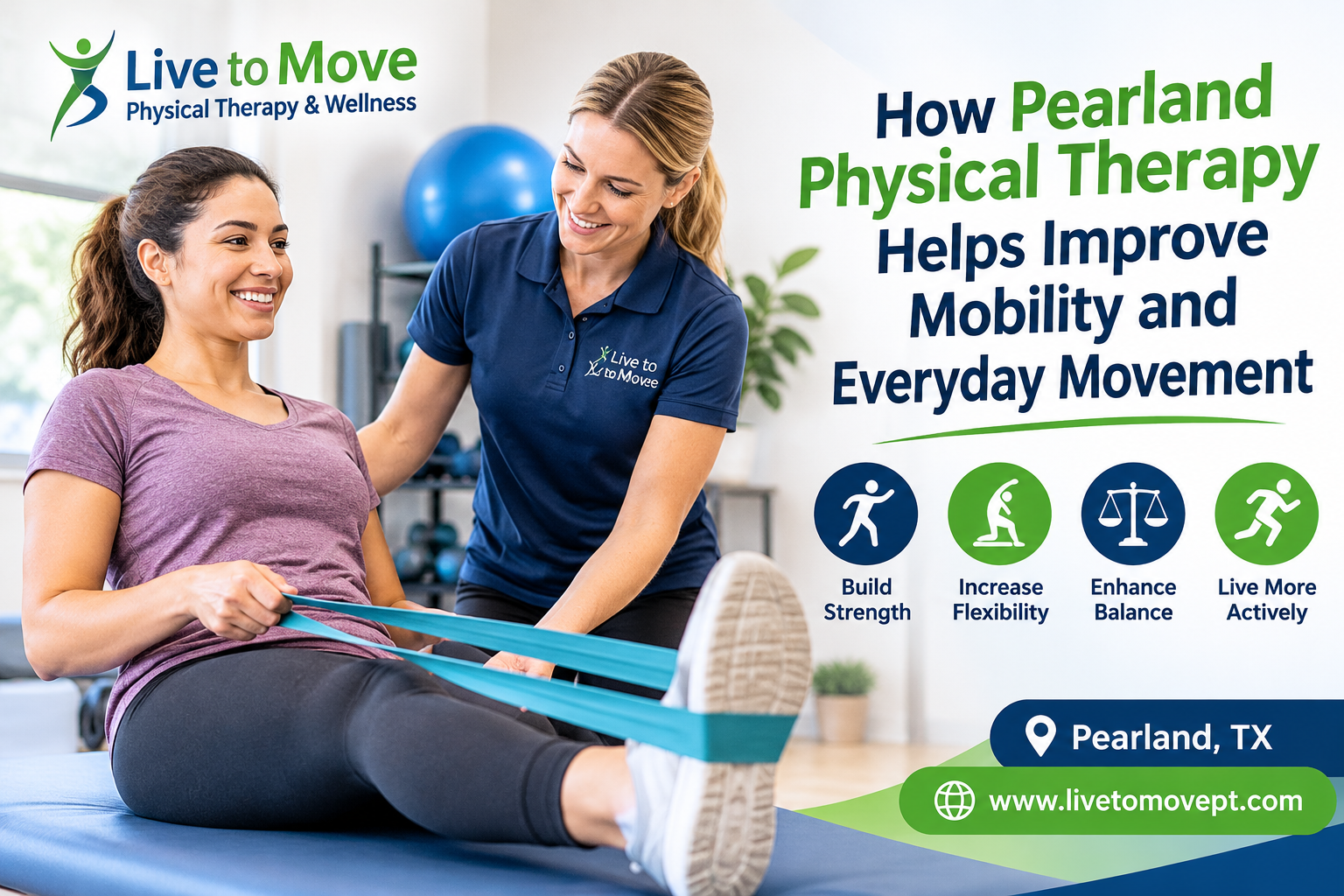
Movement is an essential part of everyday life, from walking and climbing stairs to exercising, working, and enjoying time with family. However, injuries, muscle weakness, joint stiffness, and ongoing discomfort can make these activities challenging. pearland physical therapy offers a structured approach to improving movement, restoring physical function, and helping individuals return to their daily routines with greater confidence. Through personalized treatment and guided exercises, people can work toward better mobility and long-term physical wellness.
Understanding the Importance of Everyday Movement
Everyday movement involves more than simply walking or standing. It requires coordination between muscles, joints, bones, and the nervous system. When one part of this system is affected by an injury or physical limitation, other movements may become difficult.
For example, knee discomfort can make climbing stairs uncomfortable, while reduced shoulder mobility can interfere with reaching overhead or carrying objects. Back stiffness may also affect sitting, bending, and lifting.
These limitations can gradually influence independence and quality of life. Addressing movement difficulties early can help individuals understand their physical challenges and develop appropriate strategies for improving function.
How Physical Therapy Supports Better Mobility
Physical therapy focuses on evaluating movement problems and creating treatment plans that address individual needs. Rather than concentrating only on discomfort, therapists examine the underlying factors that may affect physical performance.
An initial evaluation may include assessments of:
-
Muscle strength and endurance.
-
Joint range of motion.
-
Flexibility and mobility.
-
Balance and coordination.
-
Posture and movement patterns.
These findings help therapists identify areas requiring attention. Treatment can then be adjusted according to the individual’s abilities, goals, and progress.
For people seeking physical therapy pearland tx, individualized care can provide a practical way to address movement restrictions while building the strength and confidence needed for daily activities.
Improving Strength and Flexibility Through Guided Exercise
Muscle strength and flexibility contribute significantly to comfortable movement. Weak muscles may struggle to support joints properly, while tight muscles can restrict normal movement patterns.
Therapeutic exercises are selected to address these limitations gradually. Depending on an individual’s condition, a treatment program may include resistance exercises, stretching, balance activities, and controlled functional movements.
For instance, strengthening the muscles around the hips and knees may improve stability during walking. Gentle mobility exercises can help individuals regain comfortable shoulder movement. Core strengthening may also support better control during bending, lifting, and everyday tasks.
The goal is not simply to complete exercises but to improve how the body performs meaningful movements. Consistency, appropriate progression, and professional guidance help make exercise programs more effective and manageable.
Building Balance and Coordination
Balance supports safe walking, turning, standing, and changing direction. Injury, weakness, or reduced coordination can make these movements feel uncertain. A therapist may introduce weight shifting, supported standing, stepping patterns, and other controlled activities to improve stability. Exercises should match each person’s abilities and progress gradually.
Making Recovery Relevant to Daily Life
A useful treatment plan connects clinic exercises with activities that matter outside appointments. Someone who enjoys gardening may want to bend more comfortably. A parent may want to lift a child safely, while an office worker may want to sit and stand with less difficulty.
Therapists can break larger goals into manageable steps, monitor changes, and adjust exercises. Patients can also learn how posture, pacing, and regular activity influence their progress.
At Live to Move Physical Therapy & Wellness, care includes an evaluation of strength, range of motion, flexibility, and balance, followed by goals tailored to the individual. The clinic describes its appointments as one-on-one sessions and offers the option of seeing the same therapist for continuity.
Wellness Physical Therapist
Why Consistency Matters
Improving mobility usually takes repeated practice. Following recommendations between visits can reinforce skills developed during treatment. Home exercises should be completed as instructed, without pushing through sharp or unusual pain. Tell the therapist if an activity feels too difficult or symptoms change.
For residents considering pearland physical therapy, communication is an important part of care. A therapist should explain the purpose of exercises, answer questions, and set realistic expectations. Recovery timelines vary according to the condition, goals, and response to treatment.
Choosing Care That Fits Your Goals
Before treatment, consider what you want to improve. Describe when the problem started, which activities are difficult, and what you hope to do again. Ask how progress will be measured and what participation is expected between visits.
Live to Move Physical Therapy & Wellness emphasizes active participation, helping patients understand movement challenges and take part in their progress. Its service page explains its evaluation and appointment approach.
Conclusion
Mobility affects independence, comfort, and participation in everyday life. With an individualized plan, guided exercise, and steady communication, people can work toward better strength, flexibility, balance, and movement confidence. Physical therapy is not only about recovering from injury; it can also help rebuild skills needed for ordinary activities.
For people seeking physical therapy pearland tx, an appropriate evaluation can be a starting point for a purposeful recovery journey. Live to Move Physical Therapy & Wellness provides one-on-one physical therapy in the Pearland area, with an approach centered on individual evaluation and active participation.
Personalized pearland physical therapy connects treatment goals with safer, more confident movement at home.