Sterile medical devices need packaging that can perform two important jobs.
First, the packaging should allow the selected sterilization process to work properly. Second, after sterilization, it should continue protecting the medical device from contamination, dust, moisture and physical damage until the product is opened for use.
This requirement becomes more challenging when the medical device is large, irregular in shape, heavy or sensitive to environmental conditions.
In such cases, Breather bags can provide an effective packaging solution.
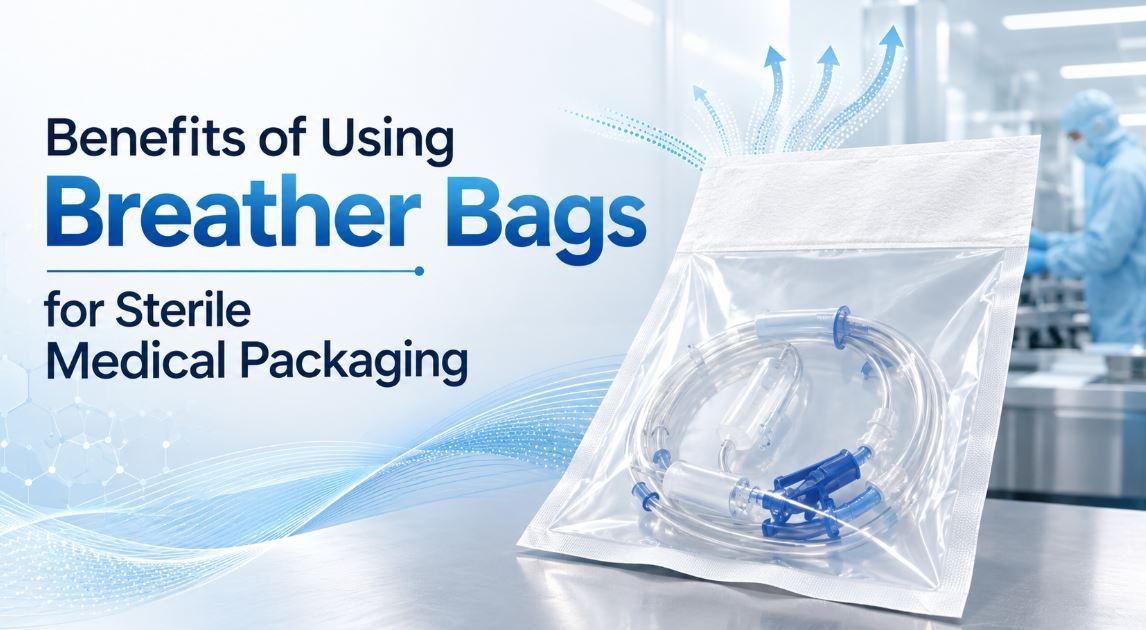
Breather bags normally combine a flexible film or high-barrier laminate body with a breathable section made from a suitable porous material such as medical-grade paper or Tyvek. The breathable area provides a pathway for sterilant movement, while the remaining pouch structure protects the product.
Because of this combination, breather bags are increasingly used in specialised Sterile Packaging applications across the medical device industry.
What Are Breather Bags?
Breather bags are flexible medical packaging bags designed with a breathable area.
The main bag body may be manufactured from materials such as:
- PET/PE laminates
- Nylon-based laminates
- High-barrier films
- Aluminium foil laminates
- Multilayer medical-grade films
A breathable patch, strip or header section is then incorporated into the bag.
This breathable section may be made from materials such as medical-grade paper or Tyvek, depending on the application and sterilization method.
The basic purpose is simple:
Allow sterilant movement while maintaining product protection.
This makes breather bags particularly useful for products undergoing ethylene oxide sterilization.
1. Allows Effective Sterilant Penetration
One of the biggest advantages of Breather bags is their ability to allow sterilant gases to enter the package.
Ethylene oxide sterilization depends on gas reaching the surfaces of the medical device.
If a product is completely sealed inside a non-breathable plastic or foil pouch, EO gas may not be able to enter the pack effectively.
The breathable area in the bag creates a controlled pathway for the gas.
During sterilization, EO can pass through this breathable section and reach the medical device.
After sterilization, the same breathable area also helps the residual sterilant leave the package during aeration.
This makes breather bags suitable for many specialised EO-sterilized products.
2. Provides Better Barrier Protection
Standard paper-film pouches are suitable for many medical devices, but some products require greater protection from moisture, oxygen or environmental exposure.
This is where breather bags can offer an advantage.
Most of the bag can be made from a higher-barrier laminate, while only a selected area remains breathable.
This allows manufacturers to balance:
Sterilization requirements + Barrier performance
For example, a medical device may require EO sterilization but also need strong protection against moisture during long-term storage.
A properly designed breather bag can provide both functions.
This makes the format useful for specialised Sterile Packaging applications.
3. Suitable for Large Medical Devices
Many standard sterilization pouches are designed for small or medium-sized products.
Large medical devices can be difficult to pack in such formats.
Breather bags can be manufactured in bigger sizes and can therefore accommodate products such as:
- Surgical procedure sets
- Large medical components
- Orthopaedic products
- Tubing sets
- Catheter assemblies
- Large disposable devices
- Medical trays
- Device kits
The flexible nature of the bag allows it to adjust around products of different shapes and sizes.
This can reduce the need for complicated rigid packaging systems.
4. Useful for Irregular-Shaped Products
Medical devices are not always flat or rectangular.
Some products contain tubes, connectors, valves, handles, joints or irregular components.
A flexible breather bag can provide more packaging freedom compared to some rigid sterile barrier systems.
However, the design still needs to provide enough space around the product.
The device should not put excessive pressure on the bag seams or breathable area.
For irregular products, proper sizing and package trials are very important.
5. Can Improve Moisture Protection
Moisture is a major concern for some medical devices.
Certain products may be affected by:
- Corrosion
- Hydrolysis
- Material degradation
- Chemical changes
- Loss of product performance
High-barrier Breather bags can provide better moisture protection compared to highly breathable packaging structures.
For products that are highly moisture-sensitive, the packaging design may also include desiccants where suitable.
The exact barrier requirement should be decided based on the medical device, expected shelf life and storage conditions.
6. Supports Long-Term Sterile Protection
Sterilization is only one stage in the life of a medical device.
After sterilization, the product may remain in storage for months or years.
During this time, the package may face:
- Humidity
- Temperature changes
- Dust
- Transportation vibration
- Compression
- Repeated handling
A well-designed Sterile Packaging system should continue protecting the medical device throughout this period.
Breather bags can be designed using strong multilayer structures that provide mechanical protection along with microbial barrier performance.
The packaging should also be tested to confirm that seals and breathable areas remain intact during the intended shelf life.
7. Helps Reduce Product Movement
Some breather bags can be designed to closely fit the medical device.
A proper fit helps reduce unnecessary movement inside the package.
This can be important for heavy or irregular products because repeated movement during transportation may damage the package.
Excessive movement can lead to:
- Punctures
- Seal stress
- Abrasion
- Product damage
- Damage to the breathable area
Correct bag sizing and product positioning can therefore improve the reliability of the sterile barrier system.
8. Can Provide Strong Mechanical Protection
The film structure used in Breather bags can be selected according to the mechanical risk of the product.
For example, nylon-containing laminates can provide improved puncture resistance for certain applications.
Higher-thickness films may also be used for heavy products.
For products with sharp points, manufacturers may additionally use:
- Tip protectors
- Protective sleeves
- Trays
- Inserts
- Cushioning materials
The objective is to prevent the medical device from damaging the packaging during sterilization, handling and transportation.
9. Can Support Better Product Visibility
Depending on the material used, the bag body can be transparent.
This can allow users to see the medical device without opening the pack.
Product visibility can help with:
- Identification
- Inspection
- Inventory control
- Correct product selection
- Detection of visible damage
For healthcare facilities and distributors, this can improve handling efficiency.
However, some high-barrier structures such as aluminium foil laminates are opaque.
The required visibility should therefore be considered during packaging design.
10. Offers Flexible Packaging Design
Breather bags can be customised in several ways.
Manufacturers can select:
- Bag dimensions
- Film thickness
- Barrier level
- Breathable area size
- Breathable material
- Printing
- Seal width
- Opening design
- Peelable or permanent seals
This design flexibility makes breather bags suitable for many specialised medical applications.
The size of the breathable area should be properly selected because it affects sterilant penetration and aeration.
A very small breathable area may restrict gas movement, while an unnecessarily large breathable area may reduce the overall barrier performance of the package.
Therefore, the correct balance is important.
11. Can Improve Packaging Efficiency
For some large or irregular medical devices, rigid trays may require more material, storage space and transportation volume.
Flexible Breather bags can sometimes provide a more compact packaging solution.
This may help reduce:
- Packaging weight
- Storage space
- Shipping volume
- Secondary packaging requirement
However, flexible packaging should only be selected when it provides enough mechanical protection for the device.
Cost saving should never compromise product protection or sterile barrier integrity.
12. Suitable for Specialised Medical Applications
Breather bags can be considered for a wide range of medical and healthcare products.
Possible applications include:
- EO-sterilized medical devices
- Surgical products
- Tubing assemblies
- Diagnostic components
- Catheter systems
- Medical kits
- Orthopaedic products
- Pharmaceutical components
- Rubber stoppers
- Medical closures
- Large disposable healthcare products
The actual suitability depends on the device, sterilization method and packaging validation.
Importance of Seal Quality
The performance of Breather bags depends strongly on seal integrity.
Even a high-quality film and breathable material cannot protect the product if the seals are defective.
Manufacturers should control parameters such as:
- Sealing temperature
- Sealing pressure
- Dwell time
- Seal width
- Jaw alignment
- Material cleanliness
Common defects include channels, wrinkles, weak seals, incomplete seals and contamination in the sealing area.
Regular inspection and sealing-process validation are therefore important.
Packaging Validation Is Essential
A breather bag should not be selected only because it appears strong or looks suitable.
The complete Sterile Packaging system should be evaluated under actual or representative conditions.
Testing may include:
- Seal strength
- Package integrity
- Sterilization compatibility
- EO penetration and aeration evaluation
- Microbial barrier performance
- Burst or creep testing where applicable
- Distribution testing
- Accelerated ageing
- Real-time ageing
- Visual inspection
- Peel performance, where required
For terminally sterilized medical devices, ISO 11607 is an important international reference for sterile barrier systems and packaging process validation.
Breather Bags vs Standard Sterilization Pouches
Both packaging types have their own applications.
Standard paper-film sterilization pouches are often suitable for smaller and relatively simple medical devices.
Breather bags may be more useful when the product requires:
- Larger dimensions
- High-barrier protection
- Stronger flexible films
- Better puncture resistance
- EO sterilant penetration
- Specialised package designs
The correct choice depends on the actual product requirement rather than selecting one format for every device.
Conclusion
Breather bags provide an effective combination of breathability, mechanical strength and barrier protection for specialised medical devices.
Their breathable section allows sterilant gases such as ethylene oxide to enter and leave the package, while the remaining film structure can provide enhanced protection against moisture, dust and handling damage.
They are especially useful for large, irregular, heavy or sensitive products where standard sterilization pouches may not provide the required performance.
However, successful Sterile Packaging depends on correct material selection, proper bag sizing, suitable breathable area design, strong seals and complete validation.
Medical device manufacturers should evaluate the device, sterilization method, barrier requirement, transportation risks and expected shelf life before finalising the packaging system.
When properly designed and validated, breather bags can provide a reliable sterile barrier solution that helps protect medical devices throughout sterilization, storage, transportation and final use.