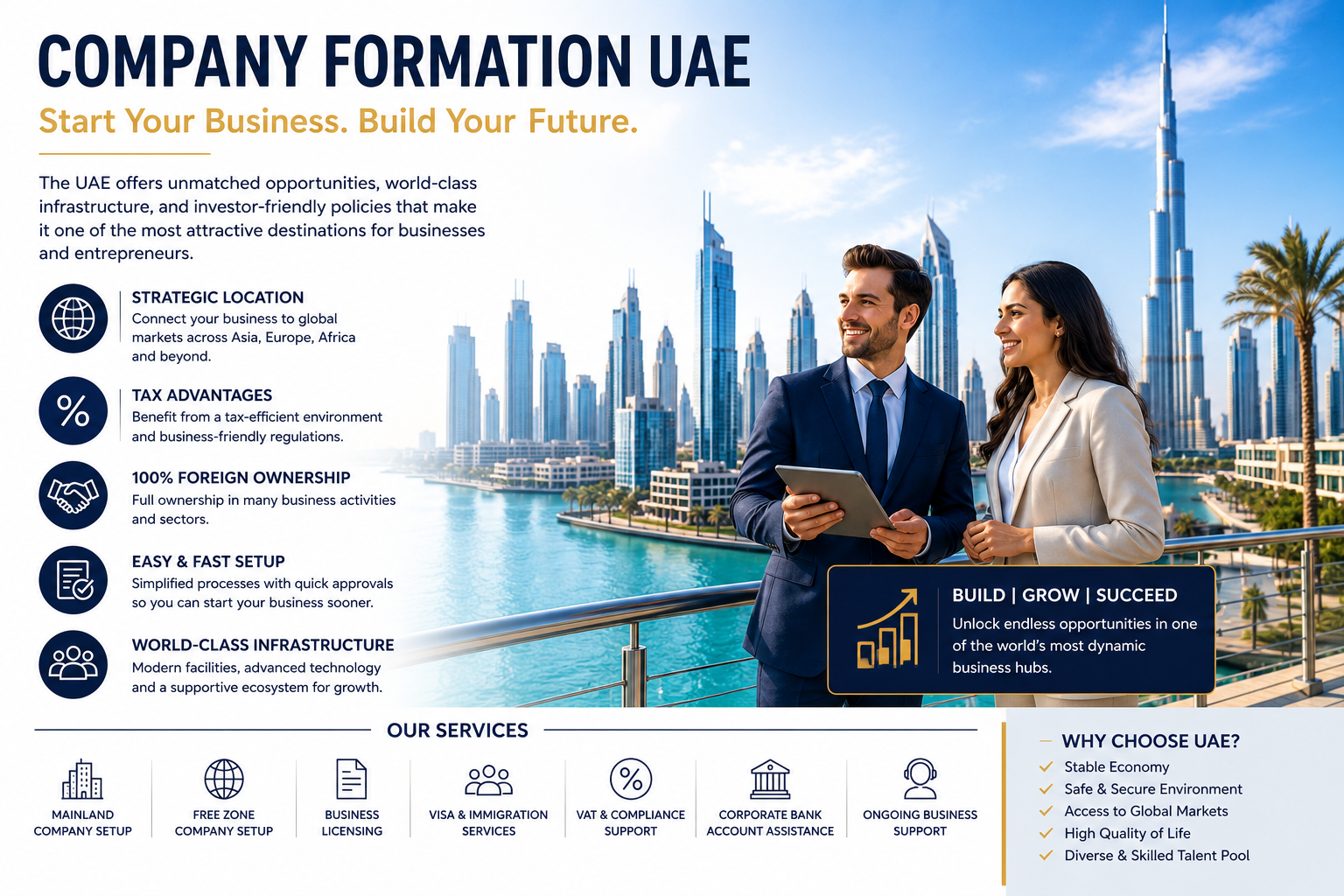
The UAE has become a leading destination for entrepreneurs, investors and international businesses looking to establish a presence in the Middle East. Its strategic location, developed infrastructure and diverse business environment make it suitable for companies across industries.
However, starting a company involves more than obtaining a trade licence. Entrepreneurs need to consider their business activity, legal structure, jurisdiction, office requirements, visas, banking and ongoing compliance.
Understanding the process before making a decision can make Company Formation in the UAE more organised, cost-effective and aligned with long-term business goals.
Why Choose the UAE for Company Formation?
The UAE offers several options for businesses looking to establish or expand their operations. Entrepreneurs can choose between mainland, free zone and offshore structures depending on their business model and objectives.
Many UAE business structures also allow foreign investors to own their companies fully, subject to the applicable activity and regulatory requirements. Businesses can also benefit from access to regional and international markets, modern infrastructure and a well-connected commercial environment.
For international entrepreneurs, the UAE can therefore serve as both a local operating base and a platform for wider Middle Eastern expansion.
Choosing the Right Jurisdiction
One of the most important decisions during Company Formation in the UAE is selecting the appropriate jurisdiction. The right choice depends on what you intend to sell, where your customers are located, whether you need physical premises and how you plan to expand.
Mainland Company Formation
A mainland company can be suitable for businesses that want to operate across the wider UAE market. Depending on the activity and emirate, mainland companies can operate from commercial premises and serve customers throughout the UAE and internationally.
Mainland structures can also be relevant for businesses seeking government contracts or companies that require a physical commercial presence.
Stratrich Consulting helps businesses evaluate their activity, legal structure, licensing requirements and other considerations before proceeding with mainland incorporation.
Free Zone Company Formation
Free zones are another popular option for entrepreneurs and international investors. Each free zone has its own regulations, licence categories, facilities and business environment.
Free zone companies can be suitable for professional services, consulting, technology, trading, e-commerce and other activities. However, selecting a free zone solely because of a low advertised licence price may not always produce the best outcome.
The business activity, office needs, visa requirements, banking expectations and future expansion plans should all be considered.
Stratrich assists businesses with comparing free zones and managing the incorporation process, including documentation, registration and trade licence applications.
Offshore Company Formation
An offshore structure may be appropriate for specific international business purposes and is different from a mainland or free zone operating company.
Because offshore companies have particular uses and limitations, investors should understand the structure before deciding whether it is appropriate for their objectives.
Key Steps in Company Formation
While requirements vary according to the jurisdiction and business activity, the formation process generally follows a structured path.
1. Select Your Business Activity
Your chosen activity determines the type of licence you may need and whether additional regulatory approvals are required. Selecting the appropriate activity at the beginning can help avoid unnecessary changes later.
2. Choose the Jurisdiction
Once the activity is clear, you can compare mainland, free zone and offshore options. Factors such as ownership, customers, location, office requirements and future growth should influence the decision.
3. Select the Legal Structure
The appropriate legal structure depends on factors such as the number of shareholders, whether the shareholder is an individual or company, and the nature of the proposed business.
4. Prepare Documentation
The documentation required depends on the structure and shareholders. Individual applicants may need identification and address documents, while corporate shareholders may need incorporation documents, board resolutions and other corporate records. Certain regulated activities can require additional documentation or approvals.
5. Apply for the Trade Licence
After the structure and documents are finalised, the application can be submitted to the relevant authority. Once approved, the company receives its licence and can proceed with applicable post-incorporation requirements.
6. Complete Post-Formation Requirements
Depending on the company, this may include arranging visas, establishing a corporate bank account, securing office facilities and addressing accounting, tax and compliance requirements.
How Stratrich Supports Company Formation
Managing incorporation independently can be time-consuming, particularly for entrepreneurs unfamiliar with UAE procedures. Professional support can simplify the process by coordinating different stages and helping business owners understand their available options.
Stratrich Consulting provides business setup and incorporation services covering mainland, free zone and offshore structures. Its approach begins with understanding the client’s business objectives, followed by jurisdiction selection, documentation and coordination with the relevant authorities.
The company also provides services beyond incorporation, including tax, corporate services, business consulting, bookkeeping and advisory support. This can be useful for businesses that need assistance after receiving their trade licence.
Consider the Long-Term Cost
The cheapest formation package is not necessarily the most suitable option. Entrepreneurs should consider both the initial formation cost and recurring expenses.
These may include licence renewal, office arrangements, visa costs, accounting, tax compliance and other administrative requirements. Choosing the right structure at the beginning can help prevent avoidable restructuring costs later.
A well-planned setup should therefore balance affordability with operational flexibility and future growth.
Start Your UAE Business with the Right Structure
Company Formation in the UAE can provide entrepreneurs with access to one of the region’s most connected commercial markets. However, choosing the right jurisdiction and licence is essential for creating a business structure that works beyond the initial registration stage.
Stratrich Consulting helps entrepreneurs and international businesses navigate company incorporation across the UAE, including mainland and free zone options. With guidance covering setup and post-formation requirements, businesses can approach the process with greater clarity and confidence.
Whether you are launching a new venture or expanding an existing company into the UAE, taking the time to understand your options can help you establish a stronger foundation for sustainable growth.