Hair restoration has advanced considerably, giving people experiencing permanent hair loss several options to consider. Modern techniques focus on moving healthy hair follicles to areas where hair has become thin or disappeared. However, choosing the right hair transplant technique is not always straightforward.
Different procedures have different approaches to extracting and placing hair follicles. The most appropriate option depends on factors such as hair-loss pattern, donor hair availability, scalp condition, desired coverage, and personal preferences. Understanding the main techniques can help patients have a more informed discussion with a qualified hair restoration professional.
What Is a Hair Transplant?
A hair transplant is a surgical hair restoration procedure in which hair follicles are taken from a donor area and placed into regions affected by hair loss. Donor follicles are commonly obtained from the sides or back of the scalp because these areas may be more resistant to certain forms of pattern hair loss.
The purpose is to redistribute available hair rather than create new follicles. Careful planning is therefore important because donor hair is a limited resource.
The procedure can be used to address areas such as a receding hairline, thinning crown, or other regions where permanent hair loss has occurred.
FUE Hair Transplant
Follicular Unit Extraction, commonly known as FUE, involves removing individual follicular units from the donor area. These grafts are then prepared and implanted into the recipient area.
One of the main features of FUE is that it does not require removing a continuous strip of scalp. Instead, individual follicular units are extracted using specialized instruments.
FUE may be suitable for people who prefer wearing shorter hairstyles or who have appropriate donor characteristics. However, the suitability of the technique varies from patient to patient.
FUT Hair Transplant
Follicular Unit Transplantation, or FUT, uses a different method of harvesting donor follicles. A strip of scalp containing hair follicles is removed from the donor area and carefully divided into individual grafts for transplantation.
FUT can provide a substantial number of grafts during a procedure and may be considered in certain cases where a larger number of follicles are needed.
Because FUT involves removing a strip of tissue, it leaves a linear scar in the donor area. The visibility of the scar can vary depending on healing and hairstyle.
Comparing FUE and FUT
Both FUE and FUT can be used for hair restoration, but they differ in how donor follicles are collected.
FUE involves individual extraction and generally produces numerous small extraction sites. FUT involves removing a strip of scalp and closing the donor area.
The choice is not necessarily about which technique is universally better. Instead, the appropriate method depends on the patient’s characteristics and treatment objectives.
A qualified specialist can explain the advantages and limitations of each technique after assessing the scalp and donor supply.
How Hairline Restoration Is Planned
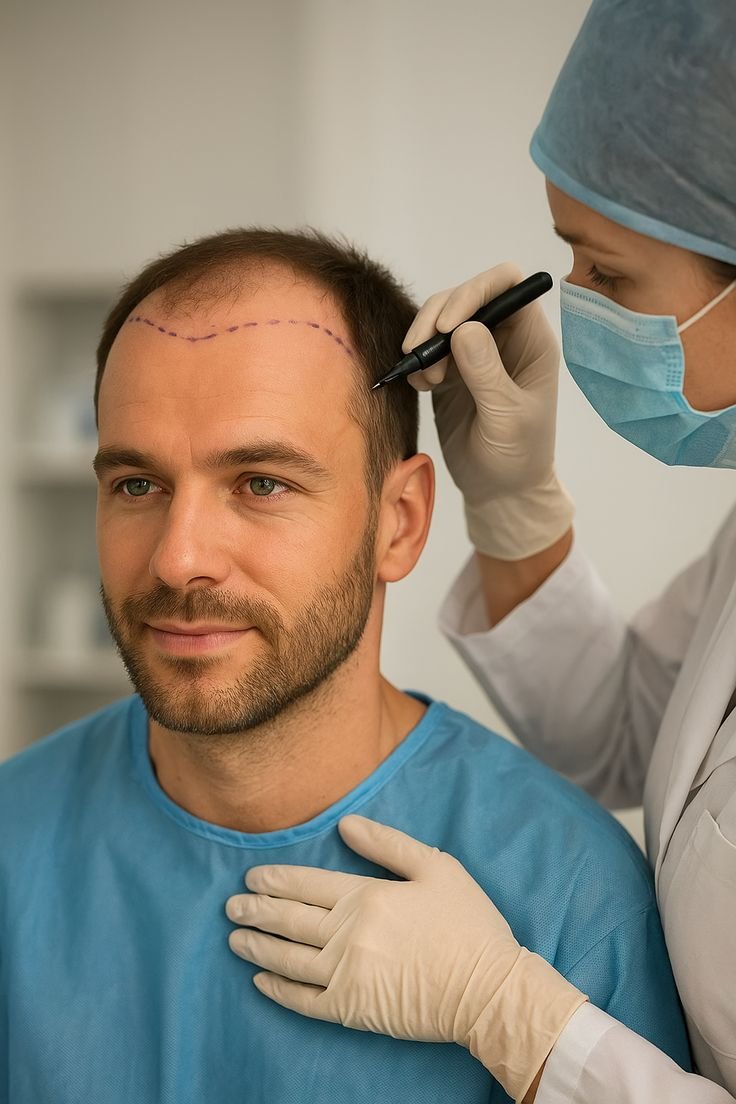
Hairline restoration requires particularly careful planning. The hairline is one of the most visible parts of the scalp, so its shape, density, direction, and position can strongly influence the final appearance.
During a hair transplant, specialists may consider facial proportions, age, existing hair, and potential future hair loss when designing the hairline.
The objective is generally to create a natural transition rather than an unnaturally straight line. Individual follicular units may be placed at different angles and densities to imitate natural growth.
Choosing a Technique Based on Donor Hair
Donor hair is one of the most important considerations when selecting a transplantation technique. The quantity, density, thickness, and characteristics of available follicles can influence the treatment plan.
Someone with a strong donor area may have several options, while limited donor availability may require more conservative planning.
A specialist can assess the donor region and estimate how many grafts may be available without compromising the appearance of that area.
Considering Hair Type and Texture
Hair characteristics can also influence treatment planning. Thick or curly hair may provide different visual coverage compared with fine, straight hair, even when the number of transplanted follicles is similar.
The specialist may consider hair caliber, curl pattern, color, and contrast between the hair and scalp when estimating potential coverage.
This personalized assessment can help establish realistic expectations about how dense the transplanted area may appear.
Recovery and Aftercare
Recovery varies according to the technique used and the individual patient. Temporary redness, swelling, tenderness, and small crusts can occur during the healing period.
Following aftercare instructions is important for protecting the treated area. Patients may receive guidance about washing the scalp, physical activity, sleeping arrangements, and other daily activities.
New hair growth takes time. Early shedding can occur, followed by gradual regrowth as the transplanted follicles enter their normal growth cycle.
The Importance of Professional Experience
Advanced equipment and modern techniques can support treatment, but the expertise of the professional remains extremely important. Successful restoration requires appropriate graft selection, careful extraction, thoughtful hairline design, and precise placement.
When researching a hair transplant, patients should consider the provider’s qualifications, experience, treatment approach, and ability to provide realistic expectations.
It is also helpful to discuss previous results and understand what can realistically be achieved based on individual donor resources.
Is One Technique Right for Everyone?
There is no single technique that is ideal for every person. Some patients may be suitable for FUE, others may benefit from FUT, and in certain situations a combination of approaches may be considered.
The right choice depends on the individual’s current hair loss, donor supply, lifestyle, hairstyle preferences, and long-term goals.
A personalized consultation is therefore more valuable than choosing a technique based solely on popularity.
Conclusion
Understanding different hair transplant techniques can make the decision-making process easier. FUE and FUT are established approaches that differ mainly in how donor follicles are harvested, while the final treatment plan also depends on hairline design, graft availability, hair characteristics, and future hair-loss considerations.
Rather than selecting a procedure based only on its name, patients should seek a detailed professional assessment. A personalized approach can help determine the most suitable technique and establish realistic expectations for natural-looking hair restoration.
For more information visit Royal Hair Transplant clinic in islamabad