Damp basement walls can seem like a minor inconvenience at first. You may notice a cool, musty smell, darker patches on concrete, or a little moisture after rain. The bigger concern is what happens when those conditions continue for weeks or months. Constant moisture creates an environment where mold can grow and where materials such as drywall, wood, insulation, and flooring can gradually deteriorate.
The source of dampness isn’t always an active leak. Moisture can move through porous concrete, collect because of poor drainage, or develop from condensation when warm air meets a cooler basement surface. Finding the reason the walls stay damp is important because covering the affected area without controlling the moisture usually leaves the underlying problem in place.
Why Damp Basement Walls Become a Mold Risk
Mold needs moisture, an available food source, and suitable environmental conditions to develop. A basement often provides all three. Paper-faced drywall, wood framing, cardboard, dust, and other organic materials can provide food, while damp walls can keep the surrounding area humid enough for mold to establish itself.
A wall doesn’t need to be dripping wet for this to happen. Repeated dampness can raise humidity around the wall and nearby materials. Once moisture remains trapped in a basement for long periods, mold may begin growing in places that aren’t immediately visible, including behind finished walls or around insulation.
Mold Can Start in Hidden Areas
Visible mold is easier to notice, but basement moisture problems can affect concealed materials first. Water vapor or dampness can move behind wall finishes, where airflow is limited and moisture can remain trapped.
This can create a situation where the basement looks relatively clean from the outside while mold is developing behind drywall, paneling, insulation, or stored materials. A persistent musty smell can sometimes be an early warning that moisture is affecting an area that isn’t easy to see.
Higher Humidity Keeps the Problem Going
Damp walls can contribute to higher indoor humidity, especially when moisture enters the basement regularly. Higher humidity can make other surfaces more likely to develop condensation, creating additional moisture beyond the original wet area.
That can turn one damp wall into a broader basement moisture problem. Controlling the source and keeping the basement environment reasonably dry helps reduce the conditions mold needs to continue growing.
Which Basement Materials Suffer Most From Long-Term Dampness
Concrete walls can tolerate moisture better than many finished materials, but that doesn’t mean the entire basement is protected. Moisture can spread from the wall into materials touching or covering it, and those materials are often much more vulnerable to long-term exposure.
Drywall, wood, insulation, flooring materials, adhesives, and stored belongings can absorb or retain moisture. Once they stay damp long enough, they may develop stains, odors, swelling, weakening, or mold growth.
Drywall Can Absorb Moisture and Lose Its Integrity
Drywall is particularly vulnerable because its paper covering provides an organic surface for mold growth. If moisture reaches the lower sections repeatedly, the material can become soft, stained, swollen, or weakened.
Painting over a damaged area may hide the appearance temporarily, but it doesn’t remove the moisture that caused the damage. Once drywall has experienced significant moisture exposure, the affected section may need to be evaluated rather than simply covered.
Wood Framing Can Become Vulnerable Over Time
Wood around damp basement walls can absorb moisture and remain wet when air circulation is poor. Extended exposure can lead to staining, odor, surface deterioration, and conditions that support biological growth.
The concern becomes greater when wood is in direct contact with a persistently damp wall. Keeping the surrounding area dry and addressing the moisture source helps protect framing and other structural or finished wood components.
Insulation Can Hold Moisture Against the Wall
Some insulation materials can retain moisture when exposed to persistent dampness. When that happens, drying can be difficult, particularly when the insulation is enclosed behind a finished wall.
Wet insulation can also contribute to odors and create a favorable environment for mold growth on nearby surfaces. This is why moisture behind finished basement walls should not be ignored simply because it isn’t visible from the room.
How Moisture Moves Through Basement Walls
Basement walls are often made from concrete, masonry, or other materials that aren’t completely resistant to water movement. Small pores and pathways within these materials can allow moisture to migrate from damp soil toward the interior surface.
The way moisture appears can provide useful clues. A wall that feels generally cool and damp may have a different cause from one showing a concentrated wet spot after rainfall. Looking at the pattern, timing, and location can help distinguish between different moisture sources.
Groundwater Can Push Moisture Toward the Interior
When the soil outside stays saturated, water can remain against basement walls for extended periods. Pressure from surrounding wet soil can encourage moisture to move through small openings and porous sections of the foundation.
This is especially noticeable after periods of heavy rain or when groundwater levels remain elevated. Repeated exposure can keep the wall damp even after the weather becomes dry.
Small Cracks Can Create More Than One Problem
A crack in a basement wall may allow moisture to enter directly, but it can also keep nearby materials damp. Water reaching one small area can spread along the wall surface or into adjacent finishes.
Not every crack indicates a major structural issue, but persistent moisture around a crack deserves attention. The goal is to understand whether the crack is acting as a water entry point and whether another drainage problem is contributing to it.
Damp Conditions Can Damage More Than the Wall Itself
People often focus on visible wall stains because they’re easy to notice. The more important concern can be the material damage happening around those stains. Moisture can affect flooring, trim, storage items, adhesives, paint, and other finishes long before serious deterioration becomes obvious.
Basement materials also react differently to moisture. Some swell, some soften, some discolor, and some retain odors. Replacing damaged materials without correcting the moisture source can lead to the same problem returning later.
For homeowners looking into basement damp proofing services in Lowell, MA, it makes sense to evaluate the wall moisture and the materials around it together. Preventing repeated moisture exposure is generally more useful than repeatedly repairing the visible damage.
Warning Signs That Dampness Is Already Affecting Materials
The basement often gives small clues before damage becomes extensive. Paying attention to these signs can help identify a moisture problem while the affected area is still manageable.
Watch for:
- Musty odors that become stronger after wet weather
- Peeling paint or bubbling wall finishes
- Dark patches or unusual discoloration
- Swollen or soft drywall near the floor
- Warped trim or damaged baseboards
- Damp insulation or wet materials behind finished walls
- White mineral deposits appearing on masonry
- Mold-like spotting on walls or stored belongings
These signs don’t all point to the same cause, but they indicate that moisture should be investigated rather than covered up.
Why Controlling Moisture Comes Before Cosmetic Repairs
A fresh coat of paint can make a basement wall look better, but it doesn’t stop moisture from passing through the wall. New drywall can also become damaged again if the same damp conditions remain behind it.
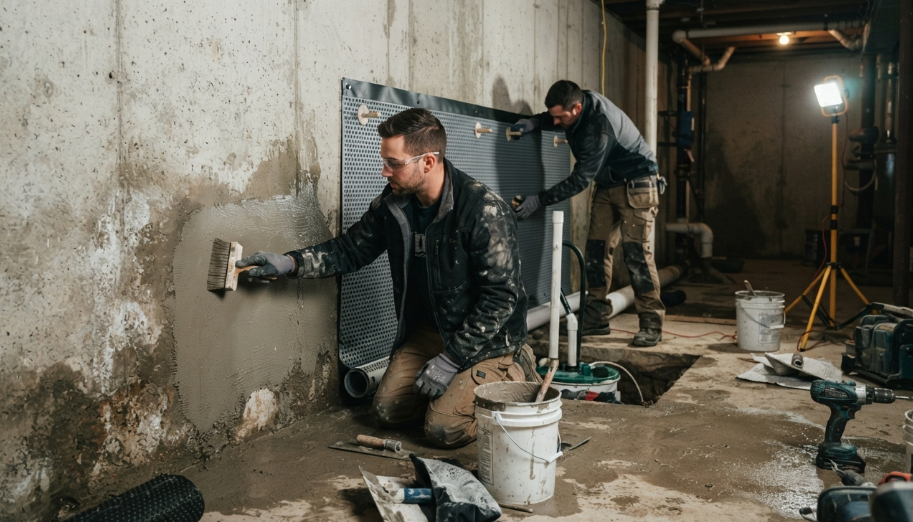
The more reliable approach is to deal with the source of the moisture first. Depending on the property, that may involve correcting exterior drainage, addressing water entry points, improving moisture control, or dealing with condensation inside the basement.
Keep Finished Walls From Hiding an Ongoing Moisture Problem
Finished basements can make moisture harder to detect. Drywall and paneling may hide damp concrete, while insulation can prevent the wall from drying naturally.
Before repairing or finishing a repeatedly damp area, it’s worth knowing whether moisture is still entering. Otherwise, the new finish may conceal a problem until odors, staining, or material damage become visible again.
Drying Alone Doesn’t Solve the Source
Running a fan or dehumidifier can help reduce moisture in the air, but it doesn’t necessarily stop water from entering the structure. These tools are useful for managing indoor conditions, especially during humid weather, but persistent wall dampness requires attention to its source.
A basement that becomes damp again after each storm is telling you something important. Temporary drying may improve the room for a while, but lasting moisture control requires addressing why the wall keeps getting wet.
Conclusion
Damp basement walls can create problems that go far beyond an unpleasant smell or a few dark marks. Continued moisture can increase humidity, encourage mold growth, and damage drywall, insulation, wood, flooring, and other materials surrounding the affected wall. The longer the conditions remain, the more opportunities moisture has to spread into areas that are difficult to see and repair.
A healthier basement starts with understanding where the moisture comes from and preventing it from reaching the wall repeatedly. Managing drainage, water entry, and indoor humidity can help protect both the foundation area and the finished materials around it. The concept of hygroscopicity is also useful here because it explains why certain materials naturally absorb moisture from their surrounding environment and can remain damp even when there is no visible leak.