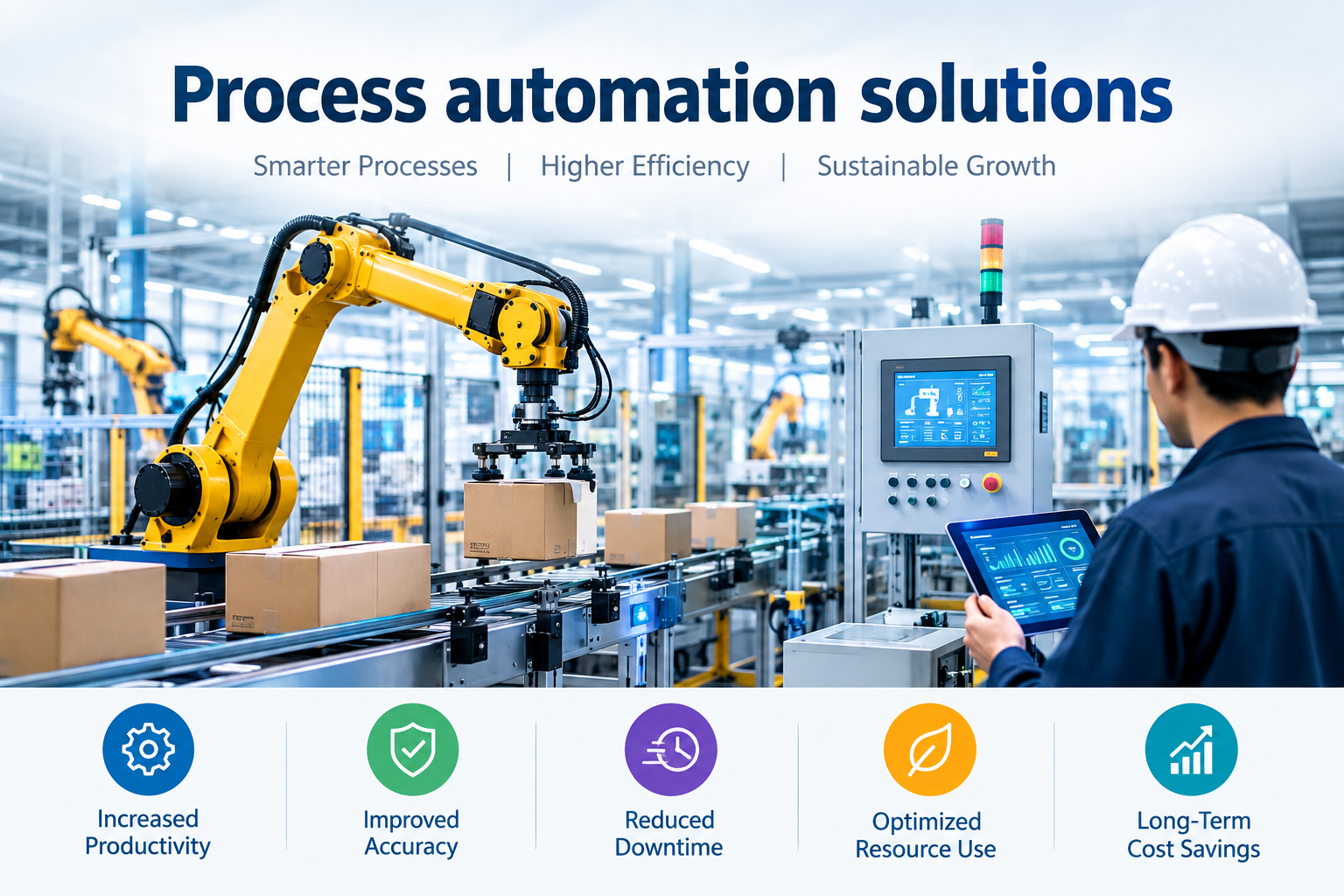
What Are Process Automation Solutions?
Process automation solutions use control systems, sensors, software, and connected equipment to monitor and manage industrial operations.
Depending on the application, automation may regulate temperature, control pressure, coordinate machinery, monitor production stages, or collect operational data.
The objective is to make processes more consistent, manageable, and measurable.
Key Benefits of Industrial Automation
Automation can improve process repeatability by executing defined operations according to programmed instructions. Monitoring systems can also provide useful information about equipment performance and operating conditions.
Another benefit is improved coordination between different stages of production. When systems are properly integrated, operators can monitor processes and identify unusual conditions more efficiently.
Actual results depend on the application, system design, implementation quality, and maintenance practices.
Planning an Automation Project
A successful project begins with clearly defined objectives. Businesses should identify existing operational challenges, determine which activities would benefit from automation, and establish measurable performance requirements.
Engineers must also consider controller compatibility, communication protocols, equipment limitations, and safety requirements.
Testing and commissioning are important steps for verifying that the completed system performs according to its specifications.
Why Engineering Integration Matters
Industrial environments often contain equipment from different manufacturers. Integrating these components requires careful planning and an understanding of control architecture.
Servotech Inc. supports engineering projects involving industrial automation and related technical requirements.
Businesses evaluating process automation solutions should consider their existing infrastructure, production objectives, and long-term operational needs. A well-planned automation strategy can help improve workflow consistency and support informed operational decisions.