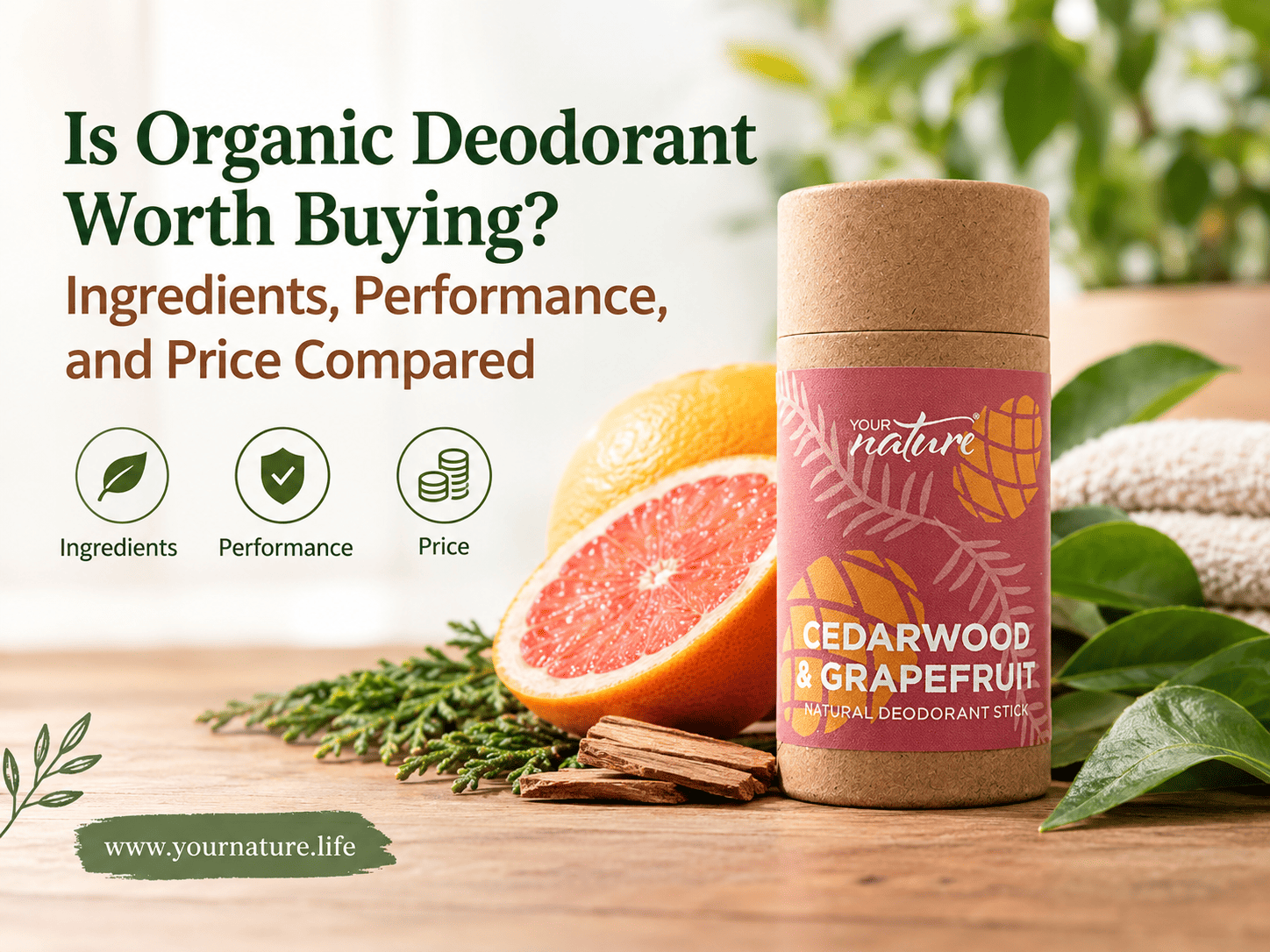
Choosing the right deodorant is about more than finding a pleasant fragrance. Many people now look for products with skin-conscious ingredients, reliable odour control, and less packaging waste. This has increased interest in organic deodorant, especially among shoppers who want to make more thoughtful personal care choices.
But is switching from conventional deodorant really worth the money? The answer depends on your skin type, daily routine, fragrance preferences, and expectations. By comparing ingredients, performance, and price, you can decide whether an organic option suits your needs.
What Is Organic Deodorant?
Organic deodorant is a personal care product made with ingredients that may include organically grown plant oils, botanical extracts, and natural fragrances. Depending on the formula, it may also contain ingredients such as baking soda, starches, magnesium compounds, or waxes to help manage moisture and odour.
However, the word “organic” does not automatically mean a product is completely natural, chemical-free, or suitable for every skin type. Ingredient lists and recognised organic certifications provide more useful information than marketing claims alone.
Unlike antiperspirants, which reduce sweating using active ingredients such as aluminium salts, most deodorants focus on controlling body odour rather than stopping perspiration. This distinction is important when comparing different products.
Which Ingredients Should You Look For?
The ingredient list can tell you a lot about how a deodorant may perform and whether it is appropriate for your skin.
1. Plant-Based Oils and Butters
Ingredients such as coconut oil and shea butter can help condition the skin and improve the texture of a deodorant. They are often included in formulas designed to glide smoothly across the underarms.
2. Odour-Controlling Ingredients
Some natural deodorant formulas use magnesium hydroxide, starches, or baking soda to help manage odour and absorb moisture. Baking soda can be effective for some people, but it may irritate sensitive skin. If you experience redness, itching, or discomfort, stop using the product.
3. Essential Oils and Fragrance
Essential oils provide scents such as citrus, lavender, and sandalwood. A sandalwood deodorant may appeal to people who prefer a warm, woody fragrance over sweet or floral options.
However, essential oils and fragrance ingredients can also cause irritation or allergic reactions. Fragrance-free products may be a better choice for people with sensitive underarms.
4. Packaging Materials
Packaging is another factor worth considering. A plastic free deodorant may come in a cardboard tube, paper-based container, or recyclable metal packaging. These formats can help reduce reliance on conventional plastic packaging, although the overall environmental impact depends on the materials used and how they are disposed of.
Does Organic Deodorant Work as Well as Conventional Deodorant?
Performance is one of the biggest considerations when deciding whether to make the switch.
Conventional deodorants and organic alternatives can both help control body odour, but results vary according to the formula and the individual.
|
Feature |
Organic Deodorant |
Conventional Deodorant |
|
Odour control |
Depends on the active ingredients and formula |
Often reliable, depending on the product |
|
Sweat reduction |
Usually does not prevent sweating |
Antiperspirants can reduce sweating |
|
Fragrance choices |
Often botanical, but varies by brand |
Available in a wide range of fragrances |
|
Sensitive skin |
Some formulas may be suitable; others may irritate |
Depends on ingredients and fragrance |
|
Packaging |
May offer plastic-free options |
Often uses plastic packaging, though alternatives exist |
If you sweat heavily, remember that switching to a deodorant alone may not provide the same dryness as an antiperspirant. You may need to adjust your expectations or choose a product designed specifically for your needs.
For better results, apply deodorant to clean, completely dry skin and follow the manufacturer’s instructions. Avoid applying fragranced products immediately after shaving if your skin is easily irritated.
Is Organic Deodorant More Expensive?
Organic deodorants can cost more than some conventional options, particularly when they use certified organic ingredients, specialised formulations, or alternative packaging. However, prices vary considerably by brand, size, and retailer.
When comparing prices, look beyond the initial purchase cost. Consider the amount of product in the container, how much you need per application, and how frequently you replace it.
A simple cost comparison can help:
- Budget-friendly options: Conventional deodorants may offer a lower upfront price.
- Mid-range options: Many natural deodorants balance ingredient choices, fragrance, and everyday performance.
- Premium options: Certified organic ingredients, specialist fragrances, and plastic-free packaging may increase the price.
A higher price does not automatically mean better performance. If possible, start with a smaller size before committing to a premium product. This is especially helpful when trying a new fragrance or formula for the first time.
Who Should Consider Organic Deodorant?
Organic deodorant may be worth considering if you prefer products featuring plant-derived ingredients, want to explore alternatives to conventional fragrances, or are looking for packaging that reduces plastic use.
It can also be a useful option for people who want a particular scent profile, such as sandalwood, without choosing a heavily fragranced conventional product. Still, natural ingredients are not automatically gentler, so checking the full ingredient list remains essential.
If you have very sensitive skin, look for a fragrance-free formula and introduce new products cautiously. People with persistent underarm irritation should seek advice from a healthcare professional rather than repeatedly trying different deodorants.
How to Choose the Right Option
Before purchasing, consider these practical points:
- Check the ingredients: Look for a formula that matches your skin’s needs and avoid ingredients you know trigger irritation.
- Compare performance: Decide whether odour control alone is enough or whether sweat reduction is also important.
- Review the fragrance: Choose a scent you enjoy, or select fragrance-free if you are prone to irritation.
- Consider the packaging: If reducing plastic waste matters to you, check whether the container is genuinely plastic-free and how it should be disposed of.
- Calculate the value: Compare product size, price, and expected usage rather than relying on the label alone.
At Your Nature, shoppers interested in more considered personal care choices can use these factors to evaluate products that align with their preferences. The best choice is one that fits your budget, works with your routine, and feels comfortable on your skin.
Final Verdict: Is Organic Deodorant Worth Buying?
For many people, organic deodorant is worth trying because it offers another way to approach everyday personal care, with options for botanical fragrances and alternative packaging. However, its value depends on the formula, your skin’s response, and how well it controls odour throughout the day.
Compare ingredients, check product claims, and consider the difference between deodorant and antiperspirant before making a decision. Whether you choose a natural deodorant, a sandalwood-scented option, or a plastic-free alternative, prioritise comfort, reliable performance, and value for money over marketing promises.
Your ideal deodorant is not necessarily the most expensive or the most natural-sounding one. It is the product that meets your needs without compromising your comfort or budget.
Frequently Asked Questions
1. Is organic deodorant better than regular deodorant?
Organic deodorant may suit people who prefer certain plant-derived ingredients, but performance and skin compatibility depend on the individual formula.
2. Does organic deodorant stop sweating?
Most organic deodorants control odour rather than sweating. Antiperspirants are designed to reduce sweat production.
3. Can natural deodorant irritate sensitive skin?
Yes. Baking soda, essential oils, and fragrances may irritate some people. Choose a suitable formula and stop using it if irritation develops.
4. Is plastic-free deodorant worth buying?
It may be worthwhile if reducing plastic packaging is a priority. Check the materials, disposal instructions, and product performance before purchasing.
5. What does sandalwood deodorant smell like?
Sandalwood deodorant typically has a warm, woody, smooth fragrance. The exact scent depends on the ingredients and fragrance blend.
6. How much should I spend on organic deodorant?
Choose a product within your budget and compare its size, ingredients, and performance. A higher price does not necessarily mean better results.