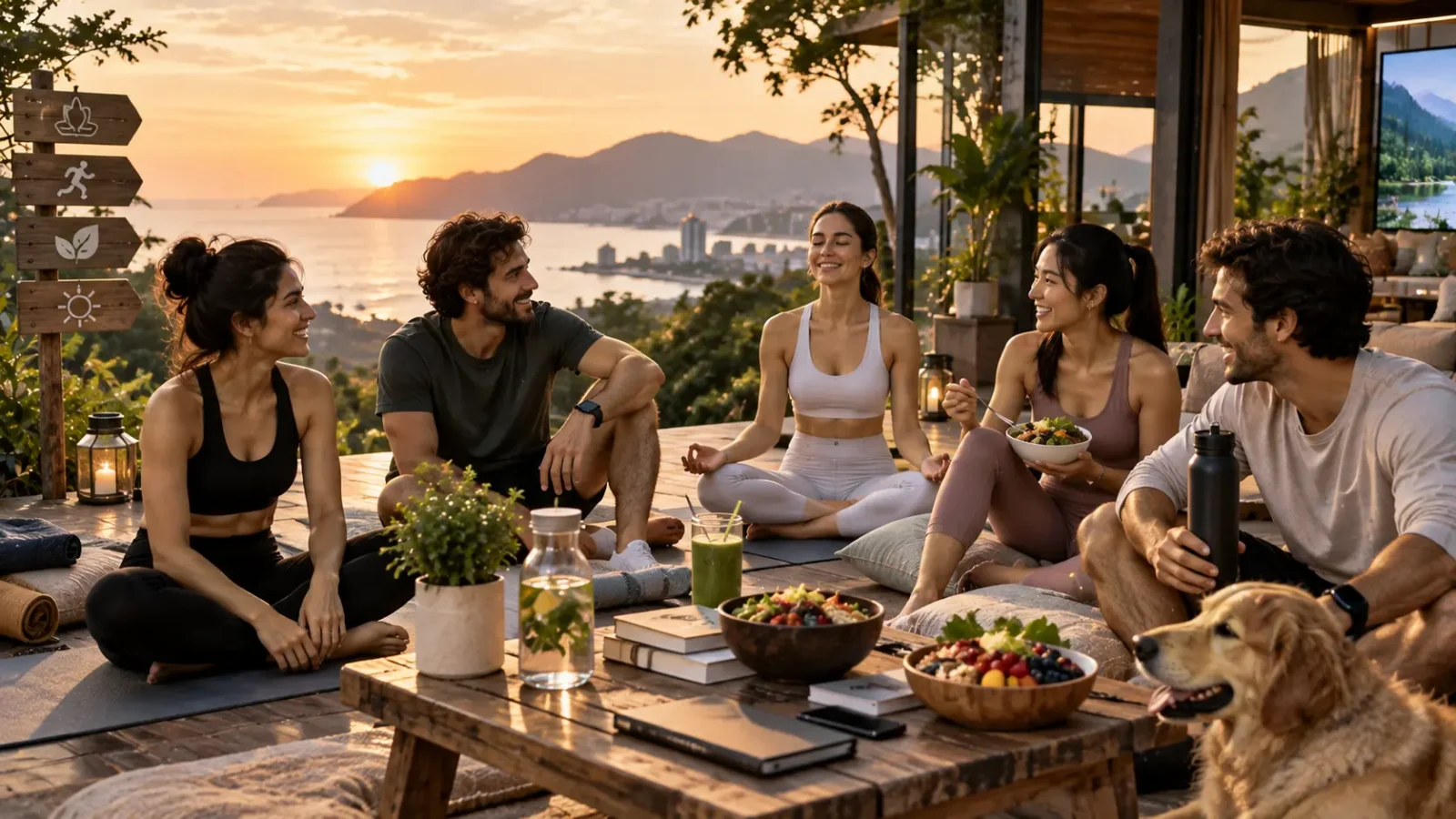
Modern life has become faster than ever.
We wake up with notifications, spend hours looking at screens, move between work and personal messages, track our activity through smart devices and constantly consume new information.
Technology has made life more convenient.
But convenience has also created a new problem: constant stimulation.
In 2026, an interesting lifestyle shift is becoming increasingly visible.
People are beginning to question the idea that every part of life needs to be optimized.
Instead of tracking every step, maximizing every workout and filling every minute with productivity, many people are looking for something simpler.
They want better sleep.
More time outdoors.
Less screen time.
Real social connections.
Quiet travel.
And routines that actually feel sustainable.
Recent wellness trends describe this movement as a shift away from relentless optimization toward regulation, presence and deeper rest.
This does not mean people are rejecting technology.
Instead, they are learning to use technology more intentionally.
So what are the biggest lifestyle trends shaping 2026?
1. The Rise of Anti-Optimization
One of the most interesting lifestyle trends of 2026 is the growing interest in anti-optimization.
For years, wellness culture often focused on improving everything.
People tracked:
- Steps
- Calories
- Sleep scores
- Heart rate
- Workout performance
- Productivity
- Recovery
Technology made it possible to measure almost everything.
But constant measurement can also become exhausting.
The emerging anti-optimization mindset asks a different question:
What if feeling good is more important than achieving a perfect score?
Instead of trying to optimize every part of life, people are increasingly looking for routines that feel natural and enjoyable.
That could mean taking a walk without tracking it, eating without counting every calorie or simply going to bed without checking a sleep score.
The movement is still relatively new, but it reflects a broader cultural desire for simplicity and presence.
2. Deep Rest Is Becoming a Lifestyle Priority
Sleep is no longer being treated simply as downtime.
It is increasingly becoming a central part of lifestyle and wellness planning.
The global wellness industry is seeing growing interest in sleep environments, circadian rhythms, recovery and deep rest. The Global Wellness Institute has identified “In Search of Deep Rest” as a key 2026 wellness-travel trend.
People are paying more attention to:
- Consistent sleep schedules
- Comfortable sleep environments
- Evening routines
- Reduced nighttime screen use
- Natural light exposure
- Quiet spaces
The important shift is that sleep is becoming something people actively protect rather than something they simply hope to get enough of.
3. Digital Detox Is Becoming More Practical
Digital detox used to sound like a dramatic idea.
Today, it can be much simpler.
A digital detox might mean:
- No phone during meals
- One screen-free evening each week
- Turning off unnecessary notifications
- Keeping the phone outside the bedroom
- Taking a weekend away from social media
- Spending time outdoors without constantly taking photos
The goal is not necessarily to eliminate technology.
The goal is to create moments when technology does not control attention.
Travel is becoming one of the places where this trend is especially visible, with digital-detox escapes and low-screen experiences increasingly appearing alongside traditional holidays.
4. Slow Living Is Finding a New Audience
Slow living is not about doing nothing.
It is about being more intentional about what deserves your time.
This can mean:
- Cooking at home
- Spending time with family
- Reading
- Walking
- Gardening
- Enjoying hobbies
- Reducing unnecessary commitments
For many people, slow living is becoming an alternative to the pressure of always being busy.
The idea is simple:
A full calendar does not always mean a fulfilling life.
5. Nature Is Becoming Part of Everyday Wellness
People are increasingly looking for ways to reconnect with nature.
This does not necessarily require an expensive vacation.
It could be:
- A morning walk
- A local park
- Gardening
- Weekend hiking
- Outdoor exercise
- Beach visits
- Camping
- Spending time in natural surroundings
Wellness travel trends for 2026 also highlight nature, cool-climate escapes, cocooning wellness and nervous-system reset experiences.
The growing interest in nature reflects a simple desire to step away from artificial environments and constant digital stimulation.
6. Wellness Travel Is Becoming More Personal
Travel is changing too.
People are not always travelling simply to visit famous attractions.
They are increasingly looking for experiences that match how they want to feel.
Some want:
- Deep rest
- Adventure
- Privacy
- Nature
- Fitness
- Cultural experiences
- Digital disconnection
The Global Wellness Institute’s 2026 trends include AI-designed wellness travel, where technology can help personalize itineraries around individual preferences and goals.
This creates an interesting combination:
Technology can help people plan the perfect escape from technology.
7. Privacy Is Becoming a New Form of Luxury
Luxury is changing.
For some consumers, luxury is no longer only about expensive products.
It can mean:
Space.
Silence.
Privacy.
Time.
Wellness-travel research identifies privacy as an increasingly valuable experience as people seek quieter environments away from crowds and constant social exposure.
This explains the growing interest in private villas, secluded retreats, small wellness properties and low-density destinations.
In a world where people share so much online, having a place where nobody expects anything from you can feel surprisingly luxurious.
8. Mental Fitness Is Becoming Part of Everyday Life
Mental wellbeing is increasingly being viewed as something people can actively maintain rather than something discussed only during difficult periods.
The 2026 lifestyle-medicine landscape highlights a shift toward mental fitness, alongside physical activity, sleep and social connection.
Simple habits can support everyday mental wellbeing:
- Regular movement
- Good sleep
- Social connection
- Time outdoors
- Hobbies
- Mindful breaks
- Healthy boundaries
This does not replace professional mental-health support when someone needs it.
Instead, it reflects a broader understanding that everyday lifestyle choices can influence how people feel and function.
9. Social Connection Is Becoming More Valuable
Technology allows people to communicate constantly.
But constant communication is not necessarily the same as meaningful connection.
A quick message or social-media interaction cannot always replace:
- Face-to-face conversations
- Family time
- Friendships
- Community activities
- Shared experiences
Lifestyle trends increasingly point toward the importance of real social connection.
This can be as simple as having dinner with friends, joining a local group or spending time with family without phones on the table.
Internal Link Opportunity: Link community and social connection to your Community article.
10. Wearables Are Becoming More Selective
Wearable technology continues to evolve.
Smartwatches and health trackers can provide useful information about:
- Activity
- Heart rate
- Sleep
- Exercise
- Recovery
But an interesting countertrend is emerging.
Some consumers are becoming tired of constant notifications and health scores.
The future may therefore not be about more tracking.
It may be about better and more meaningful tracking.
The recent wellness conversation around “anti-optimization” reflects this change, with some consumers seeking products that support wellbeing without turning every behaviour into a performance metric.
11. Sleep Technology Is Becoming More Lifestyle-Focused
Sleep technology is expanding beyond traditional fitness trackers.
The broader sleep market now includes:
- Sleep tracking
- Smart lighting
- Temperature-control products
- Sleep environments
- Circadian-focused solutions
At the same time, experts and wellness researchers are pushing back against overly complicated sleep routines.
The Global Wellness Institute’s 2026 sleep trends specifically highlight a move from “sleepmaxxing” toward simplicity.
This is an important lesson.
A complicated routine is not automatically a better routine.
Sometimes better sleep starts with the basics.
12. Food Is Becoming More Functional
Lifestyle and food trends are increasingly overlapping.
Consumers are showing interest in foods and beverages connected with:
- Protein
- Hydration
- Recovery
- Gut health
- Energy
- Sleep
- General wellbeing
Recent lifestyle trend reporting has also highlighted the growth of functional and protein-focused everyday foods.
But “healthy” does not automatically mean “better.”
People should still look at ingredients, nutritional value and individual dietary needs rather than following every viral food trend.
13. Movement Is Shifting From Performance to Longevity
Fitness culture has traditionally emphasized performance.
More people are now thinking about movement in terms of:
How do I want my body to feel ten or twenty years from now?
This can encourage activities such as:
- Walking
- Strength training
- Mobility work
- Swimming
- Cycling
- Yoga
- Low-impact exercise
The 2026 lifestyle-medicine trends emphasize physical activity for function and longevity, rather than performance alone.
This is a more sustainable approach for many people.
14. Personal Routines Are Becoming More Flexible
Another lifestyle shift is moving away from the idea that everyone needs the same perfect routine.
One person may enjoy exercising early in the morning.
Another may prefer an evening walk.
Some people work best with strict schedules.
Others need flexibility.
Lifestyle personalization is becoming more important because people are increasingly aware that wellbeing depends on individual circumstances.
The best routine is often not the one that looks perfect on social media.
It is the one you can realistically maintain.
15. Technology Is Becoming More Intentional
Technology is not disappearing from modern lifestyles.
Instead, people are becoming more selective about how they use it.
This could mean:
- Using AI to save time
- Automating repetitive tasks
- Turning off unnecessary notifications
- Limiting social media
- Using apps for useful information
- Choosing screen-free activities
The goal is intentional technology use.
Technology should support life rather than constantly interrupt it.
16. Experiences Are Becoming More Valuable Than Possessions
Many lifestyle trends are moving toward experiences.
People increasingly value:
- Travel
- Food experiences
- Concerts
- Outdoor activities
- Wellness retreats
- Creative hobbies
- Time with friends
This does not mean people have stopped buying things.
Rather, experiences can create memories and emotional value that physical products cannot always provide.
This shift is particularly visible in travel, where consumers are increasingly choosing destinations based on the experience they want rather than the destination name alone.
17. Personalization Is Shaping Lifestyle Choices
From travel to fitness and wellness, personalization is becoming increasingly common.
AI can help users create:
- Personalized travel itineraries
- Fitness plans
- Meal suggestions
- Shopping recommendations
- Entertainment choices
But personalization should remain a tool rather than becoming another source of pressure.
The purpose should be to make life easier, not to create another system that constantly tells people what they should do.
18. Lifestyle Content Is Becoming More Authentic
Social media has traditionally rewarded highly polished lifestyles.
But there is growing interest in content that feels more realistic.
People are increasingly drawn to:
- Unfiltered experiences
- Simple routines
- Behind-the-scenes content
- Realistic homes
- Everyday meals
- Honest travel experiences
This reflects a broader cultural desire for authenticity.
Not every moment needs to look perfect.
19. The Return of Simple Hobbies
Another lifestyle trend is the renewed interest in offline hobbies.
Examples include:
- Reading
- Painting
- Cooking
- Photography
- Gardening
- Journaling
- Crafting
- Music
- Board games
These activities provide something increasingly rare:
Focused attention without constant digital interruption.
Offline hobbies can also create opportunities for creativity and social connection.
20. What Does a Balanced Lifestyle Look Like in 2026?
A balanced lifestyle does not require following every wellness trend.
It can be surprisingly simple.
A balanced routine may include:
Move
Stay physically active in a way that feels sustainable.
Rest
Protect sleep and recovery.
Connect
Spend meaningful time with people.
Disconnect
Create periods without unnecessary screens.
Eat Well
Focus on nutritious and enjoyable food.
Explore
Make time for hobbies, travel or new experiences.
Reflect
Give yourself moments without constant stimulation.
The goal is not perfection.
It is consistency.
How to Build a More Intentional Lifestyle
You do not need to completely change your life.
Small changes can make a difference.
1. Create Phone-Free Moments
Start with meals or the first 30 minutes after waking.
2. Protect Your Sleep
Keep a consistent sleep schedule and create a calmer evening routine.
3. Spend More Time Outdoors
Even a short daily walk can create a break from screens and indoor environments.
4. Choose One Offline Hobby
Read, cook, garden, paint or simply listen to music without multitasking.
5. Schedule Real Social Time
Meet people in person instead of relying only on digital communication.
6. Stop Optimizing Everything
Not every activity needs to be tracked or measured.
7. Use Technology Intentionally
Keep the tools that genuinely improve your life and reduce the ones that constantly interrupt it.
The Biggest Lifestyle Trend of 2026
The biggest lifestyle shift may be surprisingly simple:
People are learning that more is not always better.
More notifications.
More tracking.
More productivity.
More content.
More optimization.
More choices.
These things can be useful.
But too much of everything can become exhausting.
That is why lifestyle trends in 2026 are increasingly focused on balance, simplicity and meaningful experiences.
The Future of Lifestyle
The future lifestyle will not necessarily be less technological.
It may actually be more technological.
AI will help personalize travel.
Wearables will continue monitoring health.
Smart homes will automate everyday tasks.
Digital platforms will make communication easier.
But people may simultaneously become more intentional about when they do not want technology.
That is the interesting contradiction of modern life.
The smarter technology becomes, the more valuable simple human experiences may become.
A quiet morning.
A walk outside.
A meal with family.
A conversation without a phone.
A good night’s sleep.
These things do not require complicated technology.
And perhaps that is exactly why they are becoming more valuable.
Final Thoughts
Lifestyle trends in 2026 are not simply about new products or fashionable routines.
They reflect a deeper change in how people think about wellbeing.
The focus is moving from constant optimization toward sustainable living.
From endless screen time toward intentional digital use.
From packed schedules toward meaningful experiences.
From performance toward rest and longevity.
And from public visibility toward privacy and real connection.
The modern lifestyle does not need to reject technology.
It simply needs better boundaries.
The goal is not to live perfectly.
The goal is to build a life that feels good to actually live.
What are the biggest lifestyle trends in 2026?
Major lifestyle trends include slow living, digital detox, deep rest, anti-optimization, wellness travel, nature-based experiences, personalized wellness, intentional technology use and stronger interest in real-world social connection.
What is anti-optimization?
Anti-optimization is a lifestyle approach that questions the pressure to constantly track and improve every aspect of life. It focuses more on presence, enjoyment and sustainable wellbeing.
Why is digital detox becoming popular?
Constant notifications and screen exposure can make people feel overstimulated. Digital detox practices create intentional periods away from screens and social media.
Is slow living about doing less?
Not necessarily. Slow living is about being more intentional with time and prioritizing activities that provide genuine value rather than staying busy for the sake of being busy.
Why is sleep becoming a major lifestyle trend?
People are increasingly recognizing sleep as an important part of overall wellbeing, recovery and daily performance. This has increased interest in sleep environments, routines and circadian health.
What is wellness travel?
Wellness travel focuses on experiences designed around physical, mental or emotional wellbeing. In 2026, trends include deep rest, privacy, nature-based retreats, nervous-system resets and personalized wellness journeys.
How can I create a more balanced lifestyle?
Start with small changes such as protecting sleep, moving regularly, spending time outdoors, creating phone-free periods, maintaining social connections and choosing activities that you genuinely enjoy.