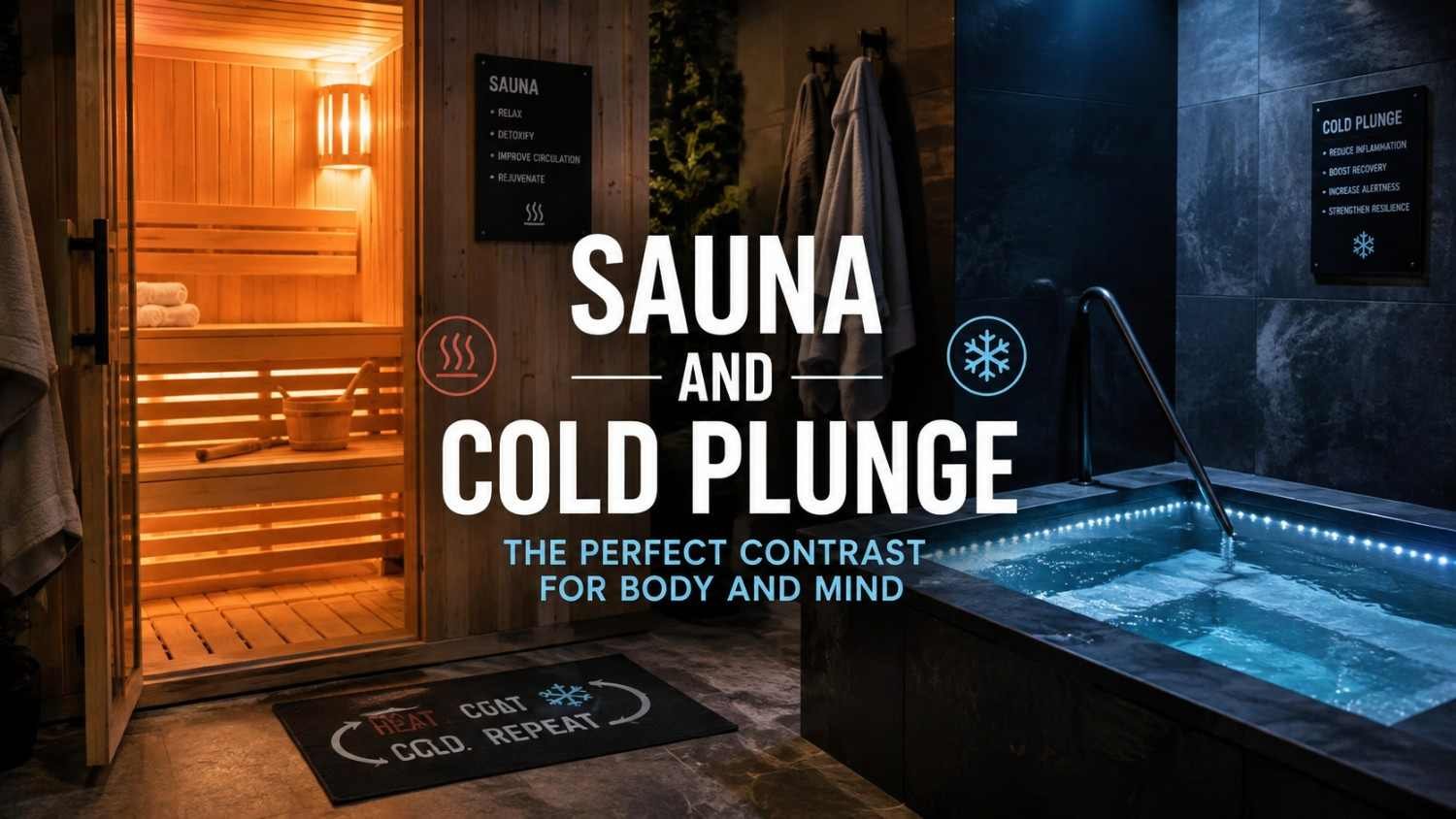
A sauna and cold plunge routine combines the soothing warmth of a traditional sauna with the invigorating sensation of cold-water immersion. This hot-and-cold approach, often called contrast therapy, gives you an opportunity to step away from your daily routine while creating a focused experience around relaxation and recovery.
For active individuals and wellness enthusiasts, sauna and cold plunge sessions can be an enjoyable way to refresh both body and mind. The heat encourages a feeling of relaxation and comfort, while the cold provides an energizing change of pace. Used responsibly, these two practices can become part of a balanced wellness routine.
What Makes Heat and Cold a Powerful Combination?
Heat and cold affect the body in different ways. During sauna exposure, the body warms up and blood vessels near the skin expand as the body works to manage its temperature. Sweating is another natural response to the heat.
Cold-water immersion creates a contrasting response. The sudden cold causes blood vessels to narrow and can make you feel more alert. Moving between these two environments is the basic principle behind contrast therapy.
Relax and Unwind in the Sauna
A traditional sauna can be an ideal place to slow down. The warm environment encourages you to sit quietly, breathe comfortably, and take a break from everyday distractions.
Many people choose sauna sessions after physical activity because the warmth can help them feel relaxed. Others simply enjoy sauna time as part of their personal self-care routine.
Refresh Yourself With Cold Water
A cold plunge delivers an entirely different sensation. The initial exposure can feel challenging, but a short session can leave you feeling awake and refreshed.
Cold-water immersion is also commonly used by physically active people following demanding workouts. It may help reduce the perception of muscle soreness and provide a refreshing transition after exercise.
How Contrast Therapy Can Complement Your Routine
Add Variety to Recovery
Recovery involves more than one technique. Rest, sleep, hydration, nutrition, and appropriate training all play important roles. Heat and cold exposure can be additional options for people who enjoy experimenting with different recovery practices.
A structured hot-and-cold session can make recovery time feel more intentional without requiring complicated equipment at home.
Encourage Relaxation and Alertness
The sauna portion offers a slower, calmer experience, while the cold portion creates an immediate feeling of stimulation. This contrast can make the entire session feel dynamic and refreshing.
For some people, the combination is particularly appealing because it provides both a period of relaxation and a strong finishing sensation.
Create Time for Yourself
Wellness is not always about performance. Taking time away from work, phones, and everyday responsibilities can be valuable in itself.
A sauna and cold routine provides a dedicated opportunity to focus on your breathing, body, and overall experience without the distractions of a normal day.
Starting Your First Session
If you are unfamiliar with contrast therapy, begin with manageable exposure. Spend a comfortable amount of time in the sauna before trying a brief cold plunge.
Allow yourself to rest between transitions and avoid comparing your routine with someone else’s. Your ideal experience should be based on your own tolerance and comfort.
Hydration and Recovery Matter
Sauna heat can cause significant sweating, so drinking enough fluids is important. Give yourself time to recover after the session rather than immediately returning to intense physical activity.
If you experience dizziness, faintness, chest discomfort, or unusual breathing difficulty, stop the session.
Who Should Take Extra Care?
Hot and cold exposure can place stress on the cardiovascular system. People with certain heart conditions, blood-pressure concerns, circulation problems, or other relevant medical conditions should consult a healthcare professional before beginning contrast therapy.
The purpose of a wellness session should be to support your routine, not to push your body beyond safe limits.
Experience a Hot-and-Cold Wellness Routine in Denver
Therma Haus Denver offers a dedicated space for guests who want to experience traditional sauna and cold-water immersion together. The combination creates an environment focused on relaxation, recovery, and a refreshing reset.
Whether you are looking for a post-workout experience or simply want to introduce something different into your wellness routine, contrast therapy can provide an engaging way to alternate between heat and cold.
FAQs
What is sauna and cold plunge therapy?
It is a contrast therapy routine that combines exposure to sauna heat with cold-water immersion, generally with rest between the two.
Is contrast therapy helpful after exercise?
Cold-water immersion may help reduce perceived muscle soreness after strenuous exercise. It can be used as one part of a broader recovery routine.
How should a beginner approach cold plunging?
Start with brief, manageable exposure rather than attempting long or extremely cold sessions. Gradual progression can help you become more comfortable with the experience.
Can sauna and cold plunge be part of a wellness routine?
Yes. Many people incorporate heat and cold exposure into their wellness routines alongside exercise, rest, hydration, and healthy lifestyle habits.
Conclusion
A sauna and cold plunge routine offers a distinctive combination of relaxation and refreshment. Traditional sauna heat provides a calming experience, while cold-water immersion delivers an invigorating contrast. By starting gradually and prioritizing safety, you can make contrast therapy a meaningful addition to your wellness routine. Therma Haus Denver to experience a dedicated sauna and cold plunge experience in Denver and discover your own approach to heat, cold, recovery, and relaxation.