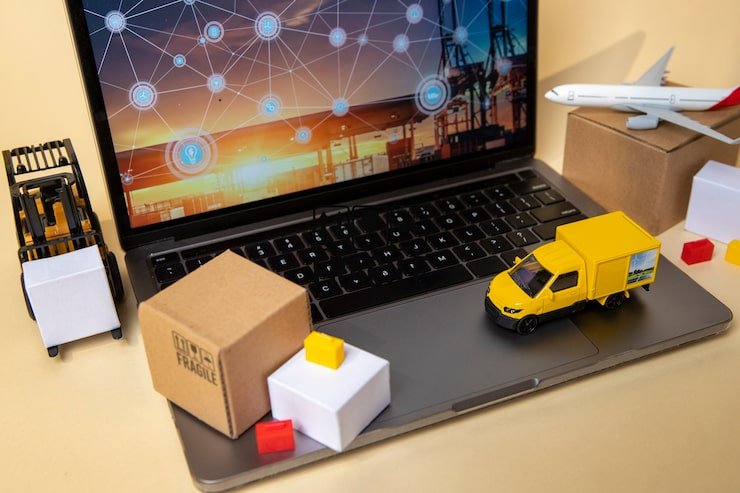
South Korea’s e-commerce logistics market is developing rapidly as highly connected consumers, strong online retail activity, and expectations for fast delivery reshape logistics operations. The ecosystem covers transportation, warehousing, fulfillment, last-mile delivery, parcel services, and value-added logistics. Dense urban populations and advanced digital infrastructure are also encouraging logistics providers to invest in automation, tracking systems, and increasingly integrated delivery networks.
According to MarkNtel Advisor’s South Korea E-Commerce Logistics market analysis, the market was valued at USD 9.4 billion in 2025 and is projected to reach USD 21.9 billion by 2032, expanding at a CAGR of 12.90% during 2026–2032. The central region, including Seoul, Gyeonggi, and Incheon, accounted for approximately 54% of the market in 2025, while transportation held about 56% and last-mile delivery networks around 32%.
E-Commerce Growth Drives Logistics Demand
The continued expansion of online shopping is increasing the volume and complexity of parcel movements across South Korea. Consumers increasingly expect convenient ordering, transparent tracking, and rapid fulfillment, requiring logistics providers to coordinate inventory, transportation, sorting, and delivery more efficiently.
Recent official data underline the scale of online retail activity. According to Statistics Korea’s online shopping trends, online shopping transactions reached KRW 24.21 trillion in August 2026, increasing 7.3% year over year. Mobile shopping accounted for 78.1% of total online shopping transactions, highlighting the importance of digitally enabled purchasing and fulfillment infrastructure.
Transportation Remains the Leading Service Segment
Transportation represented approximately 56% of the South Korea e-commerce logistics market in 2025, making it the leading service type. The segment benefits from the need to move products efficiently between sellers, warehouses, fulfillment centers, sorting facilities, and customers.
The increasing popularity of same-day and next-day delivery places additional pressure on transportation networks. Logistics providers are therefore adopting route-optimization systems, real-time tracking, automated dispatching, and increasingly sophisticated fleet-management technologies. Efficient transportation is particularly important in metropolitan areas where traffic congestion and high delivery density can affect operating performance.
Last-Mile Delivery Gains Strategic Importance
Last-mile delivery networks accounted for approximately 32% of the market in 2025. The segment has become central to e-commerce logistics because the final stage of delivery directly affects customer experience, fulfillment speed, and operating costs.
South Korea’s dense urban environment supports the development of high-frequency delivery networks. Micro-fulfillment centers, automated sorting facilities, parcel lockers, pickup points, and strategically located distribution hubs can reduce delivery distances and improve order processing. The growth of mobile commerce further increases the importance of reliable last-mile operations.
Seoul and Surrounding Areas Lead Regional Activity
The central region, including Seoul, Gyeonggi Province, and Incheon, held approximately 54% of the South Korean e-commerce logistics market in 2025. The concentration of consumers, businesses, fulfillment infrastructure, airports, ports, and transportation networks gives the region a significant logistical advantage.
The Seoul metropolitan area also supports high delivery density, allowing logistics operators to serve large numbers of customers within relatively concentrated geographic areas. Incheon’s international connectivity strengthens the region’s role in cross-border e-commerce, while Gyeonggi provides locations for warehouses and distribution facilities serving the broader metropolitan market.
Automation Transforms Warehousing
Automation is becoming increasingly important as logistics companies seek to process higher parcel volumes while managing labor constraints. Automated storage and retrieval systems, robotic picking, sorting technologies, conveyor systems, and AI-enabled inventory management can improve warehouse productivity and reduce repetitive manual activities.
The South Korean government is also supporting smart logistics infrastructure. Initiatives led by the Ministry of Land, Infrastructure and Transport have promoted smart logistics centers and advanced technologies designed to improve warehousing and transportation efficiency. This policy direction is encouraging companies to integrate automation with digital logistics management systems.
Cross-Border E-Commerce Expands Logistics Requirements
Cross-border online purchases are creating additional demand for international logistics, customs processing, air cargo, bonded warehousing, and parcel-handling capabilities. Korean consumers purchase products from overseas platforms, while domestic businesses increasingly use e-commerce channels to reach international customers.
This two-way flow requires logistics operators to manage customs documentation, international transportation, inventory positioning, and delivery coordination. Improvements in digital customs processes can reduce administrative delays and support faster movement of parcels through international gateways.
Sustainable Logistics Gains Momentum
Environmental considerations are increasingly influencing logistics infrastructure and fleet strategies. Delivery companies are evaluating electric vehicles, energy-efficient warehouses, renewable-energy systems, route optimization, and lower-impact packaging to reduce emissions and operating costs.
South Korea’s broader carbon-neutrality objectives provide a policy framework for these changes. The transition toward electric delivery vehicles can be particularly relevant for urban logistics, where vehicles operate frequently over relatively short distances. Energy-efficient warehouses can similarly reduce electricity consumption associated with lighting, cooling, automation, and material-handling systems.
Labor Shortages and Costs Remain Challenges
Labor shortages and rising warehousing costs remain important constraints for the industry. Rapid delivery growth can increase workload for drivers and warehouse personnel, while high demand for strategically located logistics facilities can raise property and operating costs in metropolitan areas.
The concentration of logistics infrastructure around Seoul and neighboring areas creates efficiency advantages but also intensifies competition for suitable warehouse space. Operators may therefore consider facilities farther from major urban centers, although longer transportation distances can increase last-mile costs and delivery times.
Market Outlook
The South Korea e-commerce logistics market is projected to reach USD 21.9 billion by 2032, expanding at a CAGR of 12.90% during 2026–2032. Transportation and last-mile delivery networks currently hold leading positions, while the Seoul metropolitan region remains the core logistics hub. Continued online shopping growth, warehouse automation, cross-border commerce, smart infrastructure, and sustainable transportation are expected to shape the market, while labor availability and rising logistics costs will remain key operational considerations.