There is a version of the conference that most people in most industries have accepted as the default.
A hotel ballroom. Rows of chairs facing a screen. A schedule of sessions running back to back from nine in the morning until someone announces that drinks are served.
The world this format was designed for no longer exists.
It works in the narrow sense that it happens and people attend it. What it rarely does is change anything. Not in the people who attended. Not in how they think about their work. Not in the relationships built over the days spent together.
In 2026, the future immersive conference experiences reshaping the event industry will begin from a completely different starting point. That means the point of bringing people together is not to deliver content to them. It is to create the conditions in how they see their field. In what they believe is possible. In who they are, in some small but real way, when they leave.
What does an event look like when it is designed this way entirely? This October in Jaipur, there is an answer.
The Experience Design Summit India is one of them. Mundota Palace & Fort, Jaipur, plays host to a five-day residential gathering this October to EDS, running from 23rd to 28th October 2026.
One hundred and fifty practitioners, selected for the depth and range of what they bring, will work alongside twelve faculty drawn from fields as different as immersive theatre, sensory science, sacred performance, cinema, and cultural storytelling.
How interactive design is redefining the experience?
The term “interactive” has been stretched so far within the events industry that it now risks meaning almost everything and therefore very little.
Live polls. Audience Q&As. Breakout groups where people discuss a question and report back to the room. These are not interactive design. They are participation mechanics bolted onto a format that has not fundamentally changed.
To experience designers, interactive design is not about technology or touchpoints. It is about what happens between a person and the space they are placed in. What does the room communicate before a single word is spoken? What does the arrangement of the room say about who matters here?
Architects know it. Theatre directors know it. Sensory designers know it. The answers live in space, light, sound, narrative, and sequence. And in the careful, considered decision of who should be in the room in the first place.
One of the biggest shifts happening right now is environmental storytelling. The space is not a container for the experience. It is part of the experience. Every detail of the physical environment communicates something, and the best designers are now treating those communications with the same care as anything on the official programme.
It changes the relationship between content and context. In a conventional conference, the venue is a container. In an immersive experience, the venue is a participant. The space itself communicates something. It sets a tone, creates conditions, and shapes what kinds of conversations are possible inside it.
This is where experience design and event design converge. And it is where the most interesting work in the industry is currently happening.
What did the conventional format get wrong?
There is a distinction worth making clearly. An event is something that happens. An experience is something that happens to you.
Most conferences fall into the first category. They have a programme, a venue, a list of speakers, and a date.
The future immersive conference experiences that are reshaping the industry fall into the second category. They are designed from the inside out, starting with the question of what a person should feel when they walk in.
The conventional conference was built for a world where information was hard to come by and expertise was even harder. Getting the right people on a stage in front of the right audience was genuinely valuable. That world does not exist anymore. That model no longer holds. Information is everywhere, and much of a conference’s content can be accessed more easily online.
Being in the room changes you in ways that are hard to explain. The conversations, the people you meet, the way you start thinking differently — none of that travels. That is what the future of immersive conferences is built around.
This is not a small difference in execution. It is a complete reversal of the design process. The immersive experience design summit format that EDS represents is built on exactly this kind of expertise.
The twelve faculty members at EDS come from immersive theatre, cinema, sacred performance, sensory transformation, and cultural curation. Different careers, different methods, different starting points. But each of them has arrived at the same understanding of what the work ultimately requires: making a person feel, without any doubt, that what is happening to them is real.
The role of place in immersive experience design
One of the most underexplored dimensions of immersive event design is the role of the physical location — the place in the experiential sense. What it communicates. What it makes possible.
The most considered immersive conference experiences treat the location as a design decision of the highest order. The space is not chosen because it has the right number of breakout rooms. It is chosen because it already carries a quality of atmosphere, history, or spatial character that the event can work with rather than against.
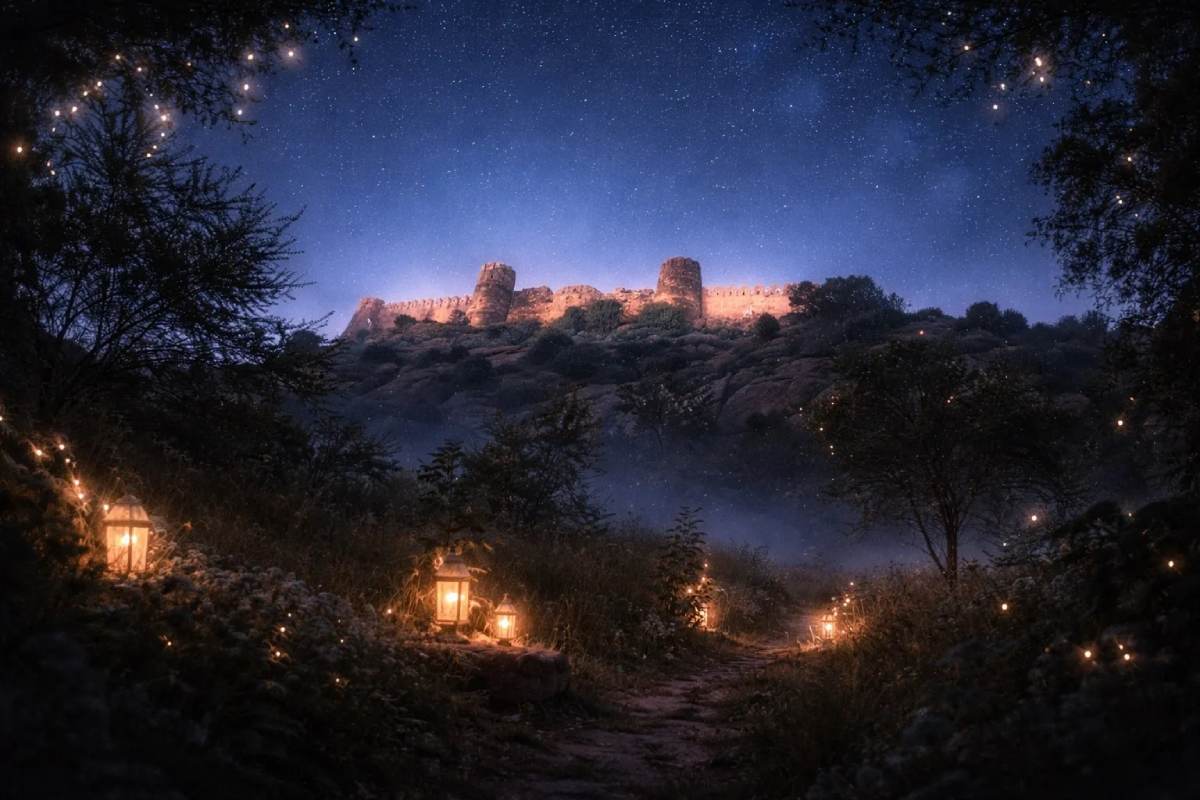
Mundota Palace & Fort in Jaipur chosed for EDS is exactly this kind of location. Mundota is a 500-year-old estate above the plains of Rajasthan. For five centuries, it has left its mark on everyone who has entered it. The stone, the scale, the particular quality of its silences: these are not incidental to what EDS is. They are part of what EDS is designed to do to the people inside it.
This is what separates an immersive experience design summit from a conventional event experience design conference.
Why the future of events belong to experience design?
The future of events is not more technology. It is more intentionality.
The clearest way to understand the future immersive conference experiences is to look at what the best ones are already doing.
They begin before the event officially starts. They treat the programme as an arc rather than a schedule. Not a list of sessions to get through but a sequence of experiences designed to move participants through something over the course of the days they are there. What happens on day one creates the conditions for what becomes possible on day five.
They design for the unscheduled as carefully as the scheduled. The best moments in any immersive conference experience happen in the spaces between the official programme. The best designers know this and create the conditions for those moments deliberately.
They measure success differently. Not by how many people attended or how the speaker ratings came in, but by what participants carried away and what changed in how they work because of it.
EDS is built on all of these principles. Five days at Mundota Palace & Fort. One hundred and fifty curated practitioners. Twelve faculty members from immersive theatre, cinema, hospitality, sensory science, sacred performance, and cultural storytelling. Applications are open now at expdesign.org.
The event experience design conference model that EDS represents is not the future of events. It is already the present for the people at the leading edge of the field. The question for everyone else is how long it takes to catch up.
Applications for EDS 2026 are open now. Write to explore@expdesign.org or visit expdesign.org. Attendance is limited to 150 curated participants.
Frequently asked questions
1- What are immersive conference experiences?
Immersive conference experiences are events that focus on getting participants involved. They combine the physical environment, the vibe, and sensory details to build a stronger link between the content and the audience — moving past regular presentations to make attendees actively participate in the experience.
2- How is interactive design redefining the conference format?
Interactive design transforms conferences into interactive discussions. Rather than having speakers talk to a passive crowd, everyone present gets involved — and this alters the way spaces are arranged, how programs are created, and how information is received.
3- What is an immersive experience design summit?
A gathering where the format reflects the subject. EDS is a five-day residential programme at Mundota Palace & Fort, Jaipur, running 23rd to 28th October 2026, built around the discipline of experience design.
4- What makes EDS different from a conventional event experience design conference?
It’s residential, curated, and focused on doing the work rather than discussing it. The location, faculty, cohort, and programme are all part of one designed experience — not separate items on a schedule.
5- Who should attend EDS 2026?
It is for practitioners who work across hospitality, luxury, live events, cultural tourism, brand, and design and have spent their careers knowing that experience is not a trend. It is the work.
6- How do I apply for EDS 2026?
Write to explore@expdesign.org or visit expdesign.org. Attendance is limited to 150 curated participants.