Dental pain has a particular cruelty to it. It waits until you lie down.
There’s a reason for that, and it isn’t bad luck. When you’re upright, blood drains away from your head. Lie flat and pressure inside the confined space of the tooth’s pulp chamber rises. That chamber has no room to expand, so inflamed tissue pushes against rigid walls and the nerve reports it the only way it can.
Which means the 2am throb isn’t your imagination, and it isn’t a sign things got suddenly worse. It’s positional. Useful to know at 2am.
First, Work Out What Kind of Pain It Is
Not all toothache means the same thing, and the distinction changes what you should do next.
Sharp pain that stops the moment the trigger goes: Cold water hits a tooth, you flinch, three seconds later it’s gone. This is usually exposed dentine — worn enamel, a receding gumline, or a small area of decay. Uncomfortable, not urgent.
Lingering pain after hot or cold: Same trigger, but the ache continues for thirty seconds or longer after you’ve swallowed. This pattern generally indicates the pulp is inflamed rather than merely irritated. It tends to progress, and it’s the one most likely to end in root canal treatment if it’s left.
Constant, deep, throbbing pain: Doesn’t need a trigger. Often worse lying down, often described as pressure rather than sharpness. This suggests the nerve tissue is dying or already dead, with infection building at the root tip.
Pain on biting: Fine at rest, sharp when you put pressure on one specific spot. Often a crack. Cracks are frustrating because they can be invisible on an X-ray and still cause significant pain.
Knowing which of these you have tells whoever you ring in the morning far more than “my tooth hurts.”
What Actually Helps Overnight
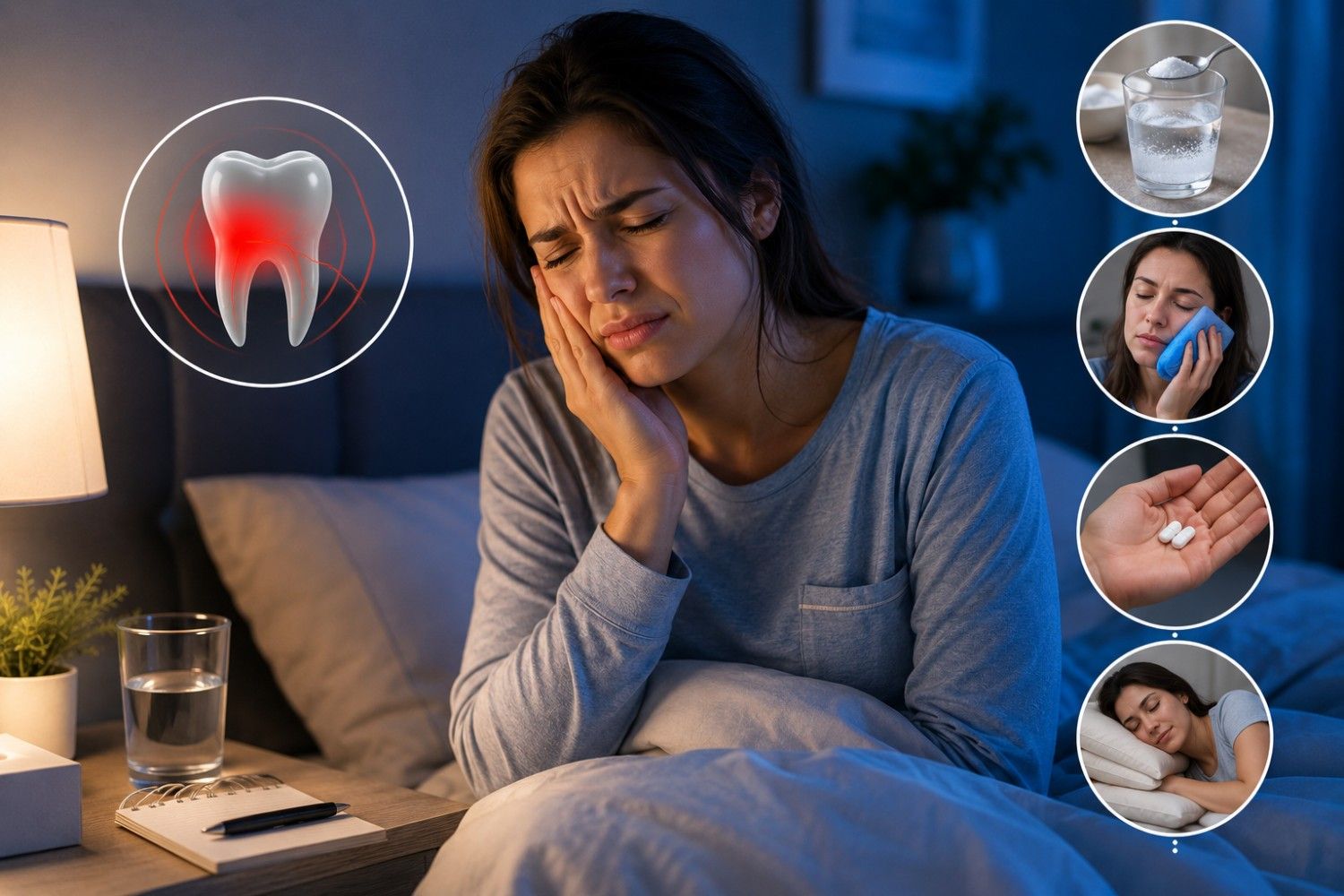
Stay elevated. Two pillows, or sleep in a recliner if you have one. This is the single most effective free thing you can do, for the pressure reason above.
Ibuprofen, if you can take it. Dental pain is overwhelmingly inflammatory, and anti-inflammatories address the mechanism rather than just masking the signal. Paracetamol taken alongside it, staggered, is often more effective than increasing either drug alone. Anyone with asthma, stomach ulcers, kidney concerns, or on blood thinners should check with a pharmacist rather than assuming. Health Direct’s medicines information is a reliable place to check interactions, and the NSW Pharmaceutical Society runs a phone line for exactly this kind of question.
Cold compress on the outside of the cheek. Twenty minutes on, twenty off. Reduces blood flow to the area, which reduces pressure.
Salt water rinse. Half a teaspoon in warm water. Won’t fix anything but it clears debris and offers genuine short-term relief when the gum is involved.
Avoid chewing on that side. Obvious, but people forget and test it repeatedly to see if it still hurts. It does.
What Doesn’t Help, Despite What You’ll Read
Aspirin held against the gum. This causes a chemical burn to soft tissue. The tooth underneath is unaffected. Swallow it or don’t use it.
Heat packs. If infection is present, heat encourages it to spread. Cold only.
Clove oil, applied liberally. Eugenol does have mild anaesthetic properties and it’s been used for a long time, but neat clove oil burns the gum and tongue. If you use it at all, a trace amount on cotton wool, on the tooth, not the gum.
Antibiotics from a leftover packet. Partial courses breed resistance and won’t touch a tooth with a dead nerve, because there’s no blood supply left to carry the drug where it needs to go. Australia’s antimicrobial stewardship guidance is clear that dental infections generally require physical treatment of the tooth rather than antibiotics alone.
The Signs That Mean Don’t Wait for Morning
Ring the after-hours line or go to hospital if any of these appear:
- Swelling that’s spreading into the cheek, under the jaw, or towards the eye
- Difficulty swallowing, or a feeling that your throat is closing
- Fever alongside the tooth pain
- Trouble opening your mouth more than a couple of centimetres
- Pain that no amount of pain relief touches
NSW Health provides emergency dental information and public clinic access details through its oral health service, and for the Macarthur region, Campbelltown emergency dental clinic department handles infections that have spread beyond the tooth.
Why It Started at Night in the First Place
Two more contributing factors worth knowing.
Nighttime clenching and grinding is far more common than people realise, and it loads teeth that are already compromised. If you wake with jaw tightness alongside the tooth pain, that’s a clue.
And distraction disappears. During the day your attention is spread across work, kids, traffic. At night there’s nothing competing for it. Pain that was a background hum becomes the only thing in the room. That’s real, not weakness.
What Happens the Next Day
Expect an examination, likely an X-ray, and a conversation about which of the four pain patterns above matches what you’ve described. Sensitivity often needs nothing more than a desensitising treatment or a small filling. Lingering pain may mean root canal treatment or extraction, and you’ll usually be given the choice.
The important thing is that the appointment happens. Pain that settles overnight doesn’t mean the problem resolved — a nerve that dies stops hurting, and that’s the quiet phase before an abscess.
For patients across Bradbury, Ruse, Airds and the surrounding Campbelltown area, Bradbury Dental Surgery reserves appointment slots each morning for people who had a bad night. Ring early; those slots fill by nine.