It is 7 p.m., your child has a fever, or you have just rolled an ankle on the stairs. The instinct many of us have is to head straight to the nearest emergency room. In my experience working with patients, that instinct is understandable, and it often leads to a long evening for a problem that a clinic could have handled in under an hour. Knowing the difference between the two settings helps you get care sooner and keeps emergency teams available for people in real danger.
How the Emergency Room Actually Works
The first thing worth understanding is that an emergency department does not see patients in order of arrival. Triage nurses assess each person and prioritize by severity, using the Canadian Triage and Acuity Scale. A person with chest pain or difficulty breathing will always be seen before someone with a sprain, even if the sprain arrived hours earlier. This is how it should work, but it means a minor problem can wait a long time.
The scale of the issue is documented. The Canadian Institute for Health Information reports that 15% of emergency department visits across Canada between April 2023 and March 2024 were for conditions that could potentially have been managed in primary care. The same body cautions that it is not possible to know for sure whether a given visit could have been treated elsewhere, and that such a visit does not always reflect poor access to care. It is a fair reminder that this is not about blame. People go where they believe help is available.
When a Walk-In Clinic Is the Right Choice
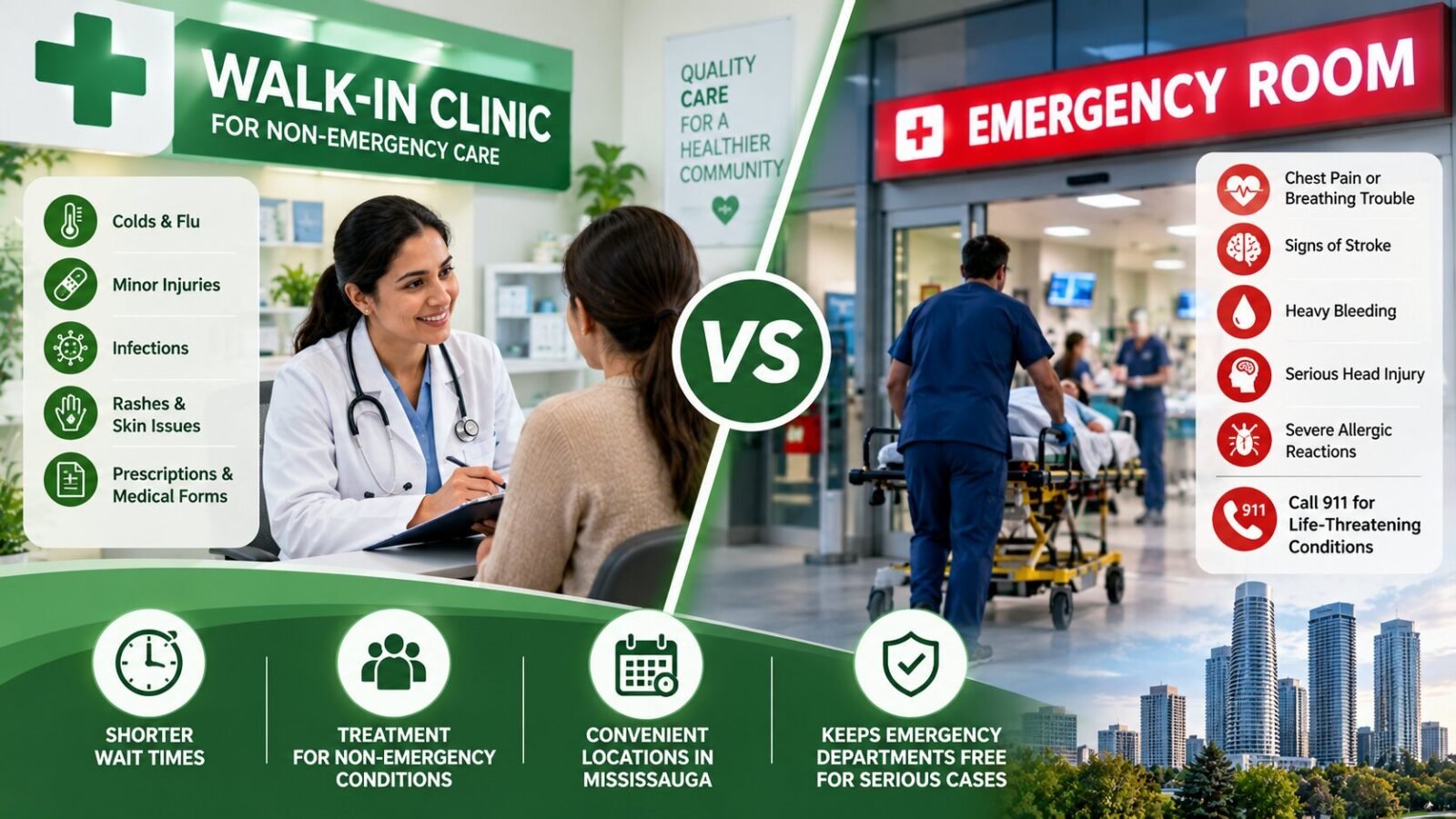
A walk-in clinic works well for problems that are uncomfortable or worrying but not life-threatening. In my experience, the most common reasons people come in are:
- Colds, flu symptoms, sore throats and ear pain
- Minor cuts, sprains, strains and bruises
- Urinary tract infections and skin rashes
- Sudden but manageable fevers in older children and adults
- Prescription renewals and simple medical forms
These are the situations where a clinic physician can examine you, order basic tests, prescribe treatment and explain what to expect. If you are looking for a Mississauga walk-in clinic for any of these, the visit is typically shorter and less stressful than a hospital trip.
When You Should Go to the Emergency Room
Walk-in clinics are not a substitute for emergency care, and I would never want anyone to hesitate when a situation is serious. Call 911 or go to the nearest emergency department immediately if you or someone with you has:
- Chest pain or pressure, or sudden shortness of breath
- Signs of a stroke, such as facial drooping, arm weakness or slurred speech
- Heavy bleeding that will not stop
- A head injury with confusion, repeated vomiting or loss of consciousness
- A fever in a baby under three months old
- Severe allergic reactions, such as swelling of the face or throat
A simple rule: if you are asking yourself whether something could be life-threatening, treat it as an emergency. You can always be redirected later, but you cannot undo a delay.
A Common Situation, and What It Taught Me
A mother I will keep anonymous came into the clinic after spending most of an evening at a hospital with her teenage son’s twisted ankle. The wait was long, and the visit ended with an X-ray, a brace and instructions to follow up. She told me later she would have gone to a clinic had she known one was open nearby. The injury was real and painful, but it was not an emergency.
The takeaway is that the question to ask is not “how bad does this feel?” but “could this be dangerous within the next few hours?” Pain and worry are valid, but they are not the same as risk.
Practical Ways to Reduce Your Wait
Even at a clinic, a few habits make your visit faster and more useful.
Check availability before you leave. Clinic hours change, especially on holidays. Searching for a walk-in clinic in Mississauga open now and confirming by phone or the clinic’s website saves a wasted trip. If you work or shop downtown, finding a walk-in clinic near Square One can fit a visit into your day more easily.
Choose your timing. In my experience, early mornings and mid-afternoons on weekdays tend to be calmer than evenings and Mondays, when people return after the weekend. This is a pattern, not a rule, so call ahead when you can.
Come prepared. Bring your health card, a list of your medications and any allergies. Write down when symptoms began and what you have already tried. Clear information shortens the appointment and helps the doctor make better decisions.
Use telephone advice when unsure. Ontario’s Health811 service (formerly Telehealth Ontario) lets you speak with a registered nurse at any hour, free of charge. If you cannot decide between a clinic and an emergency room, a five-minute call can settle it.
What About Children and Seasonal Illnesses?
Parents often feel the most pressure to choose the “safest” option, which usually means the hospital. For routine seasonal illnesses, such as mild fevers with a runny nose, a clinic is usually appropriate for children who are drinking fluids, alert and breathing comfortably. Warning signs that change the plan include trouble breathing, unusual drowsiness, a rash that does not fade when pressed, or fever in an infant. When in doubt, call Health811 or go to the emergency department.
Making a Plan Before You Need One
The best time to decide where you will go is before you are sick. Save the name and hours of a nearby clinic in your phone, and keep your health card and medication list in an easy place. Know your closest emergency department as well. That preparation costs very little and turns a stressful night into a manageable one.
Choosing the right setting benefits you directly, through faster care and less waiting. It also benefits your neighbours, because every minor visit that finds the right door leaves emergency teams free for the patients who need them most.