Finding enjoyable ways to practice communication can make a big difference for children. Many kids learn better when they are playing, exploring, and interacting rather than completing repetitive exercises. For parents supporting a child during therapy, choosing the right activities can make practice more enjoyable and encourage children to participate.
Speech Therapy Games can help children work on skills such as vocabulary, listening, pronunciation, sentence building, and social communication. The best game depends on the child’s age, abilities, interests, and individual therapy goals. A simple activity can be highly useful when it gives a child a meaningful reason to listen and communicate.
Why Use Games During Speech Therapy?
Play is a natural way for children to learn. Games can create opportunities for children to practice communication while keeping them interested and motivated.
A game may encourage a child to name an object, answer a question, describe a picture, follow instructions, or take turns with another person. Repeating these skills in a relaxed setting can help children become more comfortable using language.
Games also allow parents and therapists to adjust the level of difficulty. A younger child might practice single words, while an older child could work on complete sentences or storytelling.
- Picture Naming Games
Picture naming is one of the easiest activities to use at home or during therapy. Show a child pictures of familiar objects, animals, foods, or actions and ask them to name what they see.
Once the child becomes comfortable, make the activity more challenging by asking questions such as, “What is the dog doing?” or “What color is the ball?”
This type of game can support vocabulary development and encourage children to use words in meaningful sentences.
- Matching and Sorting Games
Matching games can be adapted for different communication goals. Children can match identical pictures, pair objects with their uses, or sort items into categories.
For example, a child could sort pictures into groups such as fruits, animals, vehicles, and clothing. Parents can introduce new words while asking the child to explain why an item belongs in a particular group.
These activities can be particularly helpful for children who benefit from visual learning.
- Storytelling and Sequencing Games
Storytelling games encourage children to organize their thoughts and describe events. Use three or four pictures showing a simple sequence, such as planting a seed, watering it, and watching it grow.
Ask the child what happened first, what happened next, and what happened at the end. Younger children can begin with short phrases, while older children can create a complete story.
These speech therapy activities can support vocabulary, sentence formation, comprehension, and expressive language.
- Turn-Taking Games
Communication is more than speaking clearly. Children also need to learn how to listen, wait, respond, and participate in conversations.
Simple turn-taking games can help develop these skills. Board games, rolling a ball back and forth, or taking turns choosing pictures can create natural opportunities for interaction.
During the activity, parents can model phrases such as “my turn,” “your turn,” “I want this,” or “let’s play.”
- Sound Practice Games
Some children need extra practice producing specific speech sounds. Games can make this practice feel less repetitive.
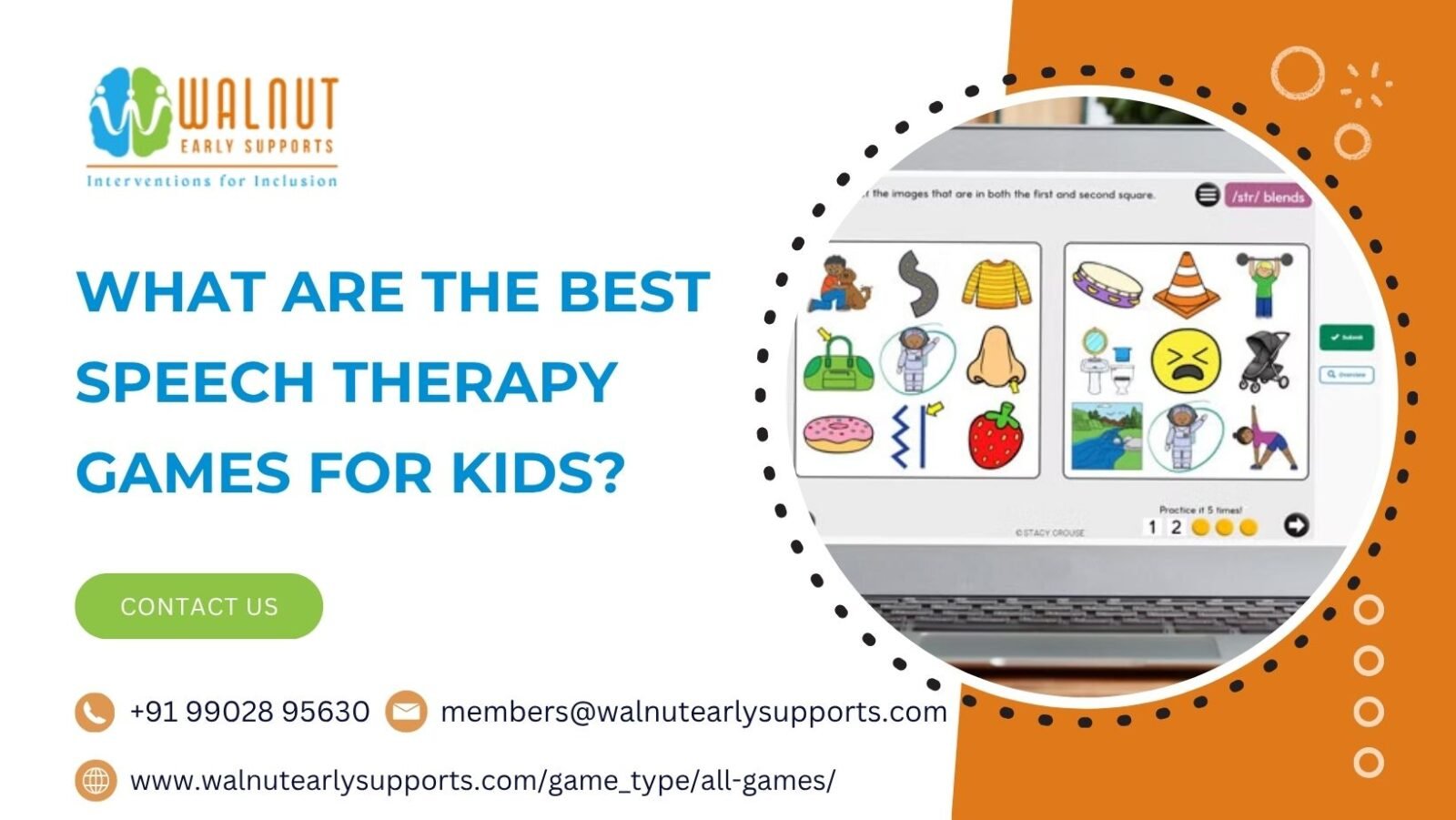
A therapist may select pictures containing a target sound and turn them into a memory game, guessing game, or picture hunt. The child can practice the sound while naming the pictures or using them in short phrases.
Parents should follow the techniques recommended by their child’s speech-language professional, particularly when working on specific speech sound difficulties.
- Games for Children With Autism
Children with autism may have different communication strengths and challenges. Activities should therefore be selected according to the child’s individual needs rather than using the same approach for every child.
Visual matching, requesting games, choice-making activities, turn-taking games, and picture-based communication activities can provide structured opportunities to interact.
Appropriate speech therapy tools for autism may help children practice functional communication in ways that are predictable and easy to understand. A speech-language professional can guide parents toward activities that match the child’s communication goals.
Choosing the Right Speech Therapy Materials for Kids
Parents may find many resources online, but not every activity is suitable for every child. When choosing speech therapy materials for kids, consider whether the activity matches the child’s age, language level, interests, and current therapy goals.
Good resources should be easy to understand and flexible enough to adjust as the child’s skills improve. Pictures, story cards, matching activities, visual prompts, and interactive digital resources can all be useful when used appropriately.
Parents can also combine different therapy materials to keep practice varied. However, having many resources is not as important as using a small number of activities consistently and meaningfully.
How Parents Can Make Games More Effective
The goal is not to make every activity perfect. Children learn through repetition, mistakes, and encouragement. Give your child enough time to respond instead of answering for them immediately.
Follow their interests whenever possible. If your child loves animals, use animal pictures, books, toys, and stories to encourage communication. If they enjoy cars, use vehicles to practice colors, actions, positions, and simple sentences.
Keep sessions short when attention is limited, and celebrate effort rather than focusing only on correct answers.
A collection of suitable child development therapy resources can also help parents and therapists introduce variety while continuing to work toward specific communication goals.
Conclusion
The best Speech Therapy Games are those that match a child’s needs while making communication practice enjoyable. Picture naming, matching, storytelling, turn-taking, and sound practice games can all create useful opportunities to develop communication skills.
Parents do not need complicated activities to support progress. With appropriate resources, regular practice, and guidance from a qualified speech-language professional when needed, everyday play can become a valuable part of a child’s communication journey.