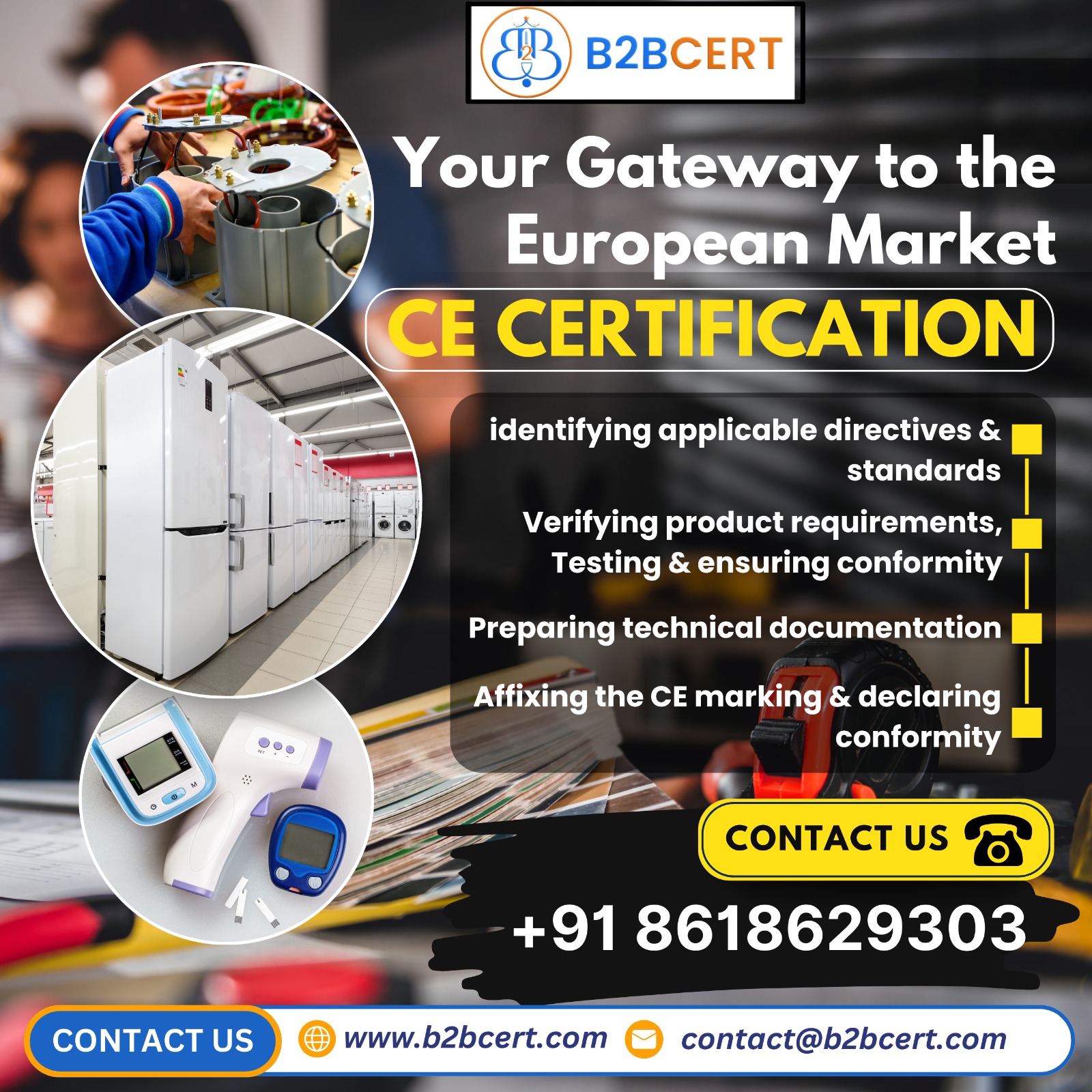
In today’s global marketplace, manufacturers seeking access to the European Economic Area (EEA) must ensure that their products comply with relevant safety, health, and environmental requirements. One of the most recognized conformity marks is the CE Certification in Singapore, which demonstrates that a product meets European Union regulations and can be legally sold within the EEA.
Understanding the steps involved in obtaining CE Certification is essential for businesses aiming to expand into European markets while maintaining compliance and consumer trust.
What Is CE Certification?
CE Certification is a conformity marking that indicates a product complies with applicable European Union directives and regulations. The CE mark is mandatory for various product categories, including machinery, medical devices, electrical equipment, construction products, toys, and personal protective equipment.
Obtaining CE Certification helps manufacturers demonstrate product safety, quality, and regulatory compliance, making it easier to access European markets.
Step 1: Identify Applicable EU Directives and Regulations
The first step in the CE Certification process is determining which EU directives and regulations apply to your product. Different product categories are governed by different requirements.
Examples include:
- Machinery Directive
- Low Voltage Directive
- Electromagnetic Compatibility (EMC) Directive
- Medical Device Regulation (MDR)
- Toy Safety Directive
A thorough regulatory assessment helps ensure that all relevant compliance obligations are identified from the beginning.
Step 2: Determine Product Requirements
After identifying applicable directives, manufacturers must understand the specific essential requirements their products need to meet. These requirements generally focus on:
- Product safety
- Performance standards
- Environmental protection
- User health protection
- Risk reduction measures
Meeting these requirements forms the foundation of CE compliance.
Step 3: Conduct a Risk Assessment
A comprehensive risk assessment is a critical component of CE Certification. Manufacturers must identify potential hazards associated with the product throughout its lifecycle.
The assessment should evaluate:
- Mechanical risks
- Electrical hazards
- Chemical exposure
- Fire risks
- Environmental impacts
- User safety concerns
Documenting identified risks and implementing appropriate control measures demonstrates compliance with EU regulations.
Step 4: Test the Product
Product testing verifies that the product meets applicable standards and regulatory requirements. Depending on the product type, testing may include:
- Electrical safety testing
- EMC testing
- Mechanical safety testing
- Environmental testing
- Performance verification
Testing can be conducted internally or through accredited laboratories, depending on regulatory requirements.
Step 5: Prepare Technical Documentation
Manufacturers must create and maintain comprehensive technical documentation, often referred to as the Technical File.
The technical file typically includes:
- Product specifications
- Design drawings
- Risk assessment reports
- Test reports
- Manufacturing procedures
- User manuals and instructions
- Compliance evidence
This documentation serves as proof that the product meets all applicable CE requirements.
Step 6: Involve a Notified Body (If Required)
Certain high-risk products require assessment by a Notified Body, an organization authorized by the EU to evaluate conformity.
Examples of products that may require Notified Body involvement include:
- Medical devices
- Pressure equipment
- Certain machinery
- Personal protective equipment
The Notified Body reviews documentation, conducts assessments, and issues conformity certificates when applicable.
Step 7: Draft the EU Declaration of Conformity
Once compliance has been verified, the manufacturer prepares an EU Declaration of Conformity (DoC).
This declaration includes:
- Manufacturer information
- Product identification
- Applicable directives and standards
- Compliance statement
- Authorized signature
The declaration serves as an official statement that the product meets all relevant EU requirements.
Step 8: Affix the CE Mark
After completing all conformity assessment procedures, manufacturers can affix the CE mark to the product.
The CE mark must be:
- Visible
- Legible
- Permanent
By displaying the CE mark, the manufacturer confirms responsibility for product compliance and regulatory conformity.
Step 9: Maintain Ongoing Compliance
CE Certification is not a one-time activity. Manufacturers must continually ensure compliance through:
- Product monitoring
- Documentation updates
- Regulatory reviews
- Design change evaluations
- Quality control processes
Ongoing compliance helps maintain market access and reduces regulatory risks.
Benefits of CE Certification
Obtaining CE Certification offers several business advantages:
Access to European Markets
CE marking enables legal product sales across the European Economic Area.
Increased Customer Confidence
Customers trust products that meet recognized European safety and quality standards.
Competitive Advantage
CE-marked products often enjoy improved market credibility and acceptance.
Reduced Regulatory Risks
Compliance minimizes the likelihood of legal issues, penalties, and product recalls.
CE Certification in Singapore
Organizations exporting products to Europe often seek professional support to simplify the certification process. Experienced CE Certification Consultants in Singapore help businesses identify applicable regulations, prepare technical documentation, conduct risk assessments, and coordinate product testing.
Professional CE Consultants Services in Singapore can significantly reduce certification timelines while ensuring compliance with all relevant EU requirements.
When planning certification projects, companies should also evaluate the CE Cost in Singapore, which may vary depending on factors such as product complexity, testing requirements, applicable directives, and Notified Body involvement.
Conclusion
Obtaining CE Certification involves a structured process that includes identifying applicable directives, assessing risks, conducting testing, preparing technical documentation, issuing a Declaration of Conformity, and affixing the CE mark. While the process may seem complex, proper planning and expert guidance can make certification more efficient and successful.
Businesses looking to enter European markets can benefit greatly from partnering with experienced CE Certification Consultants in Singapore who provide specialized CE Consultants Services in Singapore and help manage the overall CE Cost in Singapore effectively. By achieving CE Certification, organizations can enhance product credibility, ensure regulatory compliance, and unlock valuable international business opportunities.