
Introduction
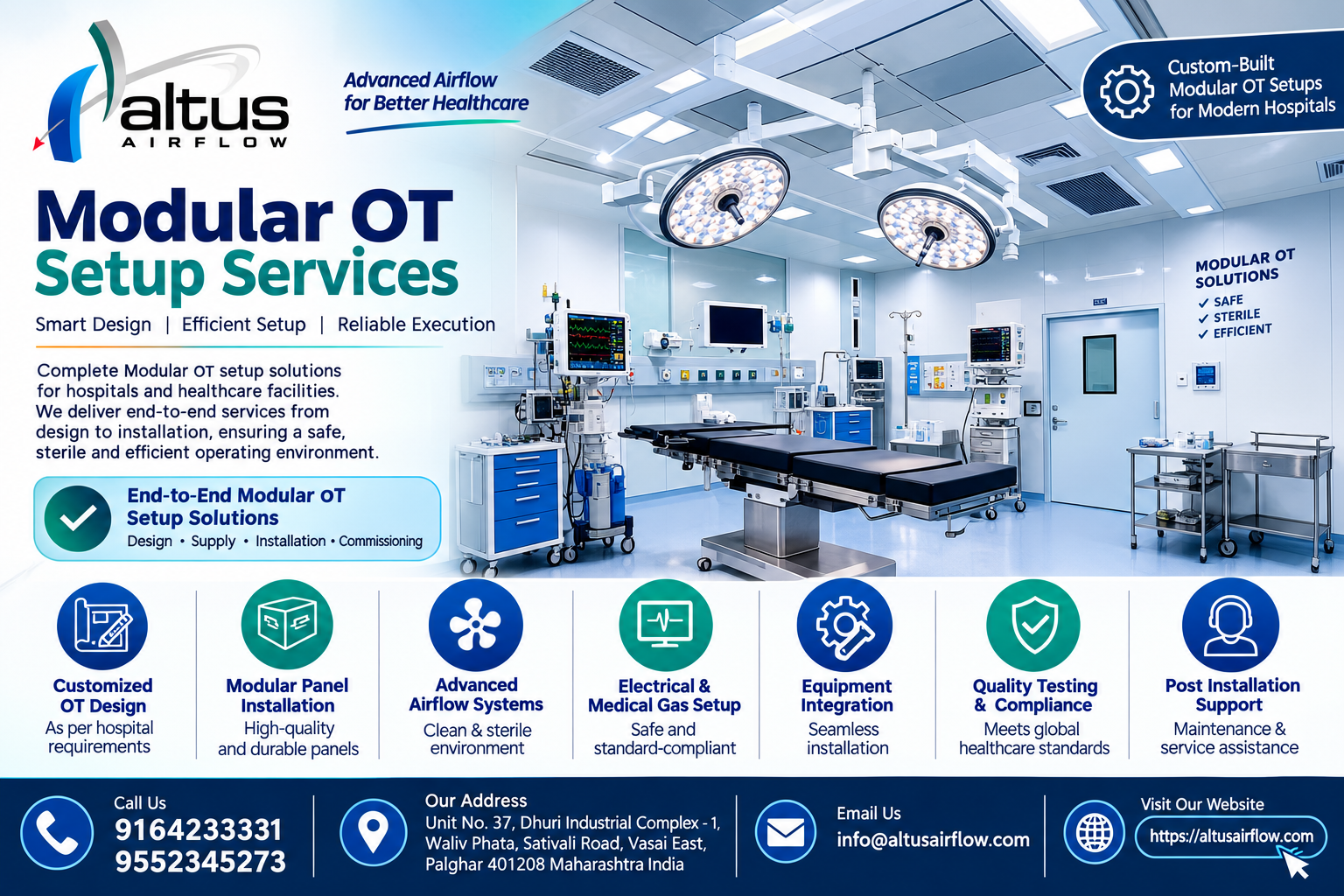
Setting up an operating theatre involves much more than arranging medical equipment inside a designated room. Hospitals need to coordinate infrastructure, utilities, ventilation, clinical workflows, hygiene requirements, equipment provisions, and maintenance considerations to create a functional environment.
Reliable Modular OT Setup Services can help hospitals approach these requirements through a structured and coordinated process. A well-planned setup should address the hospital’s present needs while also considering maintenance and potential future changes.
Understanding the Hospital’s Requirements
Every hospital has different operating requirements. The available space, types of procedures, equipment, staffing patterns, utilities, and expected workload can influence how the operating theatre should be configured.
A suitable setup process should begin with understanding these requirements. The project team can then develop an approach that reflects the facility instead of relying entirely on a standard configuration.
Early assessment can also help identify infrastructure limitations before installation begins.
Planning the Operating Theatre Layout
A practical OT layout should provide appropriate space for patients, medical teams, equipment, storage, and essential services. These elements need to be positioned carefully to support smooth movement.
Operating Theatre Setup Planning can help coordinate room configuration, equipment locations, service points, access routes, and other requirements before implementation.
Detailed planning can also reduce conflicts between engineering systems and physical components during installation.
Coordinating Engineering Services
Operating theatres rely on multiple engineering services, including electrical infrastructure, ventilation, medical gases, lighting, and other utility provisions.
These systems should be planned as interconnected components rather than separate installations. Proper coordination can help avoid service clashes and make maintenance access more practical.
Hospitals should expect the setup provider to understand how different systems interact within the available space.
Integrating Medical Equipment
Equipment requirements should be considered from the beginning of the project. The location of medical devices can influence electrical points, medical gas connections, ceiling provisions, staff movement, and maintenance access.
A coordinated setup process can help align infrastructure with equipment positions. This reduces the likelihood of unnecessary changes after installation and supports a more organised clinical environment.
Future equipment changes should also be considered where practical.
Supporting Clinical Workflow
The operating theatre should make everyday clinical activities easier to manage. Surgeons, nurses, technicians, and support personnel need convenient access to patients, equipment, utilities, and working areas.
The setup should therefore consider movement routes and equipment positioning alongside technical infrastructure. A practical layout can reduce unnecessary movement and help staff maintain an organised working environment.
Hygiene and Cleanability
Hygiene is an essential consideration in operating theatre infrastructure. Walls, ceilings, doors, joints, surfaces, and other components should be selected and detailed with regular cleaning in mind.
Hospitals should review whether the proposed materials are practical to maintain and whether the layout avoids unnecessary difficult-to-clean areas.
Addressing these factors during setup can support more manageable cleaning and maintenance routines.
Installation and Project Coordination
An operating theatre setup can involve several specialised teams. Modular components, electrical services, ventilation, medical utilities, equipment provisions, and finishing work need to be completed in an appropriate sequence.
Good project coordination can help reduce conflicts between different activities. Hospitals should also expect clear communication regarding project progress, technical requirements, and installation stages.
A structured implementation process can reduce unnecessary rework and support smoother project execution.
Testing and Handover
Once installation is complete, the operating theatre infrastructure should be reviewed against the planned requirements. Relevant systems and components should be checked before the space is placed into regular operation.
The handover process is equally important. Hospitals should receive appropriate technical documentation and information about installed systems.
Clear handover records can support facility management and future maintenance activities.
Maintenance and Service Access
An OT setup should be planned for long-term operation rather than only initial completion. Engineering systems and serviceable components should remain reasonably accessible for inspection, servicing, and repair.
If maintenance access is overlooked, even routine servicing can become unnecessarily complicated. Considering maintenance during setup can help reduce disruption to hospital operations.
Hospitals should therefore ask potential providers how service access is incorporated into their approach.
Preparing for Future Requirements
Hospital needs can change as procedures evolve, equipment is upgraded, or clinical services expand. A well-planned operating theatre should allow reasonable flexibility wherever possible.
Considering future equipment and infrastructure requirements during the setup stage can make later modifications easier to manage.
This approach can also help hospitals maintain the usefulness of their operating theatre over a longer period.
Choosing a Reliable Setup Provider
Hospitals should evaluate providers based on their overall capability. Important considerations include planning, engineering coordination, equipment integration, installation management, hygiene, clinical workflow, documentation, maintenance, and future flexibility.
The provider should also demonstrate an understanding of the hospital’s specific requirements rather than offering an entirely standard solution.
A strong setup process should result in a coordinated operating environment that is practical for both clinical teams and facility managers.
Conclusion
Choosing dependable Modular OT Setup Services can help hospitals manage the many requirements involved in developing a functional operating theatre. Detailed planning, engineering coordination, equipment integration, hygiene, installation, testing, handover, and maintenance should all be considered as part of the process.
Hospitals should select a provider that combines technical understanding with awareness of clinical workflows. A coordinated setup approach can create an OT environment that is practical to operate, easier to maintain, and better prepared for future requirements.
FAQs
1. What do Modular OT Setup Services include?
They can include layout planning, engineering coordination, equipment integration, installation, hygiene considerations, testing, documentation, handover, and maintenance planning.
2. Why is planning important before setting up an OT?
Detailed planning helps coordinate room layouts, utilities, equipment, access routes, and engineering systems before installation begins, reducing the possibility of avoidable conflicts.
3. How is equipment integrated during OT setup?
Equipment positions and requirements can be reviewed during planning so that electrical points, medical services, ceiling provisions, access, and working space are appropriately coordinated.
4. Should maintenance access be included in OT setup planning?
Yes. Planning access to serviceable systems can make inspection, repairs, and routine maintenance easier while reducing potential disruption to hospital operations.
5. Can OT setup planning accommodate future changes?
A carefully planned setup can allow reasonable flexibility for equipment upgrades, infrastructure changes, and evolving hospital requirements.
Read Our Previous Blog———–> How to Find Trusted NICU Manufacturers In India?