
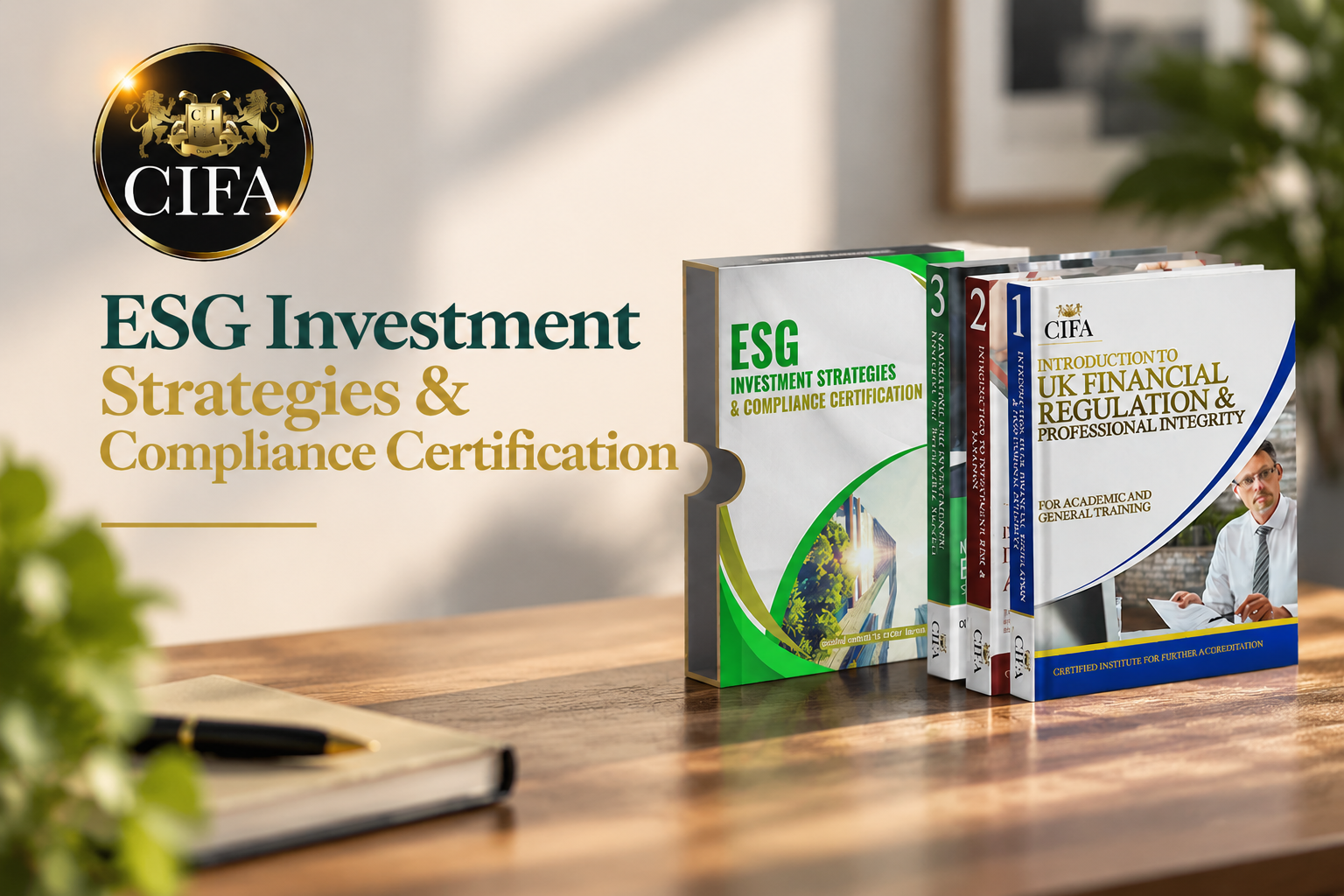
Environmental, social and governance considerations have moved far beyond the boundaries of corporate sustainability reports. In 2026, ESG is increasingly connected to investment decisions, risk management, regulatory expectations, corporate governance and the way financial institutions assess long-term business performance.
For finance professionals, this shift creates an important career consideration. Understanding financial statements, investment principles and risk is still fundamental, but professionals are increasingly expected to understand how environmental and social factors can influence financial decisions and organisational risk. This is where ESG Compliance Certification can provide valuable professional development.
An ESG qualification does not simply add another line to a CV. It can help finance professionals develop a more complete understanding of the factors influencing modern financial markets and investment strategies.
ESG Is Becoming Part of Mainstream Finance
ESG was once treated by many organisations as a specialist sustainability issue. Today, it increasingly intersects with mainstream finance.
Investment managers may consider climate-related risks when assessing companies. Banks can evaluate environmental and social factors as part of broader risk assessments. Businesses are paying greater attention to governance structures, ethical practices and sustainability-related disclosures.
This means finance professionals cannot always separate financial performance from wider business considerations.
A company facing significant environmental risks, weak governance or poor social practices may encounter financial consequences. These could affect its reputation, operational stability, regulatory exposure, access to capital or long-term investment appeal.
Professionals who understand this relationship are better positioned to participate in informed financial discussions.
Why ESG Knowledge Matters for Finance Professionals
The value of ESG knowledge is not limited to people working in sustainability departments. Its relevance extends across investment, compliance, banking, financial analysis, risk management and wealth management.
A finance professional may encounter ESG considerations while evaluating an investment, reviewing organisational risks, assessing corporate performance or advising clients.
Without a working understanding of ESG principles, it can become difficult to interpret these considerations properly.
Certification provides a structured way to build that knowledge. Rather than relying on scattered articles or general awareness, professionals can develop a clearer understanding of ESG investment strategies, compliance considerations and the relationship between sustainability and financial decision-making.
ESG and Investment Decision-Making
Investment decisions are increasingly influenced by more than traditional financial metrics.
Revenue growth, profitability, debt levels and cash flow remain important, but investors may also consider factors such as environmental exposure, governance quality, supply-chain practices and social responsibility.
This does not mean ESG replaces conventional financial analysis. Instead, it can complement it.
For example, an analyst assessing a business may need to consider whether environmental risks could affect future operating costs or whether governance weaknesses could create additional business risk.
Understanding these factors can help finance professionals approach investment analysis from a broader perspective.
Compliance Is Becoming Increasingly Important
The word “compliance” is particularly important when discussing ESG.
As ESG information becomes more relevant to investors and stakeholders, organisations need processes for managing sustainability-related information responsibly. Finance professionals working in compliance and risk may therefore encounter ESG-related policies, reporting expectations, disclosures and governance requirements.
This creates a need for professionals who understand both financial principles and the compliance implications surrounding ESG.
An ESG compliance certification can help bridge that gap by introducing professionals to the principles behind responsible investment, governance and sustainability-related financial considerations.
ESG Skills Can Strengthen Career Versatility
One of the strongest reasons to study ESG is career versatility.
Finance professionals rarely remain confined to one responsibility throughout their careers. Someone who begins in financial analysis may later move into investment management, compliance, risk, advisory work or corporate finance.
Developing knowledge across connected areas can make that transition easier.
ESG sits at the intersection of several disciplines. It brings together investment analysis, risk management, governance, regulation and sustainability. Because of this, ESG knowledge can complement an existing finance background rather than requiring professionals to abandon their core expertise.
For early-career professionals, this can also help create a broader professional profile.
A Stronger Understanding of Risk
Risk management is one of the clearest connections between ESG and finance.
Environmental issues can create operational and financial risks. Social factors can influence employee relations, supply chains and corporate reputation. Governance weaknesses can affect decision-making, accountability and regulatory exposure.
The important point is not simply to label these issues as “ESG risks”. Finance professionals need to understand how such factors may translate into financial consequences.
That requires analytical thinking.
An ESG qualification can encourage professionals to look beyond immediate financial indicators and consider the wider factors that could influence an organisation’s resilience and long-term performance.
ESG Knowledge Can Support Better Client Conversations
Professionals working directly with clients may also benefit from stronger ESG awareness.
Investors increasingly want to understand what they are investing in and how sustainability considerations may affect their portfolios. Clients may ask questions about responsible investment, governance practices or the sustainability characteristics of financial products.
A professional who understands the subject can have a more informed conversation.
The objective is not to promote every investment as “green” or assume that ESG automatically means better performance. A professional approach requires understanding the underlying information, questioning claims where necessary and considering ESG alongside broader financial objectives.
That balanced perspective is particularly valuable.
Why Certification Can Be More Valuable Than Casual ESG Knowledge
There is a major difference between knowing what ESG stands for and understanding how ESG concepts relate to financial practice.
Casual knowledge may come from reading industry news, watching webinars or following sustainability discussions. These resources can be useful, but they often provide fragmented information.
Certification offers a more structured learning experience.
A professional programme can help bring concepts together and create a stronger foundation for applying ESG principles within financial contexts. For someone already working in finance, this structured approach can also make it easier to connect new knowledge with existing professional experience.
That is particularly useful when ESG becomes part of everyday responsibilities rather than remaining a specialist topic.
Choosing the Right Professional Development Path
Professionals considering ESG certification should look beyond the title of a programme.
The quality and relevance of the curriculum matter. A useful programme should connect ESG principles with practical financial considerations rather than treating sustainability as an isolated corporate topic.
It is also worth considering how the qualification fits into your existing career path.
For example, a compliance professional may focus on governance and regulatory considerations, while an investment professional may be more interested in ESG investment strategies and risk analysis. Someone entering financial services may want broader exposure to the relationship between ESG and finance.
The best learning choice is therefore one that complements your professional direction.
For finance professionals looking to build structured knowledge in this area, CIFA provides professional finance education designed to support the development of relevant financial knowledge and skills.
ESG Could Become a Career Differentiator
Professional qualifications do not guarantee career progression, but relevant skills can help professionals demonstrate that they are keeping pace with changes in their industry.
ESG knowledge can be particularly useful because it connects several areas of modern finance.
A candidate who understands investment principles, financial risk and ESG considerations can potentially contribute to conversations that extend beyond traditional financial analysis. For employers, that broader perspective can be valuable when roles increasingly involve multiple areas of financial decision-making.
For professionals, it can also demonstrate curiosity, adaptability and a willingness to keep developing.
The Bigger Picture for 2026 and Beyond
The most important point about ESG is that it should not be viewed as a temporary trend.
Financial markets continually evolve. Regulations change, investor priorities develop and businesses face new forms of risk. Professionals who remain effective over the long term are usually those who continue expanding their knowledge as their industry changes.
ESG is now part of that conversation.
Finance professionals do not necessarily need to become sustainability specialists. However, developing a sound understanding of ESG investment strategies, governance and compliance can help them interpret modern financial challenges with greater context.
In 2026, that knowledge can be a practical addition to an existing finance career rather than simply another qualification to collect.
Final Thoughts
Finance is becoming increasingly interconnected. Investment decisions are influenced by risk, governance and sustainability considerations, while compliance professionals are dealing with a broader range of factors that can affect financial organisations.
For this reason, ESG compliance knowledge deserves a place in the professional development plans of finance professionals who want to remain relevant in a changing industry.
The real advantage is not simply having ESG certification on a CV. It is developing the ability to understand how environmental, social and governance considerations can interact with financial decisions, organisational risk and investment strategy.
For professionals willing to build that understanding, ESG can become more than a specialist subject. It can become another layer of financial expertise that supports a more adaptable and future-focused career.