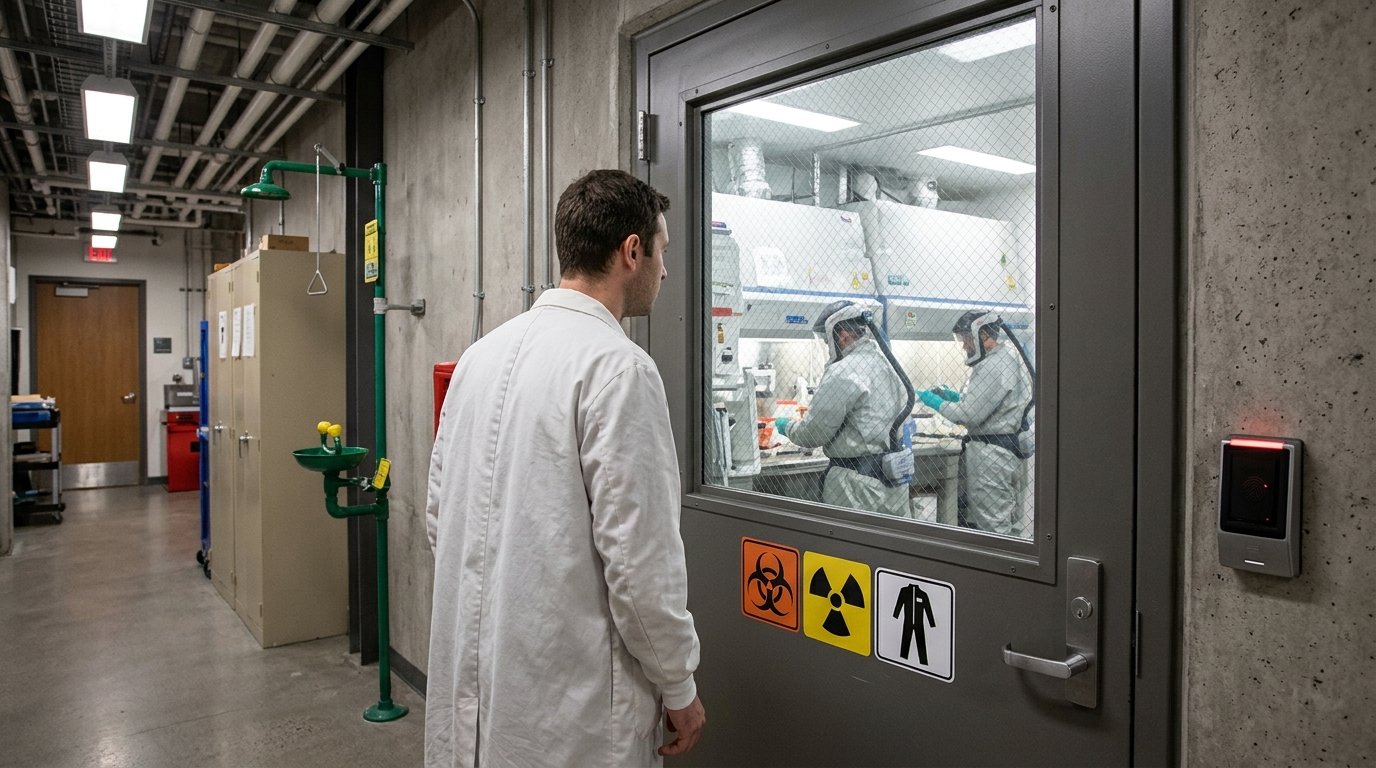
A researcher who works in one laboratory may need to enter a nearby equipment room for a routine task. Although both rooms belong to the same facility, they may contain completely different materials, instruments, or confidential records. Allowing every employee to enter every room can create unnecessary security and safety concerns, even when everyone works for the same organization.
Research facilities often combine offices, testing laboratories, sample-storage rooms, instrument areas, and spaces used by visiting scientists. Each area has different operational requirements. A practical security plan should support legitimate research activities while ensuring that access is granted according to responsibilities, qualifications, and actual work needs.
Why Research Buildings Need Different Levels of Access
An ordinary administrative office does not require the same controls as a room containing restricted research materials or specialized laboratory equipment. Employees may be authorized to work in one location but lack the training or approval needed for another. This distinction matters because physical access can affect personnel safety, research integrity, and the protection of sensitive information.
Facility managers should begin by mapping the building into clearly defined access zones. Each zone needs an identified owner who can approve permissions and explain relevant restrictions. The classification should reflect actual operations, not simply the value of equipment. A room containing hazardous materials may need stronger entry procedures because of safety requirements, while a records room may require controls primarily to protect confidential information.
How Should Employee Permissions Be Assigned?
Access permissions should reflect a person’s job responsibilities and be reviewed when those responsibilities change. For example, a visiting researcher may need temporary access to one laboratory without receiving permission to enter unrelated workspaces. Similarly, maintenance personnel may require supervised entry into technical areas without being authorized to handle research materials.
Research Facility Security Guards can support these procedures by verifying authorized individuals, monitoring designated entrances, and reporting access irregularities. However, guards should work from approved authorization records rather than independently deciding which laboratory employees deserve entry. Department managers, laboratory supervisors, and designated safety personnel remain responsible for determining appropriate permissions.
What Should Happen When Outside Contractors Need Entry?
Research buildings depend on maintenance technicians, equipment suppliers, cleaning contractors, and technical specialists. Their work can require access to areas normally restricted to research employees. The facility should establish a process for confirming the work order, identifying the responsible employee, and determining whether an escort or additional safety instruction is necessary.
The CDC’s laboratory biosafety guidance emphasizes that access planning should consider different groups, including visitors, maintenance personnel, researchers, and emergency responders. This principle is useful beyond biological laboratories because contractors may be unfamiliar with room-specific hazards. Building security should verify authorization, while qualified laboratory personnel determine whether the work area is safe to enter.
A contractor should not be allowed to begin technical work merely because security has confirmed their identity. Identity verification establishes who the person is; the department responsible for the room must still confirm that the planned work is permitted. Keeping these decisions separate prevents security staff from making technical judgments outside their training.
How Can Facilities Protect Research Samples and Records?
Sensitive research materials can be affected by unauthorized handling, incorrect storage, or incomplete documentation. Depending on the facility’s work, samples may require controlled storage conditions and records showing who transferred or handled them. Security personnel can help protect room access, but they should not take responsibility for scientific storage procedures or sample integrity.
A practical facility review should confirm that:
-
Restricted rooms have documented authorization requirements.
-
Temporary permissions have defined expiration conditions.
-
Departing employees and contractors lose access promptly.
-
Lost keys or access cards are reported and disabled where possible.
-
Security incidents reach the appropriate laboratory supervisor.
These checks help identify gaps that routine equipment maintenance might overlook. They are especially important when projects end, employees transfer between departments, or visiting researchers finish temporary assignments.
Why Access Records Need Regular Review
Electronic access systems can record entry activity, but collecting large quantities of data does not automatically make a facility secure. Managers need to determine which records are relevant, who may review them, and how long they should be retained. Unnecessary monitoring can create privacy concerns, while poorly maintained records may be difficult to use during an investigation.
Periodic access reviews are often more useful than waiting for a security incident. Department supervisors should confirm that permissions still match current assignments and investigate unexplained access attempts according to established policy. These reviews can also reveal administrative mistakes, such as temporary credentials that remain active long after a contractor completes a project.
Conclusion
Research facilities need access rules that reflect the different purposes and risks of individual rooms. Clear authorization, contractor coordination, periodic permission reviews, and appropriate security monitoring can support daily research without creating unnecessary restrictions. The principle of least privilege explains why individuals should receive only the access necessary to perform their authorized duties. Applying that principle to physical spaces helps protect sensitive work while preserving the flexibility researchers need.