Across the GCC’s construction and energy sectors, a quiet shift has been underway in how electrical infrastructure gets specified. Where a project once defaulted to a civil-built switch room or transformer bay, more contractors and consultants are now specifying a switchgear container or transformer container from the outset — and the reasons have less to do with novelty than with the practical realities of building in the region.
Switchgear Container vs. Transformer Container: Two Different Jobs
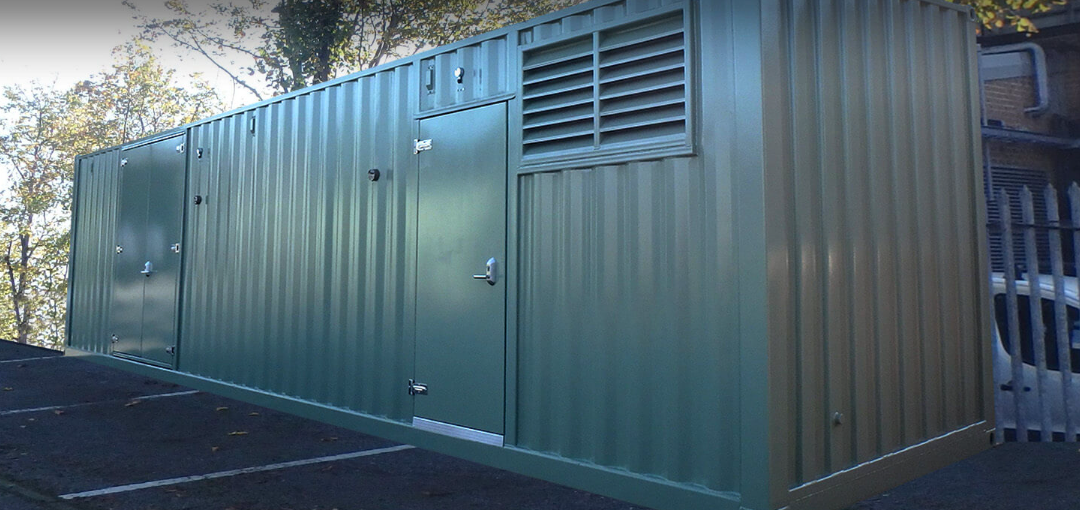
The terms get used loosely on site, so it’s worth separating them. A switchgear container houses medium- and low-voltage switchgear, protection relays, and busbars in one weatherproof steel unit — effectively a plug-and-play electrical room. A transformer container instead encloses the transformer itself, with ventilation, bunded flooring, and fire-rated separation sized to that transformer’s heat output and oil-containment needs. Many projects order both functions in a single combined transformation container, split internally between a transformer bay and a switchgear/LV compartment, which is why the terms are often used almost interchangeably in supplier conversations even though they describe two connected but distinct pieces of equipment.
Why Civil-Built Electrical Rooms Are Losing Ground
Civil construction timelines in the Gulf are long relative to the rest of a project’s critical path: foundations, curing time, block-work, and internal fit-out can add months before a switch room or transformer bay is ready to receive equipment. On fast-tracked oil & gas, power generation, and industrial projects, that lead time is increasingly incompatible with schedules driven by equipment delivery and commissioning dates set well in advance.
Containerized switchgear sidesteps this by moving fabrication off the critical path entirely. The steel enclosure, ventilation, internal fit-out, and factory testing all happen in parallel with site civil works, so switchgear containers and transformer containers alike arrive ready to energize rather than waiting on a structure that still needs finishing.
Built for the Environment, Not Just the Equipment
The GCC’s operating environment is a specific engineering problem: extreme ambient heat that compounds a transformer’s own thermal load, wind-blown sand that finds its way into any imperfect seal, and — for coastal and offshore-adjacent sites — salt-laden air that accelerates corrosion on anything less than a properly specified paint system. A transformer container built for the region typically needs a ventilation design sized to the actual heat load of the equipment inside, IP54 as a baseline dust/splash rating rising to IP65 for fully exposed installations, and a shot-blasted, marine-grade coating system rather than a coat sprayed over mill scale.
What to Look for When Specifying Switchgear in the UAE
Anyone sourcing switchgear in UAE markets specifically — as opposed to a generic regional supplier — should expect a fabricator who can speak to local civil-defence and DEWA-adjacent requirements, not just an international standard sheet. That local fluency is often the actual differentiator between suppliers whose containerized switchgear and transformer containers look identical on a datasheet.
- Design-led fabrication — the switchgear container or transformer container shell and ventilation should be sized to the equipment schedule, not adapted from a stock enclosure after the fact.
- Independent testing — pressure and leak testing, plus IP-rating verification, before the unit leaves the factory floor.
- Relocatable design — confirm the transformer container or switchgear container is genuinely liftable and transportable as a single piece, not a semi-permanent structure in container form.
- Coupled-unit capability — for larger installations, confirm the supplier can couple multiple transformer containers or switchgear containers rather than forcing an oversized single unit.
As Gulf infrastructure projects continue to compress delivery timelines while operating in one of the world’s more demanding climates for electrical equipment, the switchgear container and transformer container look less like an alternative approach and more like the default one.