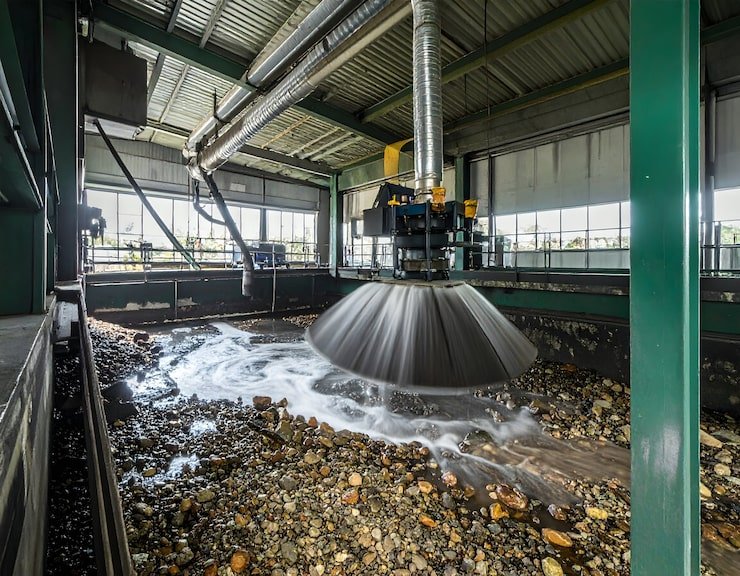
Ghana’s agriculture sector is increasingly turning toward irrigation as farmers seek greater control over water availability, particularly amid changing rainfall patterns and longer dry periods. This shift is creating a stronger role for agricultural water pumps, which support the movement of water from rivers, reservoirs, canals, boreholes, and other sources to cultivated fields. The transition is also linked with broader efforts to improve farm productivity and climate resilience.
According to a Ghana agriculture water pump industry report, the sector was valued at USD 10.29 million in 2025 and is projected to reach USD 22.38 million by 2032, expanding at a CAGR of 10.05% during 2026–2032. Centrifugal pumps account for about 42.8% of the sector in 2026, while irrigation represents the leading application segment with approximately 71.6% share.
Irrigation Gains Importance as Rainfall Becomes Less Predictable
Agricultural production in Ghana remains substantially dependent on rainfall, making dry-season water availability an important consideration for farmers. The World Bank notes that less than 3% of Ghana’s cultivated land is irrigated, despite considerable irrigation potential. This gap highlights the importance of infrastructure capable of moving water reliably to agricultural land.
Water pumps form an important part of that infrastructure. Depending on farm size and water source, producers can use surface pumps, submersible pumps, or other pumping configurations to transfer water for irrigation. The choice depends on factors such as water depth, required flow, energy availability, farm layout, and irrigation method.
Centrifugal Pumps Remain Widely Used
Centrifugal pumps hold the leading position by pump type in Ghana’s agricultural water-pumping sector. Their suitability for moving water from surface sources makes them relevant to irrigation systems using rivers, reservoirs, canals, and other accessible water bodies. Their application also extends across farms with different production scales.
The broader irrigation ecosystem includes several other technologies, including submersible and vertical pumps. Deep groundwater applications can require different equipment from surface-water irrigation, while larger agricultural schemes may use pumps alongside piped distribution networks, storage facilities, and water-control equipment.
Research from the World Bank on farmer-led irrigation development in Ghana identifies multiple pumping configurations already used by farmers, including diesel and electric pumps for surface-water sources and pumping systems that move groundwater from wells and boreholes into storage tanks.
Public Irrigation Development Supports Equipment Demand
Institutional investment in irrigation is also shaping the requirement for agricultural pumping equipment. Ghana’s Irrigation Development Authority is responsible for developing irrigation and drainage infrastructure, providing technical services, and promoting appropriate irrigation technologies. Its mandate includes the development of dams, ponds, tube-wells, conveyance structures, and related facilities.
Recent government initiatives have continued to emphasize irrigation expansion. Ghana’s Feed Ghana Programme includes an “Irrigation for Wealth Creation” component focused on rehabilitating existing schemes and developing new irrigation areas, with a stated objective of expanding irrigation coverage for more consistent agricultural production.
These infrastructure developments can create demand across the irrigation equipment chain, from pumps and motors to water-control systems and distribution networks.
Solar Pumping Addresses Energy Constraints
Energy availability is another consideration influencing pump selection. In remote agricultural areas, dependable grid electricity may not always be available, while diesel-powered systems can expose farmers to fuel and maintenance costs. These conditions are contributing to interest in solar-powered pumping technologies.
Solar pumps can operate independently of conventional electricity networks and are particularly relevant where irrigation is required during sunny dry-season periods. Their adoption is also consistent with broader efforts to reduce operating costs and improve the sustainability of agricultural water management.
The International Water Management Institute and Ghana Irrigation Development Authority have also been working together on sustainable irrigation and climate-smart water management, reflecting the growing attention toward technology-based approaches to agricultural water use.
Digital Irrigation Adds Precision to Water Management
Agricultural pumping is also becoming connected with digital irrigation practices. Scheduling tools, climate information, sensors, and digital advisory platforms can help farmers determine when and how much water is required. Such approaches can reduce unnecessary pumping while improving the timing of irrigation.
The development of digital services such as IRRILINE demonstrates this direction. The platform brings together irrigation scheduling guidance, solar pumping solutions, equipment suppliers, and financing-related services, indicating how digital tools can connect farmers with irrigation technologies and supporting services.
Toward More Resilient Agricultural Water Use
Ghana’s agricultural water-pumping sector is therefore being shaped by several interconnected developments: irrigation expansion, rainfall variability, agricultural mechanization, renewable-energy adoption, and modernization of water infrastructure. The Ghana Irrigation Development Authority’s agricultural water-management framework places irrigation development and efficient water-resource use at the center of efforts to support year-round agricultural production.
As irrigation coverage expands, pump requirements are likely to become increasingly differentiated by farm size, water source, energy availability, and crop requirements. The resulting emphasis on efficient, reliable, and increasingly solar-powered pumping systems reflects a broader shift toward more controlled and climate-resilient agricultural water management in Ghana.