Buying imported vehicles has become increasingly popular among British motorists seeking reliability, advanced features, and superior value. However, anyone planning to import cars from Japan to UK markets must first understand one essential document: the auction sheet. Hidden within its symbols and annotations lies the true story of a vehicle’s condition, history, and prior repairs.
Among the most misunderstood details are repaint marks and repair indicators. These markings can reveal whether a car has undergone cosmetic touch-ups, structural restoration, or accident-related repairs. For buyers unfamiliar with Japanese auctions, overlooking these details can lead to expensive surprises later.
Why Auction Sheets Matter So Much
A Japanese auction sheet is not merely a checklist. It is a professional inspection report prepared before a vehicle enters auction. Inspectors evaluate the exterior, interior, mechanical condition, mileage authenticity, and repair history.
When people import cars from Japan to UK dealerships or personal garages, the auction sheet becomes the primary source of truth. Unlike ordinary classified listings, Japanese auctions rely heavily on transparent grading systems.
The document generally includes:
- Overall vehicle grade
- Interior grade
- Mileage verification
- Damage map
- Repair notes
- Repaint indicators
- Rust or corrosion remarks
- Accident history observations
Understanding these sections can significantly reduce the risk of purchasing a problematic vehicle.
The Meaning of Repaint Marks
Repaint marks indicate that a portion of the car has been resprayed or refinished at some point during its lifespan. This does not automatically mean the vehicle suffered a major collision. In many cases, repainting occurs due to scratches, fading paint, or minor cosmetic imperfections.
However, repainting can also conceal accident damage. This is why inspectors carefully document these areas on the Japanese vehicle auction sheet.
Common repaint-related terms may include:
- Repainted panel
- Color mismatch
- Uneven paint texture
- Overspray
- Wave distortion
- Paint deterioration
These subtle observations help buyers distinguish between minor cosmetic restoration and deeper structural concerns.
Understanding the Auction Sheet Damage Map
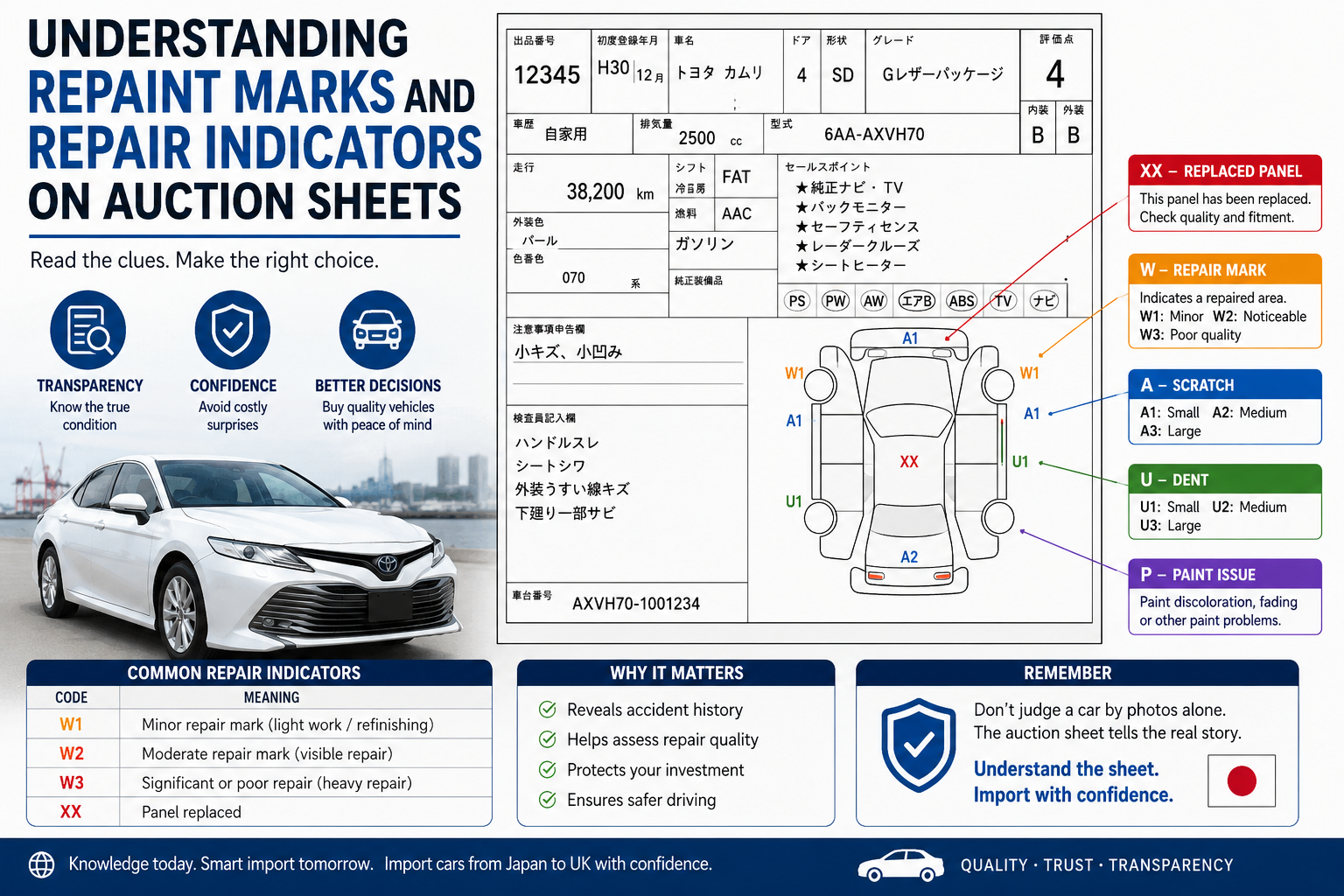
One of the most informative sections is the vehicle diagram, often called the damage map. Inspectors mark every noticeable flaw using abbreviated symbols and alphanumeric codes.
Here are some common examples:
| Code | Meaning |
|---|---|
| A1 | Small scratch |
| A2 | Medium scratch |
| A3 | Large scratch |
| U1 | Small dent |
| U2 | Medium dent |
| U3 | Large dent |
| W1 | Minor repair mark |
| W2 | Noticeable repair mark |
| W3 | Poor repair quality |
| P | Paint issue |
| X | Panel requires replacement |
| XX | Panel has already been replaced |
When buyers import cars from Japan to UK destinations, understanding these codes can prevent costly mistakes. A vehicle may appear immaculate in photographs while concealing extensive prior repairs beneath fresh paint.
What Repair Indicators Actually Reveal
Repair indicators provide insight into how previous damage was handled. Not every repaired car is problematic. In Japan, repair standards are often exceptionally high, and many repaired vehicles remain mechanically sound for years.
The critical factor is the quality and location of the repair.
Cosmetic Repairs
These usually involve:
- Surface scratches
- Parking dents
- Minor bumper damage
- Paint blemishes
Cosmetic repairs are relatively harmless and common in used vehicles.
Structural Repairs
These are more serious and may involve:
- Chassis straightening
- Frame welding
- Pillar reconstruction
- Suspension mounting repairs
Structural repairs can affect safety, alignment, and long-term durability. A careful examination of the Japanese vehicle auction sheet is vital when such indicators appear.
The Difference Between W1, W2, and W3
Repair grades beginning with “W” are particularly important.
W1: Minor Repair Mark
This generally refers to light refinishing or barely noticeable repair work. Most buyers consider W1 acceptable, especially on older vehicles.
W2: Moderate Repair Mark
A W2 indicator suggests visible repair work that may affect appearance or resale value. Closer inspection is recommended before proceeding.
W3: Significant or Poor Repair
W3 often indicates substandard repair quality or heavy restoration. This can include uneven panels, poor paint blending, or visible body filler. Buyers should exercise considerable caution.
For anyone planning to import cars from Japan to UK roads, understanding these distinctions is indispensable.
Signs of Hidden Accident Damage
Some sellers attempt to disguise previous collisions through repainting and cosmetic detailing. Fortunately, Japanese inspectors are trained to detect inconsistencies.
Warning signs on an auction sheet may include:
- Multiple adjacent repainted panels
- Roof repaint indicators
- Chassis repair comments
- Uneven panel alignment
- Replacement structural components
- Fresh undercoating remarks
If several repair indicators appear together, the likelihood of previous accident damage increases substantially.
Why Repainted Cars Are Not Always Bad
A common misconception among inexperienced buyers is that any repaint automatically makes a car undesirable. In reality, many premium imported vehicles receive partial repainting for entirely benign reasons.
Japanese owners often maintain their cars meticulously. Even minor blemishes may prompt repainting to preserve showroom aesthetics.
A lightly repainted vehicle with documented maintenance can still be an excellent purchase. The key lies in transparency and proper interpretation of the Japanese vehicle auction sheet.
The Importance of Auction Grade Correlation
Repair indicators should never be viewed in isolation. They must be compared with the overall auction grade.
For example:
- Grade 4.5 with W1 marks usually indicates minor cosmetic work.
- Grade 3.5 with several W2 or W3 marks suggests more substantial repairs.
- Grade R or RA often signifies accident history or repaired structural damage.
When buyers import cars from Japan to UK markets, combining the auction grade with repair indicators creates a far clearer understanding of vehicle condition.
How Professional Importers Analyze Auction Sheets
Experienced importers rarely rely on photographs alone. They examine:
- Inspector comments
- Repair code density
- Paint consistency
- Structural annotations
- Replacement panel history
- Corrosion indicators
Many professionals also request translation services because handwritten Japanese notes often contain crucial warnings not visible in automated translations.
This additional scrutiny dramatically reduces the chance of importing a problematic vehicle.
Common Misinterpretations Buyers Make
Many first-time importers misjudge auction sheet information due to limited familiarity with Japanese grading systems.
Typical mistakes include:
Assuming Every Repair Means Accident Damage
Minor repairs are normal in used vehicles and often purely cosmetic.
Ignoring Inspector Notes
The written comments frequently contain more valuable information than the damage diagram itself.
Focusing Only on Exterior Appearance
Fresh paint can conceal underlying issues. Structural integrity matters more than visual perfection.
Overlooking Replacement Panels
A replaced quarter panel or roof section may indicate previous severe impact damage.
These misunderstandings can lead to expensive disappointments after importation.
Why Auction Sheet Verification Is Essential
Unfortunately, altered or fabricated auction sheets occasionally circulate within international markets. Verification through reputable exporters is essential before making a purchase decision.
Authentic auction sheets help buyers:
- Confirm genuine mileage
- Verify repair history
- Assess repaint quality
- Avoid tampered vehicles
- Protect resale value
This becomes especially important when attempting to import cars from Japan to UK buyers seeking dependable long-term ownership.
Final Thoughts
Understanding repaint marks and repair indicators transforms the auction sheet from a confusing diagram into a powerful buyer protection tool. Rather than fearing every repaired vehicle, informed buyers learn to differentiate harmless cosmetic refinishing from serious structural restoration.
Careful interpretation of the Japanese vehicle auction sheet allows importers to make confident, financially sound decisions while avoiding hidden damage and deceptive listings.
For buyers seeking reliable assistance with vehicle inspections, auction sheet interpretation, and secure imports, Nobuko Japan provides valuable support throughout the importing process, helping customers source quality vehicles with greater transparency and confidence.